Why Life Seems to Speed Up as We Age (click here)
Time is perhaps the most elusive and mysterious dimension of human existence.
It is constant and unyielding, yet our perception of it is anything but fixed.
Moments of joy can feel fleeting, while periods of sorrow can stretch into what feels like an eternity.
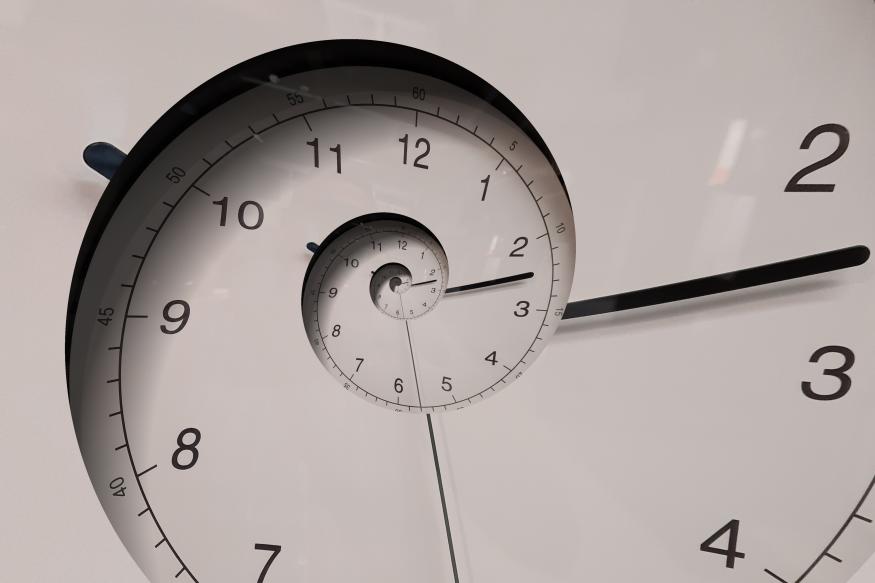
As we age, we begin to feel that life itself is accelerating, that the years slip by faster and faster, leaving us to wonder how quickly we arrived where we are.
This blog post will explore the passage of time, our relative understanding of what time truly is, and why the experience of time’s swiftness becomes more apparent as we grow older.
We will also delve into the latest scientific theories on time perception and reflect on how this phenomenon shapes our lives, our memories, and ultimately, our sense of purpose.
What Is Time? The Elusive Nature of the Fourth Dimension
Time, in its simplest definition, is the continuous progression of existence and events from the past, through the present, and into the future. However, this definition does little to capture the profound role time plays in shaping our reality.
Physicists often refer to time as the fourth dimension, intertwined with space to form the fabric of the universe itself—spacetime.
Einstein’s Theory of Relativity shattered previous notions of time as an absolute constant, demonstrating that time is fluid and can stretch or compress depending on the observer’s relative speed and gravitational influence.
This cosmic view of time complicates our understanding, revealing that the passage of time is not the same for everyone, and indeed not even the same for all objects in the universe.
While we may never fully grasp the nature of time on a cosmic scale, it is our subjective experience of time—the way we perceive and feel its passage—that most deeply influences our lives.
The Subjective Nature of Time Perception: Why Does Time Seem to Accelerate?

For children, summers seem endless, while for adults, the same stretch of months flies by in the blink of an eye.
This shift in our perception of time’s speed is one of the most commonly experienced and perplexing aspects of the human condition.
As we age, it feels like the years pass faster and faster.
Scientific studies have sought to explain this phenomenon, and one prominent theory suggests that time appears to speed up because, as we grow older, we accumulate more memories, making new experiences feel less novel.
A young child, for example, is encountering countless new experiences for the first time—each day holds new knowledge and stimuli.
These experiences create strong, lasting memories, making time feel richer and more substantial.
For adults, however, many experiences become routine. We fall into patterns—jobs, relationships, daily tasks—each reinforcing the feeling of familiarity.
This predictability leads to fewer memorable moments, which in turn makes time feel as though it is moving faster.
Days blur into weeks, and before we know it, years have passed.
- Study Reference: A 2013 study published in Frontiers in Psychology suggests that our perception of time is linked to the proportional theory, which posits that as we age, each passing year represents a smaller percentage of our total life, making them seem to move faster. For a 10-year-old, one year is 10% of their entire life, but for a 50-year-old, one year represents only 2%.
Memory and Time: The Role of Novelty in Slowing the Clock
Memories play a crucial role in our experience of time.
When we look back at a year that felt long and eventful, it’s often because it was filled with new experiences—travel, personal milestones, or professional changes.
The brain processes novel experiences more intensively than routine events, storing them more deeply in our long-term memory.
Neuroscientists have shown that time seems to pass more slowly during moments of intense focus or novelty because our brains are working harder to absorb and process these new stimuli.
This is why childhood, full of firsts—first days of school, first friendships, first family vacations—feels longer and more expansive than the adult years that follow, where routine often dominates.
To recapture the feeling of slower time, experts suggest actively seeking out new experiences, even in adulthood.
By engaging in learning, exploring new places, or taking on new hobbies, we can effectively create more vivid memories that, in retrospect, make time feel fuller and richer.
- Study Reference: In 2016, researchers at Duke University conducted experiments that demonstrated how exposure to novel experiences stretched the perception of time, showing that time is more likely to be remembered as long and eventful when the brain is engaged in something new and challenging.
The Tragic Beauty of Time’s Relentlessness
While the notion of time passing more quickly as we age can feel daunting, it also holds a certain beauty.
It reminds us of the fleeting nature of life, urging us to make the most of the moments we have.
The awareness that life is short can inspire us to live more intentionally, to cherish the present, and to nurture relationships and experiences that bring meaning to our days.
One of the most poignant aspects of time is that it waits for no one.
The feeling of time slipping through our fingers can evoke a sense of urgency, pushing us to pursue our passions and connect more deeply with those around us.
In a way, time’s swift passage is both a tragedy and a gift, challenging us to appreciate the moments we have while we still have them.
Relativity and Time’s Flexibility: The Physical World’s Take on Time
Beyond our subjective experience, time itself is far from a rigid constant.
Albert Einstein’s Theory of Relativity introduced the idea that time can dilate—meaning that the faster you move through space, the slower time passes for you, relative to others. In fact, for objects moving at the speed of light, time effectively stops.
This mind-bending notion has been proven through scientific experiments with atomic clocks, which show that time moves more slowly at high velocities or in strong gravitational fields.
For astronauts aboard the International Space Station, time actually moves slightly slower than it does for people on Earth due to the speed at which the ISS orbits the planet.
- Study Reference: In 1971, the famous Hafele-Keating experiment flew atomic clocks around the world on commercial airliners. Upon their return, the clocks showed slight but measurable differences compared to stationary clocks, providing concrete evidence that time dilation is a real effect of motion and gravity.
While we do not experience time dilation in our everyday lives, the knowledge that time is not as fixed as we once thought invites us to reconsider our relationship with it. Time is a relative construct, not just in the cosmic sense but also in our personal lives. This relativity reminds us that our experience of time is shaped as much by our thoughts and actions as it is by the ticking of the clock.
Conclusion: Embracing the Ephemeral Nature of Time
Ultimately, time is both the great equalizer and the one resource we can never get back.
As we grow older, it is natural to feel as though time is slipping away more quickly.
But by recognizing the role our perception plays in this process, we can reclaim a sense of control.
Seeking out new experiences, cultivating meaningful relationships, and cherishing life’s small moments can help slow the clock and enrich our memories.
In a world that constantly pulls our attention in different directions, it’s easy to get lost in the daily grind, only to look up years later and wonder where the time has gone. But perhaps the key to a more fulfilled life lies in realizing that time, as we perceive it, is not fixed. By living with intention, we can stretch the moments that matter and find beauty in the brevity of life’s passing.
Why Time Goes Faster As You Get Older (click here)