Harassment does not always look like harassment.
Sometimes it is an explicit threat.
Sometimes it is a defamatory post, a threatening message or an unwanted visit.
But some forms of intimidation are much less obvious.
They operate through repetition, ambiguity, social pressure and carefully deniable behavior.
A person may repeatedly encounter apparently ordinary incidents that, taken individually, seem insignificant: a provocative interaction in public, an apparently coincidental encounter, persistent noise, unwanted comments, anonymous communications, online attacks or repeated appearances in familiar places.
The individual event may have an innocent explanation.
The pattern can be much more consequential.
This is where the concept of plausible deniability becomes important.
What Is Plausible Deniability?
Plausible deniability describes a situation in which a person or organization can deny responsibility because the available evidence does not conclusively establish who ordered, caused or coordinated an action.
It is not a new concept.
Intelligence operations, political influence operations and covert activities have historically relied upon disguising responsibility.
In contemporary harassment, ambiguity can have a similar practical effect.
A person does not necessarily need to receive an explicit message saying:
“We are targeting you.”
The behavior can remain just ambiguous enough to permit a response such as:
“That was a coincidence.”
“You misunderstood.”
“Nobody was talking about you.”
“It was just a noisy neighbor.”
“That person was simply there.”
Sometimes those explanations may genuinely be correct.
But ambiguity can also make genuine misconduct harder to establish.
That is the central problem.
Why Ambiguity Can Be Effective
Imagine that a person receives one anonymous message.
There are numerous possible explanations.
It could be spam.
It could be a prank.
It could be harassment.
It could be somebody who knows the individual personally.
One message tells us relatively little.
Now imagine that the person receives several communications through different channels, followed by apparent attempts to expose private information, repeated unwanted contact, and suspicious interactions in the physical world.
The evidentiary situation changes.
Not because any individual event necessarily proves coordination.
But because multiple events can potentially reinforce one another.
That is why patterns matter so much in stalking and harassment investigations.
Street Theater
The expression “street theater” has two very different meanings.
In its ordinary sense, street theatre is a legitimate artistic and political practice.
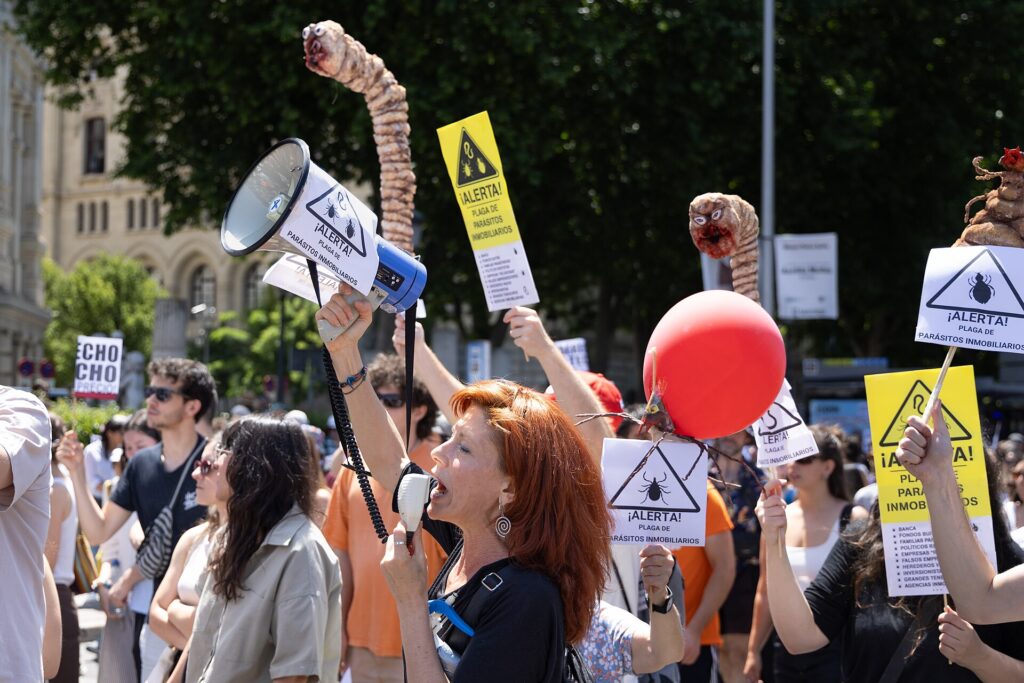
Activists and artists have long used public performance, costumes, satire, music and theatrical demonstrations to communicate political messages. Research on activist street theatre explicitly treats it as a form of public political performance.
But the same phrase is also used by some people to describe an alleged harassment tactic involving conspicuous public behavior apparently designed to attract the attention of a particular individual.
The alleged behavior can include unusually conspicuous gestures, repeated phrases, theatrical confrontations or apparently staged interactions.
The important concept here is not the theatricality itself.
It is targeting.
A public performance directed toward a general audience is one thing.
Repeated behavior apparently designed to unsettle a particular person is something else.
Why Public Harassment Can Be Difficult to Prove
Public environments contain enormous amounts of randomness.
People walk past each other.
Cars pass.
Neighbors make noise.
Strangers argue.
People laugh.
Children play.
Businesses advertise.
Street performers perform.
Political activists protest.
Any of these things can occur without having anything to do with a particular person.
That creates an obvious problem for somebody who is genuinely being targeted.
A single incident can almost always be given an alternative explanation.
The resulting uncertainty can be extremely frustrating.
And uncertainty is precisely why documentation becomes important.
Noise as a Harassment Mechanism
Noise deserves particular attention because it occupies the boundary between ordinary environmental activity and deliberate disturbance.
Loud music, repeated banging, shouting, vehicle noise, construction, amplified sound or other disturbances can interfere with sleep, concentration and ordinary life.
Persistent unwanted noise can therefore become a genuine form of harassment when it is deliberately directed at an individual.
But there is an important difference between: noise that happens and noise deliberately used against somebody.
The second requires evidence of intent and targeting.
The term “noise campaign” is used by some people to describe alleged coordinated disturbances.
It is not, however, a universally standardized legal category.
That means the underlying conduct matters more than the label.
What happened?
How often?
At what times?
Where?
Who had the opportunity to cause it?
Is there independent evidence?
Are apparently separate incidents actually connected?
Those questions can transform an allegation into something investigators can assess.
Examples of organized harassment
The Psychological Effect of Repetition
A single disturbance can be irritating.
Repeated disturbances can have a different effect.
The person begins anticipating the next incident.
They may become hyperaware of sounds.
They may have difficulty relaxing at home.
Sleep can be disrupted.
Concentration can deteriorate.
The person may begin avoiding particular places.
The environment that should feel safest, your home, can become associated with tension.
This is one reason persistent harassment can be psychologically powerful without involving direct physical violence.
The objective, when deliberate harassment is actually taking place, can be to make ordinary life increasingly difficult.
The “Reaction Trap”
One particularly effective form of intimidation is provoking a reaction.
A person repeatedly receives unwanted comments.
Eventually they respond angrily.
Someone records the response.
The recording is then presented without the preceding events.
The target now appears to be the aggressor.
This creates what can be called a reaction trap.
For activists, journalists and other publicly visible people, this can have serious reputational consequences.
The most important defense is therefore often restraint.
Do not give somebody else a dramatic reaction that can be separated from the context that produced it.
Document.
Leave.
Preserve the evidence.
Respond proportionately.
Smear Campaigns and Plausible Deniability
Reputational attacks are another area where ambiguity can be powerful.
Consider a rumor.
The person spreading it may not claim to know that it is true.
They may simply say:
“I’ve heard…”
“Someone told me…”
“People are saying…”
Responsibility becomes difficult to establish.
The recipient can then repeat the accusation while technically presenting it as something they merely heard.
This kind of information laundering can make a smear difficult to trace back to its origin.
Contemporary human-rights organizations document smear campaigns, defamation, intimidation and harassment as genuine threats faced by human-rights defenders.
Front Line Defenders’ current analysis also documents surveillance, digital threats and other forms of harassment against defenders.
Doxxing: From Information to Exposure
Doxxing creates another layer.
Publishing someone’s address, telephone number, workplace or family information can expose them to additional harassment.
The person publishing it does not necessarily have to issue a threat themselves.
Once the information is public, someone else can act on it.
This creates a form of distributed risk.
The individual who exposes the information can claim that they merely published publicly available material.
Others may then use it for intimidation.
The distinction between information and weaponized information becomes increasingly important.
Online and Offline Harassment Can Intersect
Modern harassment does not remain neatly inside the Internet.
An online campaign can affect someone’s physical life.
Personal information can move from social media into real-world intimidation.
A defamatory claim can reach an employer.
An online argument can turn into unwanted physical contact.
A person’s social network can become involved.
This creates what might be called a hybrid harassment environment.
The European Parliament has recognized contemporary forms of transnational repression involving digital surveillance, hacking, spyware, doxxing, online harassment, intimidation, defamation and disinformation directed against human-rights defenders.
Those are documented contemporary practices.
They don’t require an elaborate hidden theory to understand.
The Importance of Third Parties
Harassment can also become more difficult to understand when several people are involved.
A person may be contacted by someone they know.
Another person may post something online.
A third person may make a comment in public.
A fourth may contact someone in the target’s professional network.
Those events could be coordinated.
They could also be completely unrelated.
This is precisely where plausible deniability becomes relevant.
When responsibility is distributed across many individuals, identifying a common organizer becomes more difficult.
That is one reason serious investigations rely on communications, financial records, technical data, witness testimony and other forms of independent evidence rather than simply asking whether several people behaved strangely.
The Role of Digital Impersonation
Digital impersonation makes attribution even harder.
An account can use another person’s name.
A photograph can be copied.
A profile can imitate somebody else’s identity.
A message can be constructed to look as though it came from another source.
This creates an important principle: appearance is not attribution.
A screenshot may show what an account said.
It does not necessarily prove who controlled the account.
That question can require technical evidence.
Public Provocation
Provocation can also be designed to create deniability.
A person can say something inflammatory and then claim it was only a joke.
Someone can repeatedly make provocative gestures and then claim they meant nothing.
A person can make an ambiguous comment and deny that it referred to the target.
That ambiguity can be useful to somebody deliberately trying to provoke another person’s reaction.
Again, however, the existence of ambiguity does not itself prove malicious coordination.
It makes the conduct harder to interpret.
That distinction matters.
Why Activists Can Be Particularly Vulnerable
Activists operate in public.
They criticize institutions.
They organize events.
They publish opinions.
They participate in demonstrations.
They communicate with journalists.
Their public identity is often more visible than that of an ordinary person.
That visibility can make them more vulnerable to harassment.
Front Line Defenders’ current reporting documents physical and digital threats against human-rights defenders, including online surveillance, social-media harassment, phone surveillance, malware attacks and intimidation.
The goal of harassment can therefore be larger than causing discomfort.
It can be to discourage someone from continuing their public activities.
The Chilling Effect
A person does not have to be arrested to be silenced.
They can become silent because they are tired.
Because they are afraid.
Because they don’t want their family exposed.
Because they don’t want to lose their job.
Because they don’t want to become the subject of another online attack.
Because every public appearance seems to create another problem.
This is the chilling effect.
The person technically remains free to speak.
But the perceived cost of speaking becomes so high that they choose not to.
That is one of the most important ways harassment can affect civic participation.
Plausible Deniability and the Chilling Effect
This brings the different tactics together.
Suppose every individual incident is deniable.
The noise has another explanation.
The public interaction was “just a coincidence.”
The anonymous message could have come from anyone.
The rumor was merely “something somebody heard.”
The strange online account may be unrelated.
The person appearing repeatedly in the same place was allegedly there for another reason.
No single incident produces a clear smoking gun.
But the target experiences the aggregate effect.
That is where plausible deniability can become strategically important.
The person attempting to establish what is happening may have to solve dozens of small attribution problems rather than one obvious crime.
Why Plausible Deniability Should Not Become an Excuse
There is an important opposite danger.
Because ambiguity can exist, it can become tempting to explain every unexplained event as deliberate.
That is not good investigation.
Coincidences happen.
People behave strangely.
Neighborhoods are noisy.
Online systems make mistakes.
Individuals disagree.
What Makes a Strong Case?
A strong harassment case generally becomes stronger when several elements converge:
Repeated conduct.
The behavior happens more than once.
Targeting.
The same person is consistently affected.
Connection.
Different events can be linked through evidence.
Intent.
There are indications that the behavior was deliberate.
Independent corroboration.
Other people or technical records confirm important aspects.
Documented impact.
There is evidence of threats, fear, disruption, damage or other consequences.
The more independently supported elements exist, the more seriously a pattern can be evaluated.
Protecting Yourself Without Escalating
When confronted with suspected harassment, escalating the situation can make everything harder.
The most useful actions are usually mundane: preserve evidence; keep original files; record dates and times; protect accounts; avoid confrontations; use appropriate reporting channels; and seek professional assistance when the conduct becomes threatening or unlawful.
The objective is to create a record that somebody independent can evaluate.
The Bigger Issue: Civic Space
Ultimately, this isn’t only about individual harassment.
It is about the environment in which people participate in public life.
A healthy society should allow people to: criticize governments; organize peacefully; publish journalism; create art; defend human rights; and advocate for unpopular positions.
At the same time, people should not be subjected to genuine stalking, threats, intimidation or unlawful harassment because they exercise those rights.
Those principles aren’t contradictory.
They reinforce one another.
Conclusion
Street theatre can be legitimate political expression.
Noise can be ordinary environmental activity.
Public confrontation can be ordinary disagreement.
But these same forms of behavior can also become instruments of targeted harassment when they are persistent, deliberate and directed at a particular person.
The concept of plausible deniability helps explain one of the central difficulties involved.
Ambiguous conduct is difficult to attribute.
A single incident can be explained away.
A single message can be dismissed.
A single encounter can be called a coincidence.
A single noise disturbance can be attributed to ordinary life.
But when genuinely coordinated harassment occurs, the important issue is the pattern and the evidence connecting it.
Modern human-rights reporting demonstrates that activists and defenders can face real surveillance, intimidation, doxxing, digital harassment, smear campaigns and other forms of repression.
The responsible response is therefore neither denial nor automatic attribution.
It is careful observation.
Documentation.
Preservation of evidence.
Independent corroboration.
And accountability.
Because the most effective way to confront harassment is not to become trapped in speculation about invisible actors.
It is to make the visible facts impossible to ignore.