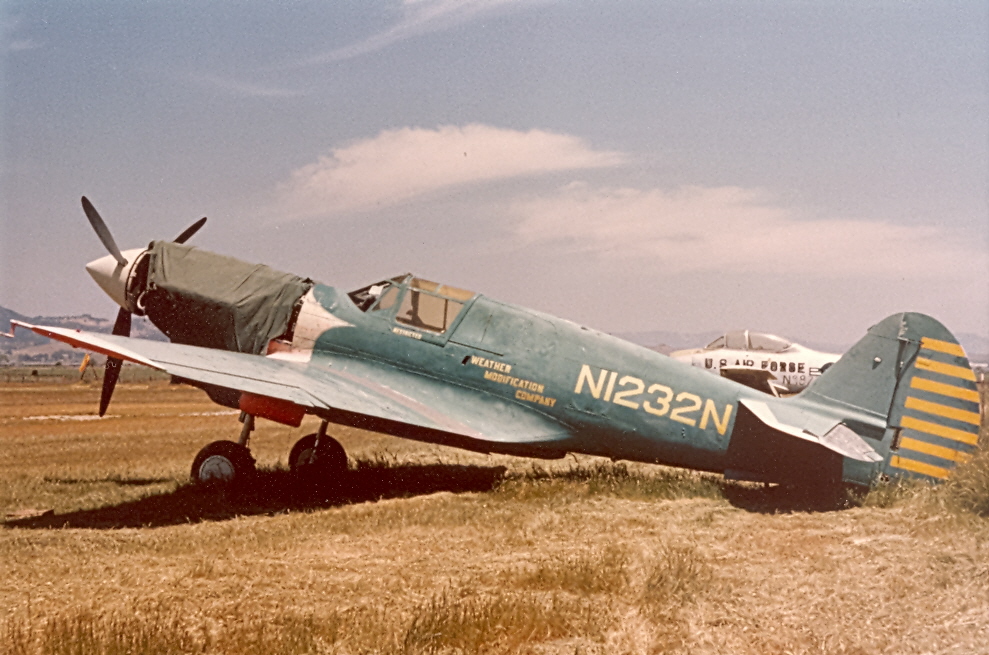
For as long as human beings have depended on agriculture, water, and predictable seasons, people have wondered whether the weather could be influenced.
Rain has been prayed for, celebrated, feared, and studied.
Ancient cultures developed rainmaking ceremonies and rituals, while later scientists began asking a different question: could atmospheric processes actually be influenced through physical intervention?
Today, weather modification is a real scientific and technological field.
Cloud seeding programs operate in several parts of the world, governments and research institutions have studied precipitation enhancement for decades, and international law specifically addresses the hostile use of environmental modification techniques.
At the same time, there is a large gap between what weather modification can demonstrably do and claims that humans can freely control storms, hurricanes, floods, or the climate.
Understanding that difference requires looking at the subject historically and scientifically.
What Is Weather Modification?
The World Meteorological Organization defines weather modification as the deliberate intervention in the atmosphere intended to influence local weather conditions.
The best-known example is cloud seeding, in which particles are introduced into suitable clouds in an attempt to alter precipitation.
Other objectives can include hail suppression or fog dispersal.
Weather modification is different from climate intervention or geoengineering.
Weather modification generally concerns relatively local or regional effects over comparatively short timescales.
Climate intervention, by contrast, generally concerns altering the Earth’s climate system on much larger spatial and temporal scales.
The two fields can overlap in some areas, but they should not be treated as interchangeable concepts.
That distinction is particularly important because the phrase “weather modification” can mean very different things depending on context.
Before Modern Science: Humanity’s Attempts to Influence Rain
Long before atmospheric physics existed, societies developed cultural practices intended to influence rainfall.
Rain dances, offerings, prayers, ceremonies, and other forms of ritual rainmaking can be found in many cultures throughout history.
These practices are important from an anthropological and cultural perspective, but they should not be confused with scientifically demonstrated atmospheric modification.
The modern scientific question began to emerge when people started investigating the physical mechanisms involved in precipitation.
Instead of asking whether humans could persuade the sky to rain through ritual, scientists began asking whether clouds could be altered through chemistry, temperature, pressure, or other physical processes.
Early Scientific Ideas About Artificial Rain
During the nineteenth century, a number of inventors and scientists proposed ways of stimulating rainfall.
Some of these ideas involved releasing particles or chemicals into the atmosphere.
Others involved attempts to alter atmospheric conditions on a much larger scale.
Many early proposals were speculative, poorly controlled, or scientifically unsuccessful.
This is an important part of the history of weather modification: the field did not begin with a proven technology.
It developed through a long series of hypotheses, experiments, failures, and increasingly sophisticated observations.
The ability to actually test atmospheric interventions improved dramatically during the twentieth century as scientists gained better knowledge of cloud microphysics, atmospheric chemistry, aviation, radar, and numerical modelling.
The Beginning of Modern Cloud Seeding
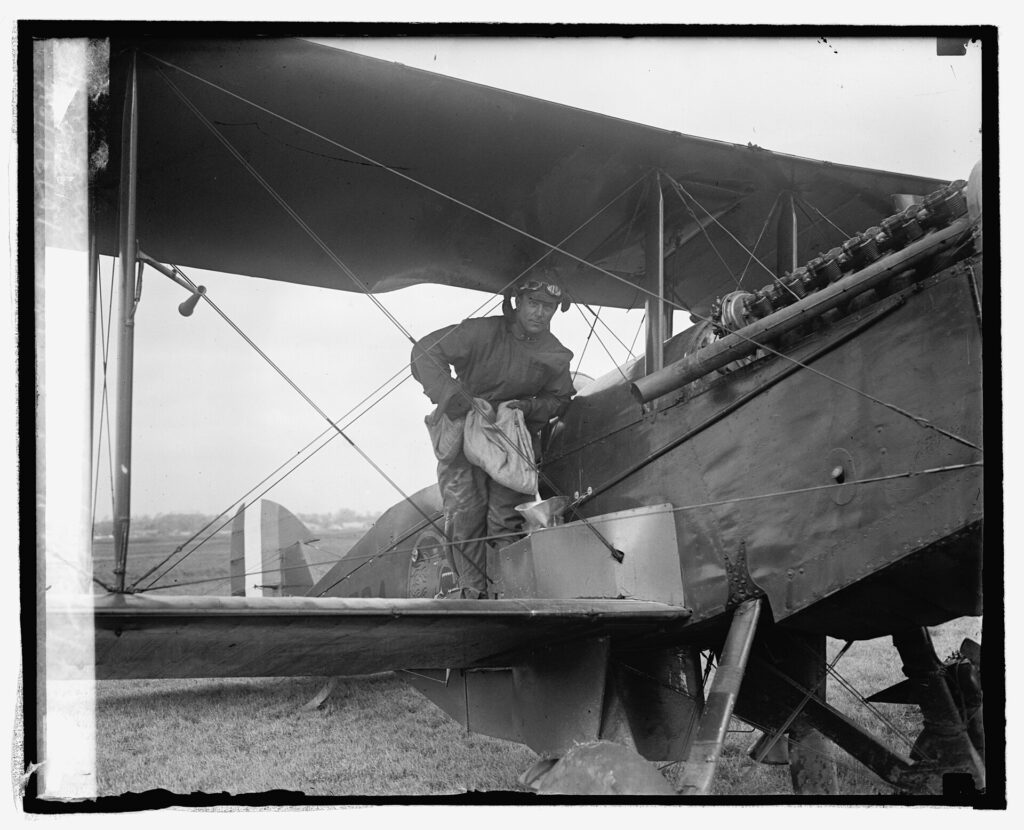
The modern history of cloud seeding is generally traced to experiments in 1946.
On 13 November 1946, General Electric scientist Vincent Schaefer conducted an experiment over Pittsfield, Massachusetts, in which dry ice was released into a supercooled cloud. The experiment produced visible ice formation and precipitation-related effects and became a landmark in the development of modern cloud-seeding research.
The following year, scientist Bernard Vonnegut discovered that silver iodide could act as an effective ice-nucleating material because of similarities between its crystal structure and ice.
This discovery helped establish the basic scientific concept behind many later forms of glaciogenic cloud seeding.
Cloud seeding was no longer simply an idea.
It had become an experimental technology.
How Cloud Seeding Works
Clouds contain enormous numbers of microscopic water droplets and, depending on their temperature and composition, ice particles.
Under suitable conditions, introducing appropriate particles can influence the formation and growth of ice crystals or water droplets.
Two broad categories are commonly discussed.
Glaciogenic Seeding
Glaciogenic seeding targets supercooled liquid water in clouds.
Materials such as silver iodide can provide surfaces on which ice crystals can form.
Those crystals can then grow, aggregate, and potentially contribute to precipitation.
This approach is particularly relevant to certain cold, wintertime, mountain clouds.
The WMO says recent research has produced stronger evidence for increased precipitation from some wintertime glaciogenic orographic cloud-seeding methods.
However, results remain dependent on the physical characteristics of the clouds and cannot simply be generalized from one location to another.
Hygroscopic Seeding
Hygroscopic seeding involves particles intended to influence the size and behavior of liquid water droplets inside clouds.
The objective is generally to increase the efficiency of collision and coalescence among droplets so that larger drops can form and eventually fall as precipitation.
The WMO notes that research into hygroscopic seeding continues, but the natural variability of convective clouds makes it difficult to distinguish the effects of seeding from normal atmospheric variability.
What Can Cloud Seeding Actually Do?
This is where scientific caution is necessary.
Cloud seeding does not create a rainstorm from an otherwise clear sky.
The WMO explicitly states that the energy involved in weather systems is so large that current weather-modification technologies cannot create rain-producing cloud systems from nothing or redirect atmospheric moisture into a region at will.
Claims of large-scale or dramatic weather control do not have a sound scientific basis.
Successful cloud seeding requires suitable clouds to already exist.
That limitation is fundamental.
A cloud-seeding aircraft cannot simply fly over a dry area on a clear day and manufacture a major storm.
The atmospheric ingredients have to be there already.
How Effective Is It?
The answer is complicated.
The U.S. Government Accountability Office, in a 2024 technology assessment published in December 2024, reviewed recent evidence and found estimates of additional precipitation ranging from 0 to 20 percent among the studies it examined.
At the same time, GAO emphasized that effectiveness is difficult to evaluate because of limitations in available data, the unpredictability of suitable cloud conditions, and methodological challenges.
The U.S. National Academies reached a similarly cautious conclusion in its 2003 review.
It noted that substantial progress had been made in atmospheric observation and computing, but that earlier experimental work had not established sufficiently strong statistical and physical evidence for many proposed seeding concepts.
The scientific picture has therefore evolved.
Some specific techniques and environments now have stronger evidence than they did decades ago, while other proposed applications remain uncertain.
That is why modern assessments tend to avoid a simple “cloud seeding works” or “cloud seeding doesn’t work” answer.
The more accurate question is:
Which technique, under which atmospheric conditions, producing what measurable effect?
Hail Suppression
Another long-standing application is the attempt to reduce hail damage.
The underlying idea is that modifying ice formation within certain storm clouds could alter the number or size of hailstones.
Cloud seeding for hail suppression has been investigated and practiced in several countries, but the WMO notes that evidence remains dependent on the specific physical circumstances and that weather-modification research continues to face substantial uncertainty.
This is another example of why weather modification should be discussed in specific terms rather than as a single all-purpose technology.
Fog Dispersal
Weather modification research has also included fog dispersal.
Clearing supercooled fog from airport runways is one of the applications with a long scientific and operational history.
Historical U.S. government assessments identified fog dispersal as one of the areas where practical effects had been demonstrated more clearly than some precipitation-enhancement applications.
Again, this is very different from controlling regional weather.
Weather Modification and the Military
One of the most historically significant developments in the field occurred when weather modification was investigated for military purposes.
During the Vietnam War, the United States conducted Project Popeye, a cloud-seeding program intended to increase rainfall along selected routes in Southeast Asia and interfere with transportation.
Declassified U.S. government records document the proposal and experimental nature of the operation.
A 1967 State Department memorandum describes the objective as generating additional rainfall along infiltration routes in North Vietnam and Laos.
This episode is historically important because it demonstrates that weather modification was not merely a civilian agricultural research topic.
Governments did consider whether manipulating precipitation could provide military advantages.
That history is documented.
The ENMOD Convention
The military history of environmental modification contributed to international concern about the use of environmental manipulation as a weapon.
The United Nations adopted the Convention on the Prohibition of Military or Any Other Hostile Use of Environmental Modification Techniques, commonly known as the ENMOD Convention, in 1976. It entered into force in 1978.
The convention prohibits military or other hostile use of environmental-modification techniques that have widespread, long-lasting, or severe effects.
The existence of ENMOD is significant for two reasons.
First, it confirms that governments historically took environmental modification seriously enough to require international legal regulation.
Second, it demonstrates that there is an important distinction between peaceful weather-modification research and hostile environmental modification.
Weather Modification in the Modern World
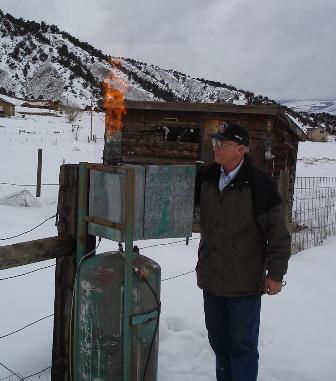
Weather modification did not disappear after the Cold War.
It became an ongoing research and operational field in several countries.
The United States, China, the United Arab Emirates, Thailand, India, and other countries have conducted cloud-seeding research or operations, although the objectives, technologies, regulations, and levels of evidence differ.
In some cases the main objective is increasing water availability.
In others, programs focus on hail suppression, agricultural support, research, or reducing the effects of drought.
The WMO’s 2025 statement makes clear that weather modification remains an active field and recommends scientifically sound research, careful evaluation, and appropriate operational practices.
Modern Research Is Becoming More Precise
Technology has changed significantly since the first cloud-seeding experiments.
Scientists now have access to increasingly sophisticated:
- weather radar;
- satellite observations;
- aircraft sensors;
- cloud microphysics measurements;
- numerical weather models;
- high-performance computing;
- and statistical techniques.
A 2026 research field demonstration in Japan explored a real-time decision-support framework combining Himawari-9 satellite observations, phased-array weather radar, and aircraft operations to identify potentially suitable clouds for experimental seeding.
The researchers emphasized that the study demonstrated operational targeting capabilities rather than proving that the particular seeding event increased precipitation.
That distinction is exactly how modern research should be interpreted.
Better technology allows better experiments.
It does not automatically prove that every atmospheric intervention works.
Weather Modification Is Not the Same as Geoengineering
The terms are often mixed together, but they describe different scales of intervention.
Weather modification generally attempts to influence local or regional conditions such as precipitation.
Climate intervention or geoengineering refers to much broader attempts to influence Earth’s climate system.
One category of geoengineering is solar radiation modification, which includes proposed techniques intended to alter the amount of solar energy reaching the Earth’s surface.
Another category includes carbon dioxide removal, which attempts to change atmospheric greenhouse-gas concentrations.
These are scientifically and politically different fields.
The WMO specifically distinguishes local-to-regional weather modification from global climate intervention.
What About Contrails and “Chemtrails”?
This subject is often brought into discussions about weather modification, so it is worth distinguishing documented science from unsupported claims.
A contrail is a condensation trail produced when aircraft exhaust interacts with cold, sufficiently humid upper-atmospheric air. Under some conditions, contrails can persist and spread into larger cirrus cloud formations.
The U.S. Environmental Protection Agency states that it is not aware of contrails intentionally being formed over the United States for geoengineering or weather-modification purposes. The agency also distinguishes legitimate, documented low-altitude aircraft spraying—such as agricultural or firefighting applications—from the claim that ordinary high-altitude contrails are secret chemical releases.
That does not mean aircraft have never been used to disperse substances.
They have.
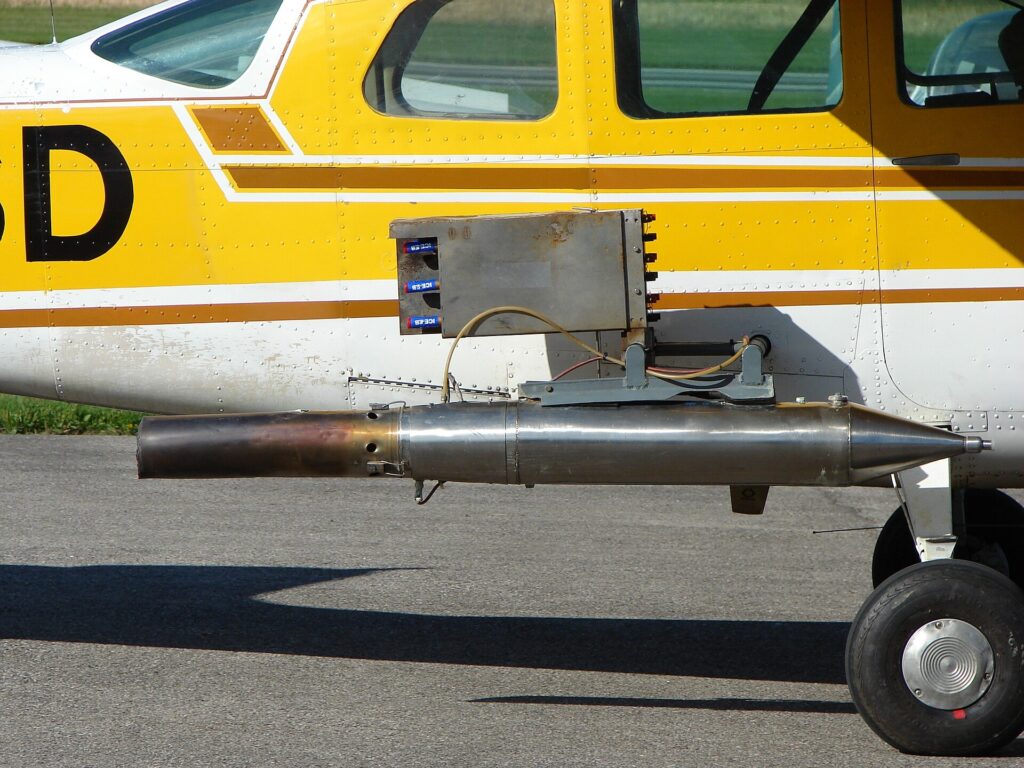
Cloud seeding itself involves deliberate dispersal from aircraft in some programs.
The point is that a documented cloud-seeding operation and the claim that ordinary commercial aircraft are secretly spraying hazardous substances are two very different propositions requiring different evidence.
Can Humans Control Hurricanes?
At present, there is no demonstrated method for controlling hurricanes through cloud seeding.
The WMO states that there is no generally accepted evidence that tropical cyclones can be modified through current weather-modification techniques.
It also states that there are no demonstrated methods for modifying tornadoes, lightning-strike danger, floods, or other severe-weather phenomena by cloud seeding.
This is one of the clearest boundaries between genuine weather modification and claims of comprehensive weather control.
Humans can influence particular microphysical processes inside suitably selected clouds.
That is a very different thing from controlling an entire hurricane or redirecting a major weather system.
Why the Subject Remains Controversial
There are legitimate reasons to debate weather modification.
Effectiveness is one.
Environmental impacts are another.
There are questions about monitoring, regulation, transparency, attribution of benefits and harms, and potential effects on neighboring areas.
The GAO notes uncertainties around effectiveness data and broader questions concerning the environmental and health implications of expanded silver-iodide use, while its review of the studies it examined did not identify current-level silver-iodide use as an environmental or health concern.
There are also questions of fairness.
If a cloud-seeding operation increases precipitation in one location, what does that mean for areas outside the target region?
How should benefits and risks be measured?
Who should authorize atmospheric interventions?
How transparent should operational programs be?
These are legitimate policy questions even when the underlying science is conventional.
Why Transparency Matters
Weather modification involves something particularly sensitive: the environment belongs to everyone.
Atmospheric processes cross political and geographic boundaries.
For that reason, transparency and scientific documentation are especially important.
Public confidence is more likely to increase when programs clearly document:
- what substances are being used;
- where and when operations occur;
- what the scientific objective is;
- what atmospheric conditions are required;
- how success is measured;
- what uncertainties remain;
- and what environmental monitoring is performed.
Open data and independent evaluation are valuable because weather naturally varies so much.
If it rains after a cloud-seeding flight, that does not automatically prove that the aircraft caused the rainfall.
The researchers must determine whether precipitation increased beyond what would reasonably have occurred without intervention.
That is why randomized experiments, control cases, statistical analysis, atmospheric measurements, and reproducible methods matter.
A Field Where the Evidence Is Uneven
One of the most important facts about weather modification is that different techniques have different evidence bases.
Some experiments show measurable effects.
Others do not.
Some effects are small.
Some results cannot be reproduced consistently.
Some atmospheric conditions are much more favorable than others.
The WMO therefore describes the field as continuing to advance while emphasizing that significant uncertainties remain in cloud dynamics, microphysics, measurements, and evaluation.
This is not unusual in atmospheric science.
Weather is an extraordinarily complex system.
Trying to measure the incremental effect of a small intervention against enormous natural variability is scientifically difficult.
The Modern Era: What We Can Say With Confidence
Several conclusions are reasonably clear from the historical and scientific record.
Weather modification is real.
Cloud seeding has been studied and practiced for approximately eight decades.
Human beings can influence some cloud processes under suitable conditions.
This is the basis of glaciogenic and hygroscopic seeding.
The effects are generally local or regional rather than planetary.
Weather modification does not give humans unrestricted control over atmospheric systems.
Effectiveness varies.
The results depend heavily on cloud type, atmospheric conditions, experimental design, and the intervention being tested.
Military interest in weather modification is historically documented.
Project Popeye is a clear example, and the subsequent ENMOD Convention confirms international concern about hostile environmental modification.
Modern weather modification continues openly in several countries.
Cloud seeding and rainmaking programs remain active and subject to ongoing research and debate.
There is no established technology capable of freely controlling hurricanes, tornadoes, floods, or the weather as a whole.
The Bigger Question
The most interesting question may no longer be whether humans can modify weather at all.
We know that some atmospheric interventions are possible.
The more important questions are:
How effective are they?
Under which conditions?
What are their environmental consequences?
Who gets to decide where they are used?
How transparent should those decisions be?
How should neighboring regions be protected?
What forms of atmospheric intervention should be internationally regulated?
These questions will become more important as water scarcity, drought, agricultural pressure, climate change, and technological capabilities continue to evolve.
The challenge is to discuss them without exaggerating what the technology can do and without pretending that legitimate scientific and policy questions do not exist.
Conclusion
Weather modification has a surprisingly long history.
Human beings first tried to influence rain through ritual and tradition. Scientists later began experimenting with physical processes. The twentieth century produced modern cloud seeding, military experiments, international regulation, and decades of research.
Today, weather modification remains a real but limited technology.
Cloud seeding can sometimes influence precipitation when the necessary atmospheric conditions already exist. Some recent experiments provide stronger evidence than earlier research did, while other applications remain uncertain.
At the same time, claims that humanity can simply manufacture storms, control hurricanes, redirect weather systems at will, or secretly manipulate the global atmosphere are not supported by established scientific evidence.
The most responsible way to approach the subject is therefore neither unquestioning acceptance nor blanket dismissal.
It is evidence.
Look at the technology.
Look at the historical record.
Look at the experiment.
Look at the data.
And distinguish clearly between what has actually been demonstrated, what remains under investigation, and what is merely claimed.
That distinction is particularly important in a field where the atmosphere itself is constantly changing and where natural variability can easily be mistaken for human intervention.
Weather modification is real.
Its limits are real too.
And understanding both sides is the best way to have an informed conversation about what humanity may, or may not, be able to do with the atmosphere in the future.