There is no perfect country.
Every society has problems, every institution has room for improvement, and every generation has its own challenges.
But sometimes it is worth stepping back from criticism and remembering what is good.
Croatia is a relatively young independent European state with an extraordinarily long cultural and historical heritage.
It is a country of Mediterranean coastlines and continental landscapes, ancient cities and modern universities, islands and mountains, traditional food and contemporary creativity.
It is also a country that has undergone enormous changes in a relatively short period.
Croatia joined the European Union in 2013 and, on 1 January 2023, adopted the euro and became a full member of the Schengen Area.
There is plenty to criticize about Croatia when criticism is justified.
But there is also a great deal to appreciate.
Healthcare: A System Built Around Broad Coverage
One of the things that deserves recognition is Croatia’s healthcare model.
Croatia has a mandatory social health insurance system with near-universal population coverage.
The Croatian Health Insurance Fund (HZZO/CHIF) is the country’s statutory insurer and principal purchaser of healthcare services.
The 2025 European Observatory/OECD profile estimates that approximately 99% of the population is insured.
That means access to healthcare is not simply dependent on whether a person has enough money to purchase a private insurance policy.
The system is based on social insurance and public financing.
People who are economically inactive, including pensioners and unemployed people, have contributions covered through state-budget transfers, while dependants can be covered through the contributions associated with working family members.
The statutory benefits package includes a broad range of preventive and curative services.
This is an important social achievement.
Healthcare systems can be judged in many different ways, and Croatia certainly faces challenges involving waiting times, staffing, finances, regional differences, prevention, and hospital organization.
I have personally been interested in the psychology field and would love to contribute myself one day hopefully.
But accessibility is an area where the country has some genuinely positive indicators.
In 2024, only 2.0% of people in Croatia with medical needs reported unmet needs because of cost, distance, or waiting times, compared with 3.6% across the EU.
The figure among people at risk of poverty was also lower than the EU average.
That does not mean that everyone has an easy experience with healthcare.
It means that, measured across the population, Croatia provides comparatively broad access.
Public Financing Matters
Another positive characteristic is the significant role of public financing.
According to the 2025 Country Health Profile, public spending accounted for around 85% of total health spending in Croatia in 2023, compared with around 80% across the EU.
Out-of-pocket spending was consequently among the lowest in the EU.
There is an important principle behind this:
A society can decide that healthcare is something people should be able to access because they need it, rather than because they happen to have substantial disposable income.
Croatia’s system reflects that principle.
It is also worth recognizing the people who make the system work: doctors, nurses, pharmacists, technicians, ambulance workers, administrative personnel, cleaners, researchers, and countless others who keep healthcare functioning every day.
Behind statistics are real people doing demanding work.
Croatia Is Living Longer Than It Was a Generation Ago
Croatia’s health indicators are not uniformly positive, and major challenges remain, particularly involving cardiovascular disease, cancer, smoking, alcohol consumption, physical inactivity, and obesity.
But there has nevertheless been a major long-term improvement in life expectancy.
Before the COVID-19 pandemic, life expectancy in Croatia had increased by approximately four years over the preceding two decades.
After falling during the pandemic, it recovered and reached 79.1 years in 2024, surpassing its pre-pandemic level.
That is worth recognizing.
Public health is ultimately about people being able to live longer and healthier lives.
There is still work to do… but progress should be acknowledged alongside the problems.
A Country With Extraordinary Heritage
Few countries of Croatia’s size possess such a concentration of historical and cultural heritage.
UNESCO currently lists 10 Croatian properties on the World Heritage List.
They include the historic complex of Split with the Palace of Diocletian, the Old City of Dubrovnik, Plitvice Lakes National Park, the Euphrasian Basilica complex in Poreč, the historic city of Trogir, the Cathedral of St James in Šibenik, Stari Grad Plain, and other transnational heritage sites.
This is remarkable considering Croatia’s population and geographic size.
In Split, an ancient Roman imperial palace is not merely an archaeological site behind a fence.
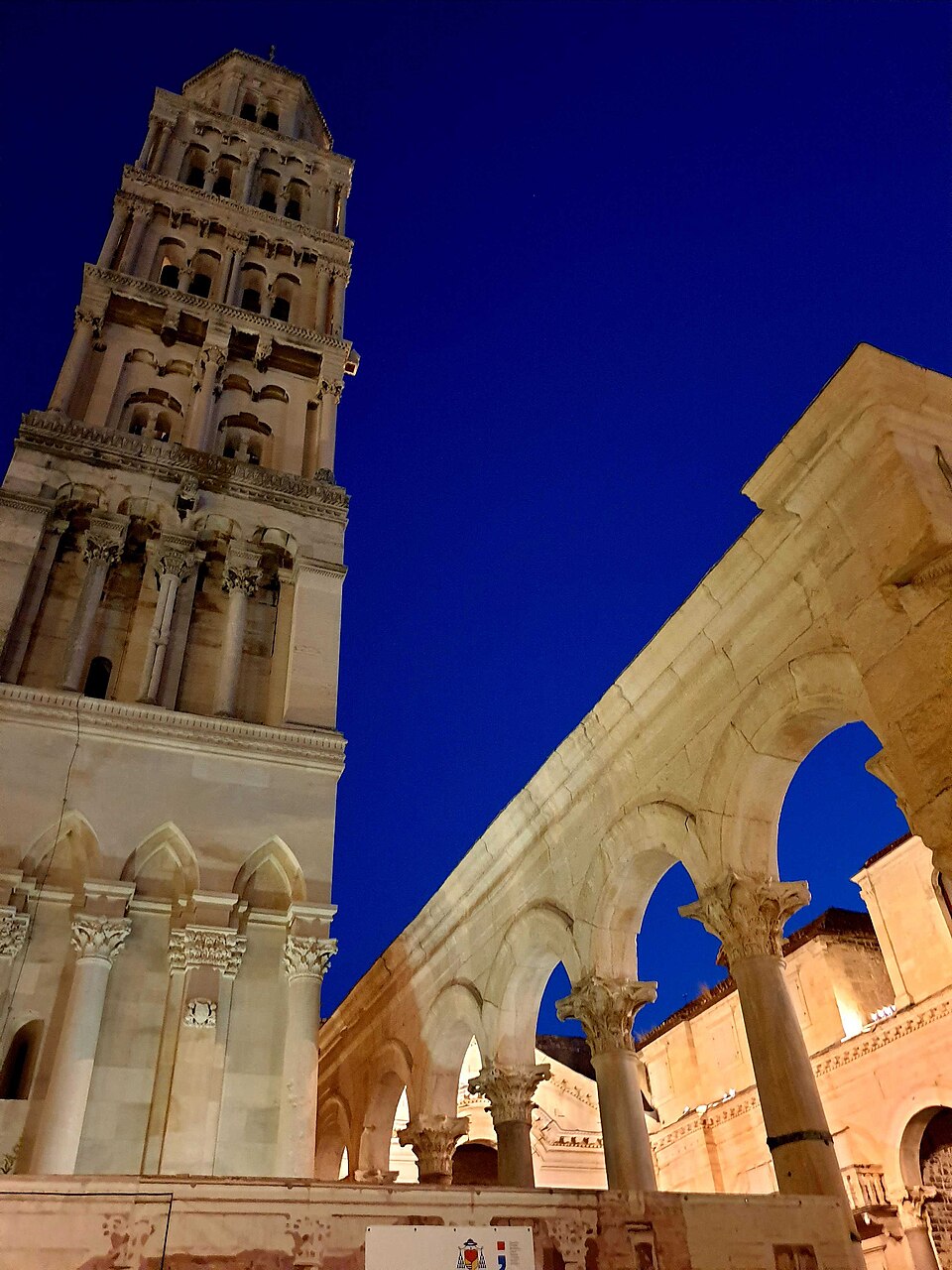
It is part of a living city.
People walk through it.
Businesses operate inside it.
Residents live beside it.
Cafés occupy spaces where people lived centuries ago.
History is not completely separated from everyday life.
It is integrated into it.
Dubrovnik and the Adriatic
Dubrovnik is another extraordinary example.
Its historic city walls, architecture, streets, churches, fortifications, and position on the Adriatic have made it one of Europe’s best-known historic cities.
But Croatia’s coastline is about much more than Dubrovnik.
From Istria to the south, the Adriatic provides an enormous variety of landscapes and communities.
There are islands, fishing villages, medieval towns, modern marinas, beaches, cliffs, forests, bays, vineyards, olive groves and historic ports.
And each region has developed its own character.
Plitvice: One of Europe’s Remarkable Natural Landscapes
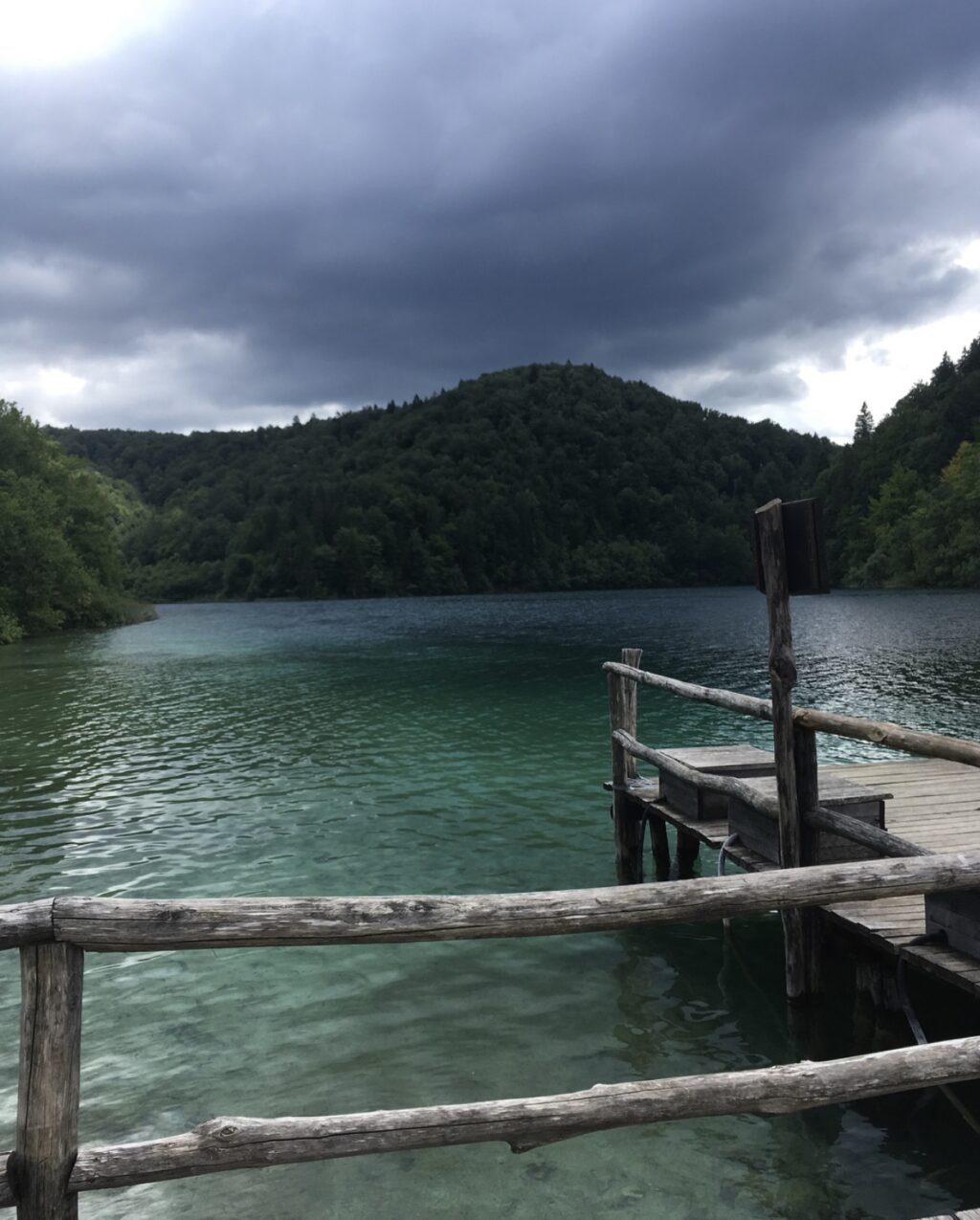
Croatia’s natural heritage is just as impressive as its built heritage.
Plitvice Lakes National Park is a UNESCO World Heritage property and one of the country’s most recognizable natural areas.
UNESCO lists the park as one of Croatia’s 10 World Heritage properties.
The interconnected lakes, waterfalls, forests, and karst landscape demonstrate the extraordinary geological and ecological diversity of the country.
Croatia is not simply a seaside destination.
It contains forests, mountains, wetlands, rivers, caves, islands and protected landscapes.
That biodiversity is something worth protecting for future generations.
Croatia’s Cultural Diversity Is One of Its Strengths
Croatian culture isn’t one single thing.
It contains influences from Central Europe, the Mediterranean, the Balkans, the Adriatic, the Alps and the historical empires and states that shaped the region.
The differences between Zagreb, Split, Rijeka, Osijek, Istria, Slavonia, Dalmatia, Zagorje and the islands are substantial.
That variety is a strength.
Croatian cuisine demonstrates the same diversity.
Istrian cuisine has its own traditions.
Dalmatia has its seafood, olive oil, vegetables and Mediterranean influences.
Slavonia has a very different culinary tradition.
The northern parts of the country have strong Central European influences.
The result is a remarkably diverse food culture within a relatively small geographical area.
Croatia Has Become More Integrated With Europe
Another major achievement is Croatia’s integration into European institutions.
Croatia became an EU member in 2013.
Then came two major milestones on 1 January 2023:
the euro and Schengen.
The European Commission described the simultaneous accession to the euro area and Schengen as a major milestone for Croatia and the EU.
The euro provides easier cross-border payments and greater currency transparency, while Schengen removes internal border checks between participating countries.
For ordinary people, European integration is not just an abstract political concept.
It affects: travel, work, education, business, investment, trade, tourism, and everyday movement.
Croatia’s place in Europe has become significantly more integrated over the past decade.
Renewable Energy Is Another Area of Strength
Croatia also has an interesting position in Europe’s energy transition.
According to Eurostat, 58.0% of electricity consumed in Croatia in 2024 came from renewable sources, placing Croatia among the EU countries where more than half of electricity consumption was covered by renewables.
Hydropower plays a particularly important role.
In terms of net electricity generation, Eurostat reported that 73.7% of Croatia’s electricity generation in 2024 came from renewable sources, with hydropower representing the dominant source.
There are still major challenges around energy infrastructure, storage, grids, solar development, efficiency and the broader energy transition.
But Croatia already has an important renewable-energy foundation.
That is something worth building upon.
Investment and European Funding
European Union membership has also brought significant access to investment and development funding.
The European Commission’s 2026 country report describes cohesion policy as one of the main sources of public investment in Croatia.
As of March 2026, selected projects represented 80.2% of the total allocation under the relevant cohesion-programming framework.
The Commission also highlights more than €1.5 billion allocated to research, innovation, SME competitiveness and digitalisation, while more than €3 billion is allocated to decarbonisation, energy affordability and sustainability.
These investments matter because infrastructure and economic development don’t happen only through private companies.
Public investment can change towns, transport systems, digital infrastructure, research capacity, water management and energy systems for decades.
Croatia Is Becoming More Digital
Croatia has also made progress in digital infrastructure.
The European Commission’s 2025 Digital Decade Country Report says Croatia has made strong progress in digital infrastructure and cybersecurity, while identifying continued challenges in SME digitalization and the uptake of advanced technologies.
Croatia’s national Digital Decade roadmap contains 31 measures with a total budget of €634.73 million.
That combination is important.
Croatia does not need to pretend that every digital challenge has been solved.
It hasn’t.
But the country is investing in the infrastructure and skills needed to participate in Europe’s digital economy.
For young people, entrepreneurs, developers, designers, engineers, artists, freelancers, researchers and small businesses, that creates opportunities that previous generations simply did not have.
Tourism: The World Wants to See Croatia
Tourism is obviously a major part of Croatia’s economy and international identity.
In 2025, Croatia recorded approximately 20.7 million tourist arrivals and 94.8 million tourist nights in commercial accommodation, representing increases of 2.2% and 1.2% respectively compared with 2024.
Those numbers are impressive for a country of fewer than four million residents.
But the significance of tourism goes beyond the headline numbers.
Tourism creates demand for: restaurants, transport, hospitality, construction, culture, entertainment, maritime services, food production, tour guides, design, technology, and countless small businesses.
It also creates an enormous international window into Croatia.
Millions of people visit the country every year and leave with their own memories of Croatian cities, islands, food, landscapes and people.
Croatia’s Cities Are Small Enough to Feel Human
One of the underrated advantages of Croatia is scale.
Even Zagreb, the country’s capital, is nowhere near the size of Europe’s largest metropolitan areas.
Cities such as Split, Rijeka, Osijek and Zadar are smaller still.
That has disadvantages, particularly in employment opportunities and some specialized services.
But it also has advantages.
It is possible to cross the city without spending hours commuting.
You can reach the coast relatively quickly from many parts of the country.
You can live close to nature.
You can have a professional life without necessarily living in a megacity.
For some people, that balance is extremely valuable.
Croatia Has a Strong Sporting Culture
Croatian sport has also given the country an unusually large international profile relative to its population.
Croatia has produced globally successful footballers, water-polo players, tennis players, basketball players, rowers, skiers, sailors and athletes across many disciplines.
Sport has become one of the ways Croatia presents itself to the rest of the world.
It demonstrates something interesting about a small country: population size does not necessarily determine ambition.
The Adriatic Lifestyle Is a Real Asset
There is also something less measurable about Croatia.
The ability to spend an evening beside the sea.
To walk through an old town.
To drink coffee slowly.
To swim before work.
To eat locally produced food.
To have mountains, forests, islands, rivers and coastline within reach.
These things don’t show up neatly in GDP statistics.
But quality of life is not composed entirely of economic indicators.
Environment matters.
Culture matters.
Community matters.
Free time matters.
A sense of place matters.
Croatia has an extraordinary amount of all of these things.
Croatia Is Still a Work in Progress
Being positive about Croatia does not require pretending that everything is perfect.
It isn’t.
There are genuine problems involving wages, housing costs, demographics, bureaucracy, corruption, healthcare workforce pressures, regional development, emigration, infrastructure, environmental protection and other issues.
The healthcare system, for example, has strong accessibility and public-financing characteristics while still facing important challenges, including workforce capacity, prevention and health outcomes.
The 2025 health profile identifies areas where Croatia performs worse than EU averages, especially preventable and treatable mortality.
Acknowledging these problems doesn’t undermine the positive story.
It makes the positive story more credible.
A country doesn’t have to be perfect to be worth loving.
There Is a Lot Worth Building
Perhaps the most encouraging thing about Croatia is that many of the ingredients for a successful future already exist.
There is:
A strong cultural identity.
An extraordinary natural environment.
A functioning European institutional framework.
Broad healthcare coverage.
A substantial renewable-energy base.
World-class heritage.
A globally recognized tourism sector.
Growing digital infrastructure.
Access to European investment.
Universities and research institutions.
Creative industries.
Entrepreneurs and small businesses.
And, most importantly, millions of people who continue to live, work, create families, build businesses, make art, study, volunteer and contribute to their communities.
A country is not merely its government.
It is not its political parties.
It is not its bureaucracy.
A country is ultimately its people.
Looking at Croatia With Fresh Eyes
Sometimes we become so accustomed to our surroundings that we stop noticing them.
For someone who has lived in Croatia for years, the Adriatic can become ordinary.
Diocletian’s Palace can become just another part of downtown Split.
A Croatian healthcare card can become something you barely think about.
A UNESCO designation can become another line on a website.
The euro can become just the currency in your wallet.
Plitvice can become somewhere tourists go.
But these things are worth appreciating.
Croatia is a country that has undergone extraordinary change within the lifetime of a single generation.
It has moved from war and post-war reconstruction into EU membership, the euro area and Schengen.
It has preserved an enormous historical heritage while participating in a modern European economy.
It has maintained an unusually rich natural environment while becoming one of Europe’s best-known destinations.
And it continues to evolve.
A Positive Future
The best way to be positive about Croatia is not to claim that nothing needs fixing.
It is to recognize that there is something worth fixing and building upon.
The country already has enormous strengths.
The challenge for the next generation is to use them wisely.
Protect the coast.
Protect the forests.
Improve healthcare.
Invest in education.
Support young people.
Develop cities outside Zagreb.
Make housing more accessible.
Encourage innovation.
Protect cultural heritage.
Improve public administration.
Strengthen democratic institutions.
Keep investing in renewable energy.
Create better opportunities so talented Croatians can build their futures at home.
Those goals are not unrealistic.
They are the logical next steps for a country that has already accomplished a great deal.
Croatia Is Worth Appreciating
Croatia is more than its problems.
It is more than its politics.
It is more than tourism.
It is more than the images of beaches that appear in international advertisements.
It is a country with ancient cities, extraordinary islands, forests, mountains, rivers, hospitals, universities, businesses, artists, scientists, athletes, families and communities.
It is a place with a complicated history and an evolving future.
And there is plenty here that deserves to be appreciated.
I believe it is possible to love a country while criticizing it.
It is possible to demand improvement without denying progress.
It is possible to recognize problems while still being grateful for what works.
And it is possible to look toward the future with optimism.
Croatia has plenty of work ahead… but it also has plenty of reasons to believe in what comes next.
That is something worth remembering.
With love,
Dino