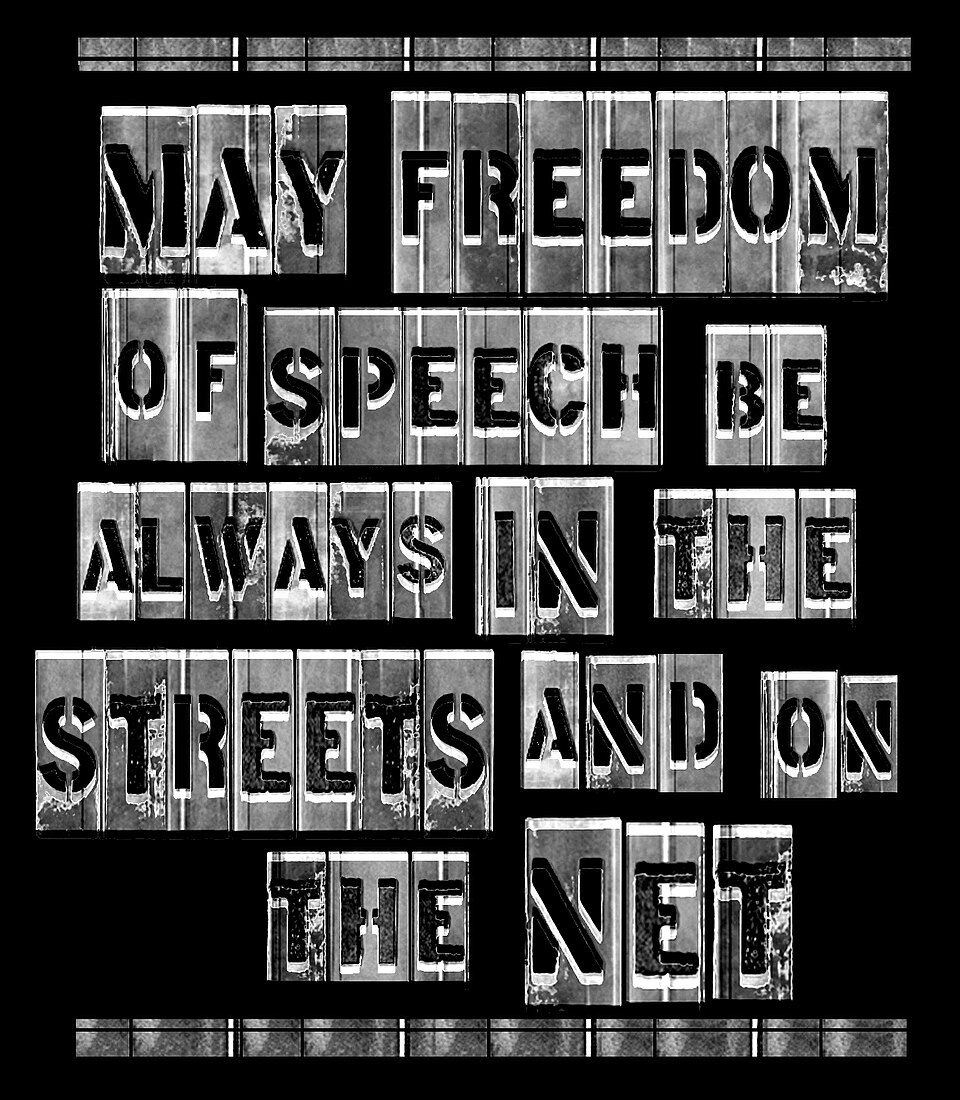
Freedom of speech is one of those rights that can seem obvious until it is challenged.
Most people support the principle in the abstract.
The difficult question comes when somebody says something we strongly dislike.
What happens when the opinion is offensive?
What happens when it criticizes the government?
What happens when it challenges a powerful institution?
What happens when it is unpopular?
What happens when it is expressed online to thousands or millions of people?
And what happens when protecting one person’s expression appears to conflict with another person’s privacy, reputation, security, or dignity?
These questions have become increasingly important in the digital age.
Social media has radically changed who can speak, how quickly information travels, and how large an audience an individual can reach. A person with a phone can publish an opinion to the world without owning a newspaper, television station, or publishing company.
That is an extraordinary expansion of human communication.
It also creates extraordinary challenges.
The fundamental principle remains remarkably important:
People should be free to express opinions and ideas without unjustified interference.
Freedom of Speech Is a Fundamental Right
Freedom of expression is not simply a modern political slogan.
It is recognized as a fundamental human right.
Article 19 of the International Covenant on Civil and Political Rights protects the right to hold opinions without interference and the right to seek, receive and impart information and ideas through any media and across borders. The UN Human Rights Committee has described freedom of opinion and expression as essential to a free and democratic society and as an important foundation for transparency and accountability.
The European Convention on Human Rights provides a corresponding protection in Article 10.
The Council of Europe describes freedom of expression as one of the essential foundations of democratic society and emphasizes that the protection extends to political speech, public debate, artistic expression, journalism, and the right to receive and impart information.
This matters because democracy requires more than elections.
People need to be able to discuss political ideas.
They need to criticize politicians.
They need to question institutions.
Journalists need to investigate.
Artists need to create.
Researchers need to debate.
Citizens need to disagree.
Without those possibilities, democratic participation becomes much weaker.
Freedom of Speech Includes Unpopular Speech
One of the most important principles of freedom of expression is that protection cannot be limited only to statements that everyone likes.
The Council of Europe explains that Article 10 protects expression that may offend, shock, or disturb, as well as speech that is welcomed or regarded as inoffensive. It provides particularly strong protection for political speech and matters of public interest.
This principle is uncomfortable by design.
A right that protects only popular opinions is not much of a protection.
The purpose of freedom of speech becomes most obvious when someone says something unpopular.
Democratic society depends on the possibility that conventional wisdom can be challenged.
Sometimes the speaker will be wrong.
Sometimes the criticism will be unfair.
Sometimes the argument will be badly expressed.
Sometimes the audience will strongly disagree.
Those situations do not automatically justify censorship.
The answer to bad arguments is often more speech.
Counterarguments.
Debate.
Fact-checking.
Criticism.
Persuasion.
Freedom of Speech Is Not the Freedom to Do Anything
Freedom of expression is fundamental, but it is not unlimited.
Article 10 of the European Convention allows restrictions when they are prescribed by law and are necessary in a democratic society for legitimate purposes, such as protecting national security, public safety, health, morals, or the rights and reputations of others. The Council of Europe emphasizes that restrictions must satisfy principles including legality, necessity, and proportionality.
The International Covenant on Civil and Political Rights uses a similar framework.
Article 19 protects expression but permits certain restrictions where they are provided by law and are necessary for specified legitimate purposes, including protecting the rights or reputations of others and certain public interests.
This is an important distinction.
Freedom of speech does not mean:
“I can do absolutely anything with words and nobody can respond.”
It means that restrictions on expression require a legitimate legal basis and must satisfy the applicable human-rights standards.
That distinction is essential in a democratic society.
Croatia and Freedom of Expression
For those of us in Croatia, freedom of expression is not an abstract international concept.
It is protected directly by the Constitution of the Republic of Croatia.
Article 38 guarantees freedom of thought and expression. It specifically identifies freedom of the press and other means of communication, freedom of speech and public expression, and the freedom to establish public communication institutions.
The Constitution also explicitly prohibits censorship and guarantees journalists freedom of reporting and access to information.
At the same time, the Croatian Constitution recognizes boundaries.
Article 39 prohibits incitement to war or violence and incitement to national, racial, religious or other forms of intolerance.
This demonstrates an important principle:
Freedom of expression and protection from serious harm are not necessarily opposing concepts.
The challenge is determining where restrictions are justified and ensuring that they do not become a pretext for suppressing legitimate criticism.
The Internet Changed Everything
The Internet transformed freedom of expression.
Before social media, publishing to a large audience generally required access to traditional media.
Today, almost anyone can publish.
A smartphone can function as:
a camera,
a recording studio,
a newspaper,
a broadcasting station,
a publishing platform,
and a communications network.
This democratization of communication has enormous advantages.
A person with limited resources can document an event.
An independent journalist can publish without owning a television station.
An activist can communicate directly with supporters.
An artist can reach an international audience without a traditional record label or publisher.
A small organization can communicate globally.
This is an extraordinary expansion of individual agency.
But the same infrastructure creates new problems.
Social Media and the New Public Square
Social-media platforms have effectively become part of the modern public sphere.
Political debates happen there.
Journalism happens there.
Activism happens there.
Artists distribute their work there.
Ordinary people document events there.
For many people, social media is where they first encounter breaking news.
This raises a difficult question:
Who determines what people are allowed to say in these spaces?
The answer is complicated because online platforms are generally private companies rather than governments.
Their terms of service can impose rules beyond the minimum legal requirements of a state.
At the same time, their enormous social importance means that moderation decisions can have consequences for public debate.
Europe has therefore increasingly attempted to create a regulatory framework that protects users’ rights while addressing illegal content and systemic platform risks.
The Digital Services Act
The European Union’s Digital Services Act (DSA) is an important part of this new environment.
The European Commission states that the DSA includes rules intended to protect fundamental rights online, including freedom of expression, freedom of information, and freedom of opinion. It also introduces greater transparency around content moderation and certain platform recommendation systems.
This is an important development because platform governance is no longer simply a private technological question.
It has become a fundamental-rights question.
If a platform removes content, users need mechanisms to understand decisions and challenge them in the circumstances covered by the DSA.
At the same time, governments still have to respect fundamental rights when seeking to regulate or restrict online expression. The Council of Europe emphasizes that government demands directed at internet intermediaries must satisfy legality and proportionality requirements under Article 10.
The Problem of Censorship
Censorship can take many forms.
The classic image is a government physically preventing a newspaper from publishing.
Modern censorship can be more complicated.
It can involve:
legal restrictions;
blocking websites;
pressure on journalists;
restrictions on access to information;
unlawful surveillance;
platform moderation;
internet shutdowns;
intimidation;
or economic and administrative pressure.
Not every content removal is censorship in the legal sense.
A private platform enforcing its terms of service is not automatically equivalent to a government banning speech.
But the distinction should not prevent serious discussion of how digital platforms exercise enormous influence over public discourse.
The goal should be transparent, rights-respecting governance rather than arbitrary control.
Disinformation Creates a Genuine Challenge
Freedom of speech has another difficult counterpart: false information.
The Internet allows people to distribute inaccurate information rapidly.
Some misinformation is simply the result of mistakes.
Some is deliberate.
Disinformation can be organized to deceive audiences, influence elections, damage reputations, or undermine public trust.
The European Union has developed policies addressing disinformation while explicitly stating that counter-disinformation efforts should uphold freedom of expression and increase transparency. The EU’s Code of Conduct on Disinformation was incorporated into the framework of the Digital Services Act in 2025.
This creates a delicate balancing exercise.
Governments and platforms need to address genuine harms.
But the existence of misinformation should not become a justification for suppressing legitimate disagreement.
The central question should always be:
What is the lawful and proportionate response?
The Danger of Calling Everything “Misinformation”
There is also a danger in using terms such as “misinformation” or “disinformation” too casually.
A factual error is not necessarily a coordinated disinformation operation.
A controversial interpretation is not automatically false information.
A political opinion is not a fact claim.
A prediction is not necessarily misinformation because it turns out to be wrong.
These distinctions matter.
Public debate becomes weaker when people stop distinguishing between: facts, opinions, interpretations, hypotheses, predictions, and deliberate deception.
A healthy society should encourage people to make those distinctions.
The Role of Journalism
Freedom of speech and freedom of the press are deeply connected.
Professional journalism provides a mechanism for investigating events, verifying information, interviewing sources, checking documents, and holding powerful institutions accountable.
The Council of Europe specifically recognizes the importance of media protection under Article 10 because journalism plays a key role in defending freedom of expression.
A functioning media environment therefore requires more than simply allowing newspapers to exist.
Journalists need: access to information; protection from unjustified interference; the ability to protect legitimate sources; reasonable editorial independence; and a legal environment in which investigative reporting is possible.
At the same time, journalism carries responsibilities.
Accuracy matters.
Corrections matter.
Source verification matters.
Fairness matters.
Freedom of the press does not eliminate professional standards.
Artists Have Freedom of Expression Too
Freedom of expression is not limited to political speeches.
Art is expression.
Music is expression.
Poetry is expression.
Film is expression.
Photography is expression.
Satire is expression.
The European human-rights framework recognizes artistic expression as protected under Article 10.
This is particularly important because artists frequently address subjects that conventional political language cannot communicate effectively.
A song can challenge social norms.
A painting can criticize authority.
A poem can express grief or anger.
Satire can expose hypocrisy.
Creative expression can ask questions rather than provide answers.
Protecting artistic freedom therefore protects an important part of public culture.
Political Speech Deserves Special Attention
Political expression is particularly significant.
Citizens must be able to criticize governments and public officials.
They must be able to advocate for changes in law.
They must be able to support political movements.
They must be able to oppose them.
They must be able to discuss corruption allegations, public spending, institutional performance, elections, human rights, foreign policy, environmental policy, healthcare, education and virtually every other matter of public interest.
The Council of Europe explicitly recognizes the importance of political speech and public-interest debate under Article 10.
That is one reason restrictions on political expression deserve especially careful scrutiny.
A democratic government cannot reasonably require citizens to praise it.
The Right to Criticize Authority
One of the healthiest characteristics of a democracy is the ability to criticize institutions without automatically becoming an enemy of the state.
Government is supposed to be accountable to citizens.
Parliament is supposed to be debated.
Public spending is supposed to be scrutinized.
Policies are supposed to be criticized.
Institutions are supposed to be questioned.
Journalists are supposed to investigate.
Citizens are supposed to complain.
That is not a failure of democracy.
That is democracy functioning.
A society becomes dangerous when criticism itself becomes treated as disloyalty.
Freedom of Speech Requires the Freedom to Disagree
There is another aspect that is sometimes forgotten.
Freedom of speech protects not only the speaker.
It protects the audience.
People have a right to seek and receive information and ideas, not merely to produce them. Article 19 of the ICCPR explicitly protects seeking, receiving and imparting information and ideas through any media.
That means freedom of expression supports a broader ecosystem of public knowledge.
If citizens cannot access competing views, they cannot make genuinely informed decisions.
If journalists cannot investigate, citizens lose information.
If researchers cannot debate, scientific understanding becomes weaker.
If artists cannot experiment, culture becomes poorer.
If activists cannot organize, civil society becomes weaker.
Free expression therefore benefits society even when individual opinions are unpopular.
The Rise of Generative AI
The newest challenge is artificial intelligence.
Generative AI can produce text, images, audio and video at remarkable speed.
This can create enormous opportunities for creativity and communication.
But it also creates new risks.
Deepfakes can imitate real people.
Voice cloning can make fabricated audio sound authentic.
Synthetic images can be presented as photographs.
Automated systems can generate enormous quantities of content.
The Council of Europe has specifically examined generative AI’s implications for freedom of expression, identifying issues including deepfakes, voice cloning, disinformation, opinion manipulation and the possibility that AI could affect the diversity and reliability of information available to the public.
This makes information literacy more important than ever.
The answer to technological deception cannot simply be eliminating controversial expression.
It requires better verification.
Better provenance.
Better transparency.
Better media literacy.
And, where appropriate, carefully designed regulation.
The New Problem of Deplatforming
Another modern issue is deplatforming.
Removing somebody from a platform can dramatically reduce their ability to reach an audience.
Sometimes there may be legitimate reasons for removal.
Platforms have to deal with threats, illegal material, harassment, spam, fraud and other forms of abuse.
But difficult questions arise when moderation decisions concern political debate or controversial ideas.
Who should decide?
What procedures should exist?
Should users receive explanations?
Should they be able to appeal?
How should automated moderation errors be corrected?
The EU’s digital regulatory framework increasingly addresses transparency and user rights in these areas.
A mature digital society should expect moderation systems to be accountable, transparent and subject to meaningful safeguards.
Online Speech Is Still Real Speech
There is sometimes a tendency to treat online speech as less important than speech in the physical world.
That distinction no longer makes much sense.
An online post can influence an election.
A video can document abuse.
A journalist can publish an investigation entirely online.
An activist can organize a movement through messaging platforms.
An artist can release an album internationally from a bedroom.
An ordinary person’s testimony can reach millions.
Digital communication is part of real life.
That means fundamental-rights protections must function in the digital environment as well.
The Council of Europe explicitly states that Article 10 applies to the Internet.
Freedom and Responsibility
Freedom of expression carries responsibilities.
That is recognized directly in international human-rights law.
Article 19 of the ICCPR states that freedom of expression carries special duties and responsibilities.
Freedom should therefore be exercised with an understanding that other people also have rights.
There is a meaningful difference between: criticizing someone, and deliberately threatening them.
There is a difference between: expressing an unpopular opinion, and inciting violence.
There is a difference between: investigative reporting, and deliberately inventing facts about someone.
There is a difference between: political satire, and targeted harassment.
The protection of freedom of expression requires recognizing those distinctions rather than collapsing everything into a simple “free speech versus censorship” argument.
The Danger of Chilling Effects
One of the greatest threats to freedom of speech is not necessarily direct censorship.
It is self-censorship caused by fear.
A person may decide not to speak because they fear: losing their job, being harassed, being threatened, being targeted online, being publicly humiliated, being sued, or becoming the subject of a campaign of abuse.
The result can be a society where people technically possess freedom of expression but increasingly choose silence.
This is called a chilling effect.
Protecting free expression therefore involves more than preventing government censorship.
It also involves creating an environment in which people can participate in public debate without disproportionate intimidation or retaliation.
The Importance of Privacy
Freedom of speech and privacy are also connected.
People are more likely to participate openly when they have reasonable control over their personal information.
The Croatian Constitution separately protects privacy of communications and personal data.
This matters in the digital age because personal information can be weaponized.
A political disagreement should not automatically expose someone’s private life to the entire Internet.
A journalist should be able to protect legitimate sources.
An activist should be able to communicate securely.
An ordinary person should not have to choose between participating in public life and surrendering every aspect of their privacy.
The Importance of Media Literacy
The strongest defense of free expression is not simply allowing everybody to speak.
It is helping people become better listeners and readers.
Media literacy means asking:
Who published this?
What evidence supports it?
Is the source identifiable?
Is there independent confirmation?
Is this fact or opinion?
What context may be missing?
Has the information been manipulated?
Could an image or recording be synthetic?
What incentives might the source have?
These questions do not suppress free speech.
They make society better at processing it.
Free Speech Requires Courage
Historically, many social changes began with people saying things that were uncomfortable at the time.
Ideas that eventually became accepted were sometimes initially regarded as strange, radical, offensive, or unrealistic.
That does not mean every controversial idea is correct.
It means society needs room for ideas to be tested.
The process requires disagreement.
Evidence can defeat bad arguments.
Experience can challenge bad theories.
Time can expose errors.
Debate can improve good ideas.
Suppressing an idea is sometimes easier than answering it.
But democratic societies should generally prefer argument over silence.
Defending Freedom of Speech Means Defending It for People We Disagree With
This may be the most difficult principle of all.
It is easy to support free speech when the speaker agrees with us.
The real test comes when the speaker does not.
If we defend freedom only for our political allies, then we are not really defending freedom of speech.
We are defending our side.
The stronger principle is universal:
The rights we want for ourselves should also exist for people with whom we profoundly disagree.
That does not require agreeing with them.
It requires recognizing their right to participate within the bounds established by law.
Freedom of Speech in the Future
The next decade will bring new challenges.
Artificial intelligence will change how information is produced.
Algorithms will continue influencing what people see.
Platforms will evolve.
Political communication will become increasingly digital.
Synthetic media will become more difficult to distinguish from authentic media.
Governments will continue attempting to address online harms.
Technology companies will continue developing their own rules.
These changes will force societies to repeatedly reconsider the balance between expression, safety, privacy and accountability.
The fundamental principles should remain stable even as technology changes.
Restrictions should have a legal basis.
They should pursue legitimate objectives.
They should be necessary.
They should be proportionate.
And they should not become disguised mechanisms for suppressing legitimate political criticism.
The Council of Europe continues to emphasize these principles when discussing both traditional expression and emerging digital technologies.
Why Freedom of Speech Matters to Me
Freedom of speech is ultimately about more than politics.
It is about the ability to tell your story.
To write.
To make music.
To criticize.
To question.
To disagree.
To investigate.
To create.
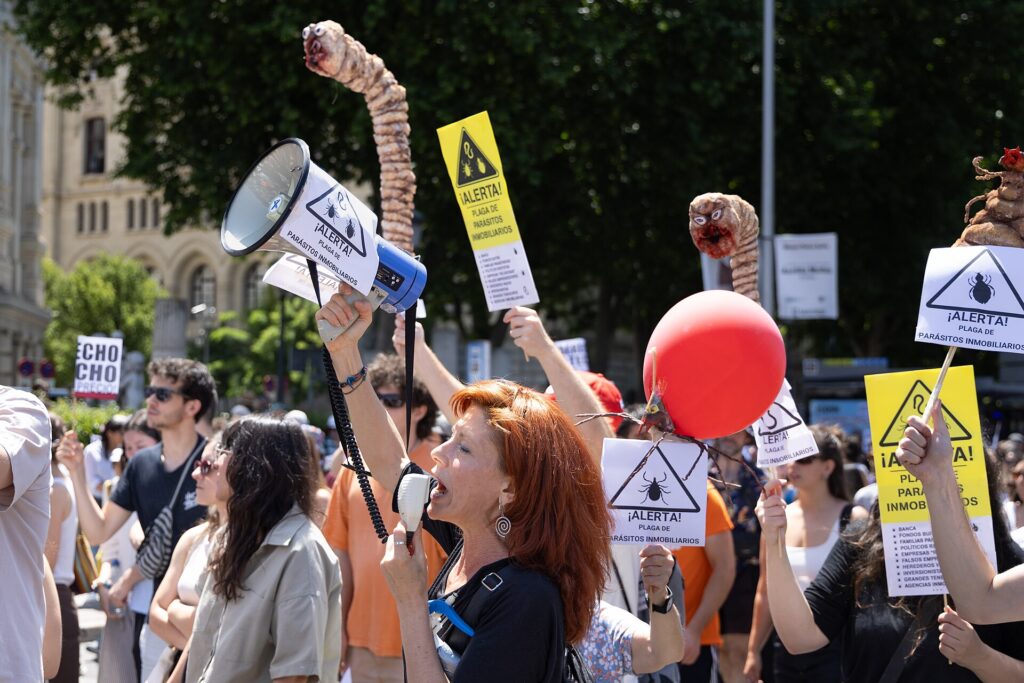
To protest peacefully.
To change your mind.
To learn from someone.
To make an argument and have somebody answer it.
These are ordinary human activities.
They are also essential components of a free society.
A person should not need permission to have an opinion.
And a democratic society should not fear disagreement.
Conclusion
Freedom of speech is not the promise that everyone will agree with you.
It is the principle that disagreement can exist without automatically becoming repression.
It is the ability to question authority without automatically becoming an enemy.
It is the ability of journalists to investigate.
It is the ability of artists to create.
It is the ability of citizens to criticize.
It is the ability of activists to advocate.
It is the ability of researchers to debate.
And it is the ability of ordinary people to participate in the society around them.
The digital era has made this freedom more powerful than ever.
It has also made protecting it more complicated than ever.
We have to confront disinformation without destroying legitimate debate.
We have to regulate powerful platforms without giving governments unlimited control over speech.
We have to combat genuine threats without treating criticism as a threat.
We have to address online abuse without making ordinary disagreement impossible.
We have to confront deepfakes without assuming that every controversial image is fabricated.
And we have to preserve privacy so that participation in public life does not require surrendering one’s entire personal existence.
None of these problems have simple answers.
But one principle remains worth defending:
A free society must leave room for people to speak, question, criticize, create and disagree.
Not only when their opinions are convenient.
Especially when they are not.
Freedom of speech is not merely a right written in a constitution or treaty.
It is a culture.
It is a habit.
It is the willingness to tolerate disagreement.
It is the willingness to answer ideas with ideas.
And ultimately, it is the belief that society becomes stronger… not weaker, when people are free to think and speak for themselves.
That freedom is worth protecting.