Activism takes place in public.
That is one of the defining characteristics of civic participation.
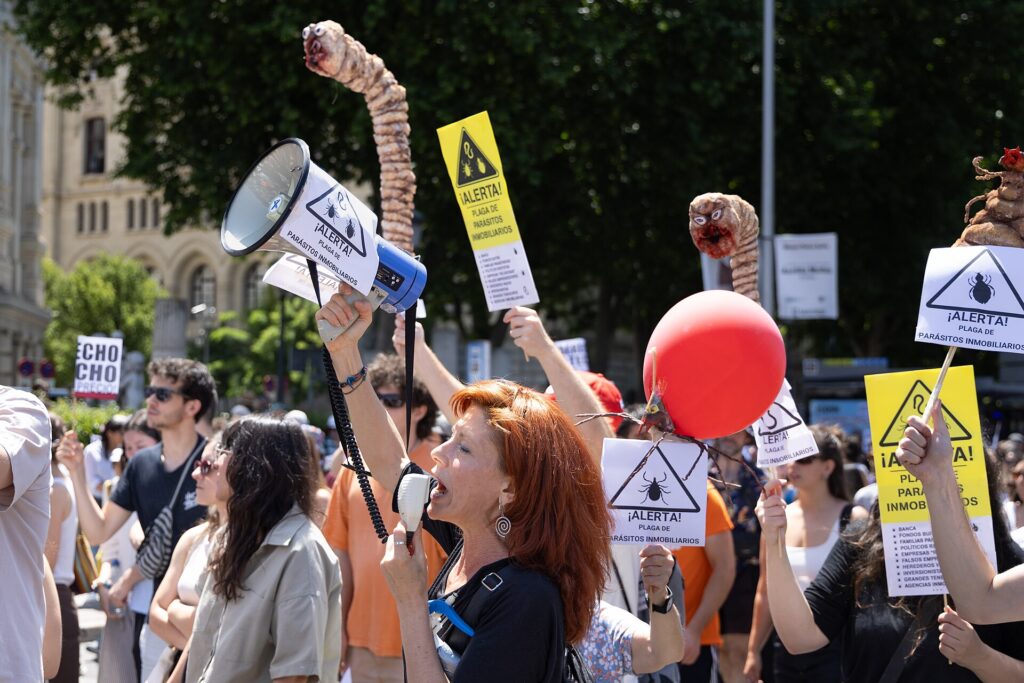
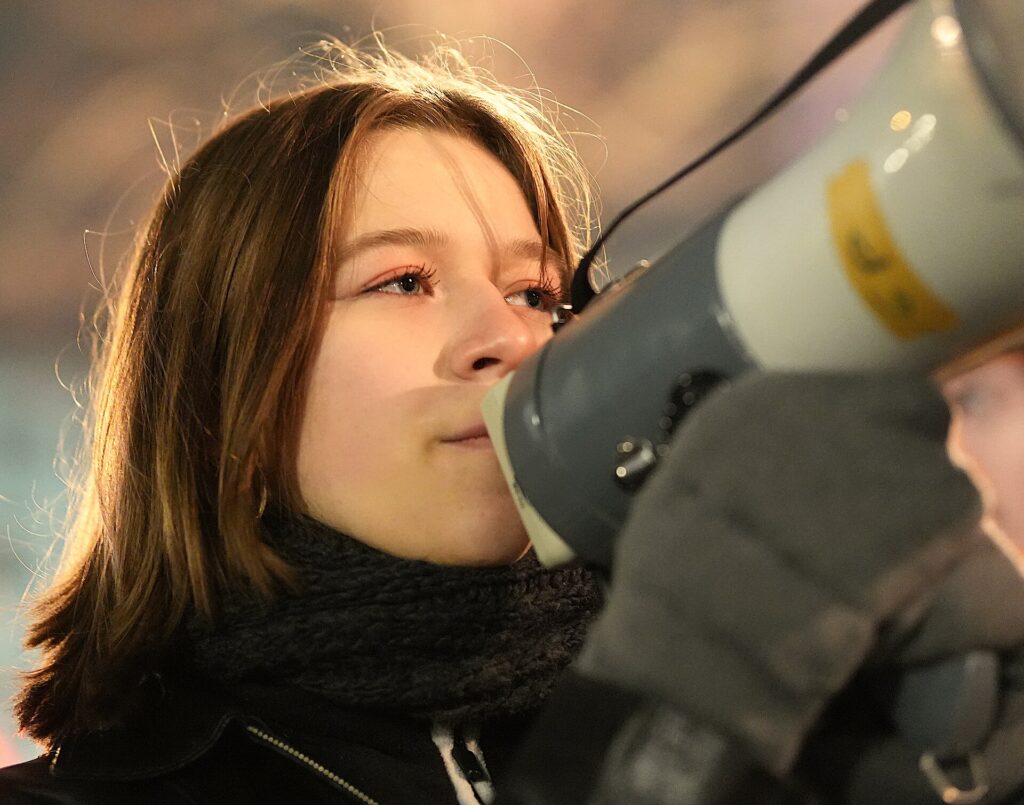
People gather in streets and squares. They march. They hold signs. They perform political theatre. They use music, speeches and loudspeakers. They organize demonstrations and public campaigns.
These activities can be perfectly legitimate forms of freedom of expression and assembly.
But public space can also be used to intimidate people.
There is an important distinction between ordinary political expression and conduct deliberately intended to harass, intimidate, exhaust or frighten a particular person.
That distinction becomes especially important when discussing terms such as street theater, noise campaigns, public harassment, provocation, and coordinated intimidation.
Some of these expressions are informal rather than standardized legal categories. Others describe genuine phenomena documented by human-rights organizations and researchers.
The safest way to approach them is therefore to examine the underlying behavior rather than automatically assigning a label to it.
Street Theater Has Two Very Different Meanings
The phrase street theatre normally refers to performance in public spaces.
It has a long history in political activism.
Activists have used theatre, music, dance, puppets, costumes, satire and other performance techniques to attract attention to political or social causes.
Contemporary theatre research continues to treat street theatre as a legitimate form of activist practice and political communication.
There is therefore nothing inherently suspicious about seeing people perform in a street or public square.
A demonstration with costumes is not harassment simply because it is theatrical.
A protest using loudspeakers is not inherently harassment.
A political performance may intentionally be provocative without being unlawful.
The issue changes when public activity is allegedly directed at a specific individual with the purpose of intimidating, following, humiliating, disrupting or frightening them.
That is a different question.
When Public Performance Becomes Harassment
The difference is primarily one of context, targeting and conduct.
Imagine a political group holding a loud public performance in a city square.
That is ordinary public expression.
Now imagine people repeatedly appearing outside one individual’s home, workplace or regular locations, directing remarks toward that person, filming them, shouting at them or deliberately disrupting their daily life.
The relevant issue is no longer simply whether the activity is theatrical.
It is whether the conduct constitutes unlawful harassment, stalking, intimidation, or another form of abuse.
The same outward behavior can therefore have very different meanings depending on who is being targeted, how frequently it occurs, what is being communicated, and whether there is evidence of deliberate unwanted contact.
Noise as a Form of Pressure
Sound can be extremely intrusive.
Persistent shouting, amplified music, repeated banging, loud vehicle noise or other disturbances can interfere with sleep, concentration, work and ordinary life.
Noise can therefore become a genuine harassment mechanism when it is deliberately directed at a person and repeatedly used to interfere with their ability to live normally.
However, the existence of unusual noise does not by itself establish a coordinated campaign.
A loud neighbor is not automatically part of an organized operation.
Construction noise is not automatically intentional harassment.
A party is not evidence of surveillance.
Traffic noise is not evidence of targeting.
This distinction is essential.
The strongest evidence of deliberate harassment comes from documented patterns, not from the mere fact that something is irritating or unusual.
Why Noise Can Be Psychologically Effective
Persistent unwanted noise can have effects beyond simple annoyance.
It can interrupt sleep.
It can interfere with work.
It can increase stress.
It can make a person reluctant to remain in their home.
It can create anticipation: the individual begins wondering when the disturbance will happen again.
That anticipatory stress can itself become burdensome.
For a person already under pressure, repeated environmental disruption can become especially exhausting.
This is one reason persistent harassment tactics do not necessarily have to involve physical violence.
The objective can be to make ordinary life increasingly difficult.
“Noise Campaign” Is Not a Universal Legal Category
The expression noise campaign is often used online to describe allegedly coordinated noise intended to disturb a particular individual.
But it is not a single universally recognized legal or academic category.
Different situations can involve very different causes.
A genuine nuisance can arise from ordinary neighborhood activity.
A dispute between neighbors can generate repeated noise.
A person can intentionally create disturbances.
A criminal offender can deliberately harass somebody.
Or completely unrelated events can occur close together and appear connected.
The appropriate question is therefore not:
“Was there noise?”
It is:
“What evidence shows who caused it, whether it was intentional, whether it was directed at a particular person, and whether the incidents are connected?”
That is the standard that turns an impression into something investigators can actually examine.
Public Provocation
Another tactic sometimes discussed in relation to activism and harassment is provocation.
Provocation can take many forms: confrontational language; deliberately inflammatory comments; repeated unwanted contact; public mockery; attempts to provoke an angry reaction; or disruptive behavior designed to make another person appear unreasonable.
This matters because an individual who reacts emotionally to persistent provocation can then be portrayed as the problem.
A person who has been repeatedly antagonized might finally lose their temper.
Observers who did not see what happened beforehand may see only the final reaction.
That can create a distorted public narrative.
For activists, reputation can be extremely important.
A person who is publicly known for aggressive behavior may find it harder to convince others that they were being targeted.
The “Reaction Trap”
One of the most important things activists can learn from harassment situations is to avoid the reaction trap.
Suppose somebody repeatedly insults an activist.
The activist eventually responds angrily.
The resulting argument is filmed.
Only the activist’s reaction is uploaded.
The original provocation disappears from the story.
Suddenly the person who was responding appears to be the aggressor.
This is why being calm matters.
If an incident genuinely involves harassment, preserving what happened before, during and after the confrontation can be far more useful than simply recording the final moment.
Public Humiliation
Another documented form of activist harassment is public reputational attack.
Human-rights organizations have repeatedly documented smear campaigns, intimidation and public harassment against activists and defenders.
Front Line Defenders’ current global analysis identifies threats and other harassment, surveillance and legal action among recurring violations against defenders.
Public humiliation can take many forms: derogatory posters; hostile social-media posts; defamatory accusations; exposure of private information; mockery at public events; or coordinated attempts to portray an activist as dangerous or dishonest.
The goal can be to discourage other people from associating with the person.
That can create social isolation even without any direct physical threat.
Smear Campaigns
Smear campaigns are among the best-documented forms of pressure against activists.
Amnesty International has documented cases in which activists and human-rights defenders were subjected to public harassment, death threats and defamatory campaigns because of their work.
More recent cases documented by Front Line Defenders likewise include defamation, smear campaigns, cyber-attacks and threats against human-rights defenders.
A smear campaign can be particularly effective because it does not necessarily require everybody to believe the accusation.
It may be enough to make people uncertain.
An employer may become uncomfortable.
A potential collaborator may withdraw.
A friend may become cautious.
A journalist may decide not to engage.
The result can be social isolation without any formal order being issued.
Doxxing
Doxxing involves publishing or exposing personal information, such as an address, phone number, family information or other identifying data, in a way that can facilitate harassment or intimidation.
It can be particularly dangerous for activists because public availability of personal information can transform an online dispute into a physical-world risk.
Doxxing is now recognized in contemporary human-rights reporting as one of the tools that can be used in transnational repression and digital harassment.
It also creates a bridge between online and offline intimidation.
Someone does not have to threaten a person directly.
Publishing enough personal information can allow others to do the threatening.
Online Harassment Can Overflow Into Real Life
Modern harassment does not respect the boundary between online and offline spaces.
An activist may experience: hostile messages; fake accounts; public accusations; doxxing; threats; surveillance; and then unwanted encounters in physical spaces.
Those incidents may be connected.
They may also be unrelated.
That is why careful investigation is essential.
Technology makes it easier to coordinate real harassment, but it also makes misidentification easier.
A fake account can impersonate someone.
A photograph can be taken out of context.
A screenshot can be edited.
An anonymous message can come from almost anywhere.
The existence of digital material therefore does not eliminate the need for verification.
Surveillance and Following
Physical surveillance can be another serious concern for activists.
Human-rights organizations document surveillance as a recurring violation against defenders.
Front Line Defenders’ 2025/26 analysis specifically identifies surveillance and digital threats among the risks faced by activists.
Surveillance can involve: physical observation; monitoring communications; phone surveillance; digital monitoring; or other forms of information gathering.
But again, an important distinction is necessary.
Seeing the same person twice does not establish surveillance.
Seeing the same car twice does not establish surveillance.
A person standing nearby does not establish a coordinated operation.

Repeated Unwanted Contact
A much clearer category is persistent unwanted contact.
This can include: repeated calls; repeated messages; unwanted visits; following; attempts to communicate through friends; or repeated appearances at places associated with the target.
Whether such behavior is illegal depends on the circumstances and applicable law.
But from a personal-safety perspective, persistent unwanted contact is worth documenting carefully.
The most useful record is objective: date; time; place; what happened; who was present; what was said; and whether there is supporting evidence.
Using Third Parties
Another potential harassment mechanism is involving other people.
A person might be contacted indirectly through: friends; coworkers; relatives; neighbors; online communities; or organizations.
This can make the source of the pressure harder to identify.
However, third-party involvement also creates a major evidentiary problem.
A person who communicates with an activist may have completely innocent reasons for doing so.
They may not know what another person is doing.
They may be acting independently.
They may have received misleading information.
Therefore, it is not responsible to assume that everybody around a target is participating in a coordinated campaign.
The connection has to be established.
Intimidation Through Numbers
One person can be intimidating.
A crowd can be much more intimidating.
This is why activists can sometimes face pressure through multiple individuals appearing together.
Human-rights organizations document cases of defenders being subjected to group intimidation, threats, harassment and attacks.
Front Line Defenders currently describes threats and intimidation as among the most common strategies used against human-rights defenders, including threats involving family members.
The important distinction is again between organized harassment and legitimate collective activity.
A group of protesters criticizing someone publicly is not automatically harassment.
A group intentionally surrounding an individual, preventing them from leaving, threatening them or repeatedly targeting them may raise very different legal and safety concerns.
Context matters.
Public “Performances” Designed to Provoke
Sometimes harassment is described as theatrical because the behavior appears exaggerated or deliberately conspicuous.
A group may speak loudly.
People may deliberately draw attention to themselves.
Someone may repeatedly make gestures toward a particular individual.
A staged-looking interaction may occur.
The term “street theater” can describe this.
The appropriate approach is to document exactly what happened rather than immediately deciding that a hidden organizer was responsible.
This distinction matters because actual political street theatre is a common and legitimate activist technique.
Researchers describe it as a form of public political performance, sometimes deliberately theatrical and provocative.
What Makes Targeted Harassment Different?
Several elements become more significant when assessing whether conduct is actually targeted harassment:
Persistence.
Does it happen repeatedly?
Direction.
Is a specific individual actually being targeted?
Intent.
Is there evidence that the conduct is deliberate?
Coordination.
Is there evidence that different participants are working together?
Impact.
Is the conduct causing fear, substantial disruption, or other harm?
Corroboration.
Can independent evidence establish what happened?
The more of these elements that can be established, the stronger the case for treating multiple incidents as a connected pattern.
Documentation Is More Valuable Than Interpretation
Suppose an activist hears repeated loud noises outside their home.
A useful record might say:
“At 22:17, a vehicle stopped outside the building. Loud music was audible for approximately eight minutes. A second vehicle arrived at 22:31. I recorded audio.”
That is useful.
Compare it with:
“A coordinated harassment team used a noise campaign against me.”
The second statement is an interpretation.
It might ultimately turn out to be correct.
But investigators cannot test it effectively unless the underlying facts have been preserved.
Facts first.
Theory second.
Preserve Original Files
Where digital evidence exists, keep the originals.
Don’t rely exclusively on screenshots of screenshots.
Don’t crop away important context.
Don’t alter recordings unnecessarily.
Keep the original message if possible.
Keep the date and time information.
Record where the material came from.
If the material is online, preserve the URL and publication date.
If possible, maintain multiple secure copies.
This turns a personal experience into an evidentiary record.
Avoid Escalation
An important practical principle is to avoid escalating a confrontation.
If someone is behaving aggressively, it is generally safer to preserve evidence and seek appropriate help than to retaliate.
Retaliation can complicate the situation.
It can also create ambiguity about who initiated what.
For an activist, a calm factual record is usually more valuable than a dramatic confrontation.
The Modern Activist Faces a Hybrid Environment
Today’s activists operate simultaneously in physical and digital environments.
A campaign can begin online and move into the street.
A public protest can be filmed and immediately redistributed online.
A smear campaign can begin with a social-media post and then reach employers or family members.
A personal encounter can be recorded and uploaded within seconds.
This hybrid environment can amplify both activism and harassment.
Front Line Defenders’ 2025/26 analysis highlights exactly this mixture of physical and digital pressures, including surveillance, online harassment, threats, cyber-attacks, legal action and other forms of intimidation.
Threats Can Be Subtle
Not every threat is an explicit statement saying:
“I will hurt you.”
Threats can involve implication.
A person might receive: a warning that their employer has been contacted; a statement that someone knows where their family lives; a message containing personal information; a photograph of their home; or repeated references to private activities.
These can be intimidating even without an explicit threat of violence.
Human-rights organizations recognize that threats can concern employment and other adverse consequences, not only physical injury.
Harassment Can Target the Support Network
Activists are not always targeted alone.
Pressure may also affect: partners; family; coworkers; friends; colleagues; or organizations they work with.
This can be particularly effective because the target may decide to stop activism in order to protect others.
Front Line Defenders documents threats against family members as a recurring intimidation tactic.
That is why protection strategies should sometimes consider the wider support network rather than focusing exclusively on the individual activist.
The Goal Can Be Silence
The most important question is:
What is the intended outcome?
Sometimes harassment is simply personal hostility.
Sometimes it is financial.
Sometimes it is criminal.
And sometimes it may be connected to an individual’s public activities.
For human-rights defenders, organizations such as Amnesty International and Front Line Defenders have documented intimidation campaigns explicitly intended to discourage activism or force people to reduce or abandon their work.
The chilling effect is therefore not theoretical.
When people become afraid to speak, organize, travel, publish or attend meetings, civic space becomes smaller.
The Difference Between Criticism and Harassment
Activists also have to tolerate disagreement.
Criticism is not harassment.
A journalist criticizing an activist is not automatically part of a campaign.
A political opponent disagreeing with an activist is not automatically intimidation.
A negative review is not automatically persecution.
The defining question is often the nature and persistence of the conduct.
Democratic societies need room for disagreement.
Harassment begins where behavior crosses into unwanted, threatening, coercive or unlawful conduct.
The Importance of Independent Verification
A person experiencing something disturbing deserves to be taken seriously.
But being taken seriously does not mean that every interpretation must automatically be accepted.
Good investigation does both:
It takes the report seriously.
And it tests the explanation against evidence.
This protects genuine victims while protecting innocent people from false accusations.
That principle is particularly important when discussing alleged organized harassment.
Why Online Discussions Can Become Confusing
The Internet contains enormous amounts of personal testimony about unusual experiences.
Some accounts describe genuine crimes.
Others describe ordinary misunderstandings.
Some involve mental-health difficulties.
Some are political propaganda.
Some are simply incomplete information.
The existence of many stories does not automatically establish a coordinated phenomenon.
That is why primary evidence matters.
Official records.
Police reports.
Court documents.
Authentic communications.
Independent witnesses.
Forensic evidence.
Verified technical data.
These are stronger foundations than anonymous anecdotes.
A Useful Framework for Activists
When something unusual happens, ask:
What exactly happened?
What can I prove?
What did I personally observe?
What did somebody else tell me?
What is my interpretation?
Are there alternative explanations?
Is there evidence connecting separate incidents?
Can someone independent verify part of the event?
That framework is useful precisely because it does not require either automatic belief or automatic dismissal.
What Responsible Activism Looks Like
Activism is strongest when it remains grounded in evidence.
An activist who documents problems carefully is more credible.
An activist who corrects mistakes is more credible.
An activist who distinguishes fact from allegation is more credible.
An activist who refuses to falsely accuse innocent people is more credible.
And an activist who understands their legal rights is better equipped to defend those rights.
This applies equally to claims about harassment.
Conclusion
Public space can be used for communication, protest and political theatre.
It can also become the setting for intimidation and harassment.
Street theatre itself is not harassment.
It is a legitimate form of political performance used by activists around the world.
Noise itself is not evidence of a campaign.
Noise becomes relevant when there is evidence that it is deliberately directed at somebody as part of persistent unwanted conduct.
The same principle applies to public provocation, repeated appearances, online harassment, smear campaigns, doxxing and other troubling behavior.
Some forms of harassment are very real and extensively documented.
Front Line Defenders’ latest global analysis records threats, harassment, surveillance, legal action and digital attacks against human-rights defenders around the world.
Amnesty International and other human-rights organizations have also documented intimidation campaigns intended to make activists afraid to continue their work.
The responsible response is therefore neither to dismiss unusual experiences nor to automatically attribute them to a coordinated hidden organization.
It is to document, preserve, verify and investigate.
A public performance is not automatically harassment.
A loud noise is not automatically a campaign.
A strange encounter is not automatically surveillance.
But persistent targeted conduct deserves to be taken seriously.
That distinction is essential for activists, journalists, human-rights defenders, law-enforcement professionals and ordinary citizens alike.
Because protecting civic space requires two things at the same time: the freedom to participate peacefully in public life, and the right to be protected from genuine intimidation and harassment.
Both deserve protection.
Examples/explanations of street theater, organized harassment and stalking by proxy.