
Modern biology has given humanity an extraordinary ability to understand, manipulate, and potentially transform living systems.
That capability has produced enormous benefits.
Vaccines have saved millions of lives.
Antiviral medicines have transformed the treatment of previously devastating diseases.
Molecular biology has made it possible to investigate how pathogens spread, how they interact with cells, and how immune systems respond to infection.
But scientific capability also creates a difficult question:
Just because we can perform a biological experiment, should we always perform it?
That question is at the center of the long-running debate over gain-of-function research, particularly research involving pathogens with pandemic potential.
The phrase “gain of function” is broad.
In biology, it can simply describe a change that gives an organism a new or altered function.
Many kinds of research that could technically be described this way are ordinary and useful.
The controversy concerns a much narrower category: experiments that could enhance characteristics of dangerous pathogens in ways that might increase their potential to cause serious harm.
The National Academies has described the debate as involving a difficult balance between potential scientific and public-health benefits and biosafety and biosecurity risks. The WHO likewise treats certain life-science research as dual-use research because knowledge or techniques with legitimate purposes can potentially be misused, accidentally or deliberately.
This is why high-risk biological research deserves exceptional scrutiny.

CDC worker in a maximum-containment virology laboratory, 1987.
What Does “Gain of Function” Actually Mean?
The terminology matters.
In genetics and virology, a gain-of-function mutation can mean that a gene product acquires a new molecular function or an altered pattern of expression.
That broad scientific meaning is much wider than the policy debate surrounding high-risk pathogen research.
Public discussion often uses “gain-of-function research” as though it refers to one single activity.
It does not.
There are many different kinds of experiments and many different levels of risk.
Some experiments may involve harmless organisms.
Some may investigate basic biological mechanisms.
Others can involve pathogens for which changes in pathogenicity, transmissibility, host range, or other characteristics could be consequential.
The greatest concern is therefore not the label itself.
It is the hazard created by a particular experiment and the consequences if something goes wrong or the resulting knowledge or biological material is misused.
Why High-Risk Research Is Different
A dangerous pathogen does not need to be deliberately weaponized for an accident to have serious consequences.
A sufficiently consequential biological event could result from a combination of:
- an experimental error;
- a containment failure;
- inadequate safety procedures;
- equipment failure;
- an unrecognized biological property;
- poor institutional oversight;
- theft or unauthorized access;
- or deliberate misuse.
The WHO’s global framework for responsible life sciences explicitly identifies risks arising from accidents, inadvertent actions, and deliberate misuse. It recommends managing these risks through laboratory biosafety, laboratory biosecurity, and oversight of dual-use research.
That distinction is fundamental.
Biosafety asks, broadly, how to prevent accidental exposure or release.
Biosecurity asks how to prevent unauthorized access, theft, loss, or deliberate misuse.
Dual-use oversight asks a still more difficult question:
Should certain research be performed in the first place, given the benefits and the possible consequences?
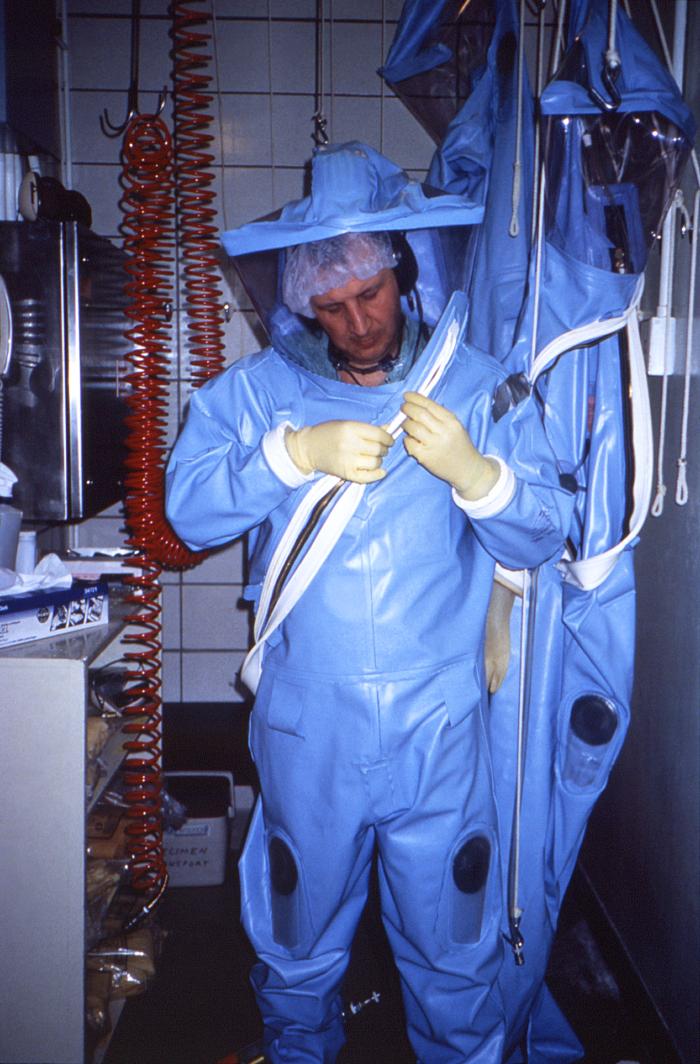
A CDC photograph showing a laboratorian preparing to enter an earlier maximum-containment facility.
The Asymmetry of Biological Risk
One of the strongest arguments for caution is the potential asymmetry between benefits and harms.
The benefit of an experiment may be incremental.
The downside of a severe biological accident could be enormous.
That does not automatically mean the research should be prohibited.
It means the risk assessment has to consider more than the immediate scientific value.
The National Academies’ work on gain-of-function research emphasized the need to evaluate both risks and benefits and highlighted the importance of considering the consequences of newly created strains, alternative research approaches, global distribution of risks and benefits, and uncertainties in risk assessment.
In other words, the question is not:
“Could this experiment teach us something?”
The question is:
“Is the knowledge worth the additional biological risk, and is there a safer way to obtain substantially the same knowledge?”
Accidental Release Is One Concern
Laboratories are designed to control biological hazards.
But no human system is infallible.
The history of laboratory science includes accidental infections, containment incidents, equipment problems, procedural mistakes, and other failures.
That is one reason governments have repeatedly developed specialized oversight frameworks for work involving dangerous pathogens.
The U.S. government began a formal review of certain high-risk gain-of-function experiments in 2014 following concerns about the risks and benefits of such work. That process led to specialized federal oversight approaches for research involving enhanced potential pandemic pathogens.
The existence of such frameworks is itself an acknowledgment that ordinary research oversight may not be sufficient for every category of biological experiment.
The Problem of Dual Use
Perhaps the most difficult issue is dual use.
The same knowledge can have beneficial and harmful applications.
Learning how a pathogen interacts with its host may help scientists design vaccines or treatments.
It may also provide information that could potentially be misused.
The WHO defines dual-use research of concern as life-science research with legitimate purposes that could be misused in ways that threaten public health, other animals, agriculture, or the environment.
This creates a dilemma that has no simple technological solution.
You cannot always separate beneficial knowledge from potentially dangerous knowledge at the moment it is created.
That is why governance, review, access controls, publication standards, institutional responsibility, and international cooperation matter.
The Risk Doesn’t End When the Experiment Ends
Another important point is that biological risk can persist beyond the laboratory procedure.
Potentially dangerous biological materials can require secure storage.
Research data can need protection.
Experimental results may have implications for future work.
Personnel need appropriate training.
Facilities need continuing oversight.
And institutions need plans for incidents that were not anticipated in advance.
The WHO’s framework therefore treats biorisk management as a continuing system rather than a single safety checklist. Its three central pillars are laboratory biosafety, laboratory biosecurity, and governance of dual-use research.
Why the Pandemic Potential Matters
Some biological agents are inherently more concerning because they already possess combinations of characteristics that could permit widespread human disease.
This is why U.S. oversight frameworks have focused specifically on potential pandemic pathogens and, more recently, on research involving pathogens with enhanced pandemic potential.
The 2024 U.S. government policy established a unified federal framework for overseeing certain types of research involving biological agents and toxins that could pose risks to public health, agriculture, food security, economic security, or national security.
The point is not that every experiment involving a pathogen is dangerous.
The point is that some experiments have consequences important enough to require specialized review before they are funded or conducted.
The United States Has Repeatedly Reconsidered Its Rules
The policy history itself demonstrates how difficult the issue is.
In 2014, the U.S. government launched a formal deliberative process over certain gain-of-function research and paused federal funding for selected work anticipated to enhance the pathogenicity or transmissibility of influenza, MERS, or SARS viruses.
In 2017, a federal framework was introduced for reviewing proposed research involving enhanced potential pandemic pathogens.
In 2024, the United States adopted a broader policy for oversight of Dual Use Research of Concern and Pathogens with Enhanced Pandemic Potential.
Then, in May 2025, an executive order called for stronger independent oversight, enforcement, auditing, and transparency and directed the government to revise or replace the 2024 framework.
And on 28 July 2026, the U.S. Department of Health and Human Services announced a new U.S. Government Policy for Stopping High-Risk Life Sciences Research. The new policy prohibits federal support for dangerous gain-of-function research, while establishing stronger oversight for other high-risk life-science research and continuing to support vaccines, therapeutics, diagnostics, and other medical countermeasures under safeguards.
That is a significant development.
It demonstrates that the debate is not merely historical.
Governments are still actively reassessing where the acceptable boundary lies between scientific freedom and biological risk.
Why Oversight Matters More Than Politics
The subject is frequently discussed in political terms.
But the underlying scientific question exists independently of politics.
Whether a research project is worthwhile should depend on:
- the biological hazard involved;
- the plausible pathways to harm;
- the expected scientific or medical benefit;
- the availability of safer alternatives;
- the quality of the containment measures;
- the security environment;
- the competence and reliability of the institution;
- the transparency of the oversight process;
- and the consequences if assumptions turn out to be wrong.
A strong oversight system should not begin with the assumption that scientists are reckless.
Nor should it begin with the assumption that every researcher is automatically incapable of making mistakes.
It should recognize that competent people can make mistakes and that systems can fail.
Good governance is designed around that reality.
The Human Factor
Laboratory safety ultimately depends on people.
Researchers must follow procedures.
Institutions must train personnel.
Supervisors must enforce standards.
Biosafety officers must have genuine authority.
Security systems must work.
Managers must be willing to stop research when something is wrong.
A culture in which schedules, prestige, funding, or publication pressure outweigh safety is itself a risk factor.
This is why oversight cannot be purely theoretical.
Rules are useful only when institutions actually enforce them.
Transparency and Independent Review
The more consequential the potential harm, the stronger the argument for independent oversight.
Research institutions have legitimate scientific expertise.
But they can also face institutional incentives.
They compete for grants.
They compete for publications.
They compete for recognition.
That does not mean researchers cannot regulate themselves responsibly.
It means that independent review can provide an additional layer of protection against conflicts of interest and optimistic assumptions.
The U.S. experience shows an ongoing move toward stronger review mechanisms for research with pandemic-potential implications. Earlier NSABB recommendations specifically called for multidisciplinary risk-benefit assessment and appropriate review mechanisms for proposed enhanced-potential-pandemic-pathogen research.
The Importance of Alternative Research
Another central question is whether the same scientific objective can be achieved through a lower-risk method.
This is one of the most important principles in responsible science.
Suppose researchers want to understand how a pathogen interacts with a particular biological pathway.
Does answering that question require making a pathogen more dangerous?
Could the same question be studied through a non-pathogenic system, computational model, structural study, non-replicating material, or another lower-risk approach?
The answer will vary by research question.
But the principle is important:
The more dangerous the proposed experiment, the stronger the justification should need to be.
Are the Benefits Real?
Yes.
It would be inaccurate to claim that high-risk biological research has no potential benefit.
The National Academies’ review emphasized the enormous contributions of biomedical research to the understanding and treatment of disease, including vaccines, drugs, and new experimental models. It also recognized that the benefits of basic research may sometimes emerge only over the long term.
Research involving pathogens can help scientists understand:
- how diseases develop;
- how immunity works;
- why particular mutations matter;
- how vaccines might perform;
- how diagnostic systems can be designed;
- and what biological characteristics require particular public-health attention.
Those are legitimate scientific goals.
The debate is about how much risk is justified to achieve them.
Risk Is Not the Same as Certainty
Another important distinction is between possible harm and probable harm.
A high-consequence event may be unlikely.
That does not necessarily make the risk irrelevant.
Risk assessment generally considers the relationship between the severity of an outcome and the probability of it occurring.
The National Academies has emphasized that proper assessment should consider hazard, exposure, dose-response, risk characterization, and risk management, while also accounting for uncertainty and the distribution of risks and benefits.
This matters because discussions of biological research can become confused when people treat “unlikely” as meaning “unimportant.”
For catastrophic hazards, low probability does not automatically justify ignoring the risk.
Biosafety Is Not Enough
Another lesson is that biosafety and biosecurity are not interchangeable.
Biosafety primarily concerns preventing accidental exposure and unintended release.
Biosecurity concerns protecting dangerous biological materials, information, and facilities against unauthorized access, theft, loss, or misuse.
A laboratory could have excellent biosafety practices but still have weaknesses in security.
Conversely, a facility could have strong physical security but inadequate procedures for preventing accidents.
High-risk research requires both.
The WHO explicitly incorporates both into its global biorisk-management framework.
Globalization Makes the Problem Bigger
Biological research is international.
Scientists collaborate across borders.
Research institutions exchange samples and data.
Companies provide laboratory services internationally.
Equipment and biological materials move through global supply chains.
That makes national regulation important, but insufficient by itself.
A highly dangerous research project conducted in one country can potentially have consequences far beyond that country’s borders.
This is why the WHO emphasizes international cooperation and responsible governance of dual-use life sciences.
The July 2026 U.S. policy likewise calls for stronger international biosafety and biosecurity standards and encourages other countries to adopt safeguards for high-risk research.
The Information Problem
There is another difficult issue:
How much should scientists publish?
Scientific openness has enormous value.
Science depends on researchers being able to reproduce results, challenge conclusions, and build upon previous discoveries.
But some biological information can be sensitive.
If research creates knowledge that could be misused to increase biological threats, unrestricted dissemination may create additional risks.
This is a classic dual-use problem.
The solution cannot simply be “publish everything” or “publish nothing.”
Different cases require different judgments.
That is why the governance process has to consider whether publication, experimental methods, datasets, or other outputs create risks beyond their scientific value.
Why “Extraordinary” Is the Right Word for the Potential Consequences
The concern with certain high-risk experiments is not that every researcher is creating a catastrophic threat.
It is that the consequences of a sufficiently serious failure could be extraordinarily large.
A hazardous experiment involving a common, relatively mild organism is not equivalent to an experiment involving a pathogen capable of causing severe disease.
Risk scales with the biological properties of the agent, the experiment, the environment, the safeguards, and the possible avenues to misuse.
That is why responsible policy increasingly focuses on risk-based assessment, rather than simply placing every experiment under one universal label.
The Current U.S. Policy Direction
The newest U.S. policy direction is especially relevant to this discussion.
On 28 July 2026, HHS announced that the United States had adopted a new government-wide policy that prohibits federal support for dangerous gain-of-function research and establishes more rigorous independent review for other high-risk life-science research.
It also restricts federal funding for research conducted in places that lack appropriate biosafety, biosecurity, and oversight standards.
At the same time, the policy explicitly states that biomedical research with major benefits, such as vaccines, therapeutics, diagnostics, and other medical countermeasures, will continue under appropriate safeguards.
That is an important distinction.
The policy is not a rejection of biomedical science.
It is an attempt to separate valuable medical research from research judged to present unacceptable biological risk.
What Responsible Research Should Look Like
For the highest-risk research, strong governance should include:
Independent review.
Important decisions should not depend entirely on the researchers proposing the work.
Transparent risk assessment.
The reasoning behind approval should be documented and reviewable.
Meaningful biosafety and biosecurity standards.
Safety should be built into research from the beginning.
Institutional accountability.
Organizations should be responsible for ensuring that researchers follow the approved conditions.
Clear authority to stop experiments.
A safety officer who cannot halt unsafe work is not an effective safety system.
Assessment of alternatives.
Lower-risk approaches should be seriously considered before dangerous approaches are approved.
Incident reporting and learning.
Errors should be documented, investigated, and used to strengthen future safeguards.
International cooperation.
Biological risks do not stop at national borders.
These principles are broadly consistent with the risk-management approach advocated by international and U.S. oversight frameworks.
Scientific Freedom and Public Safety Are Not Enemies
It is possible to support scientific freedom and demand strict oversight simultaneously.
In fact, the two can reinforce each other.
Public trust in science depends partly on people believing that scientists and institutions take extraordinary risks seriously.
The goal should not be to make researchers afraid to investigate dangerous diseases.
The goal should be to make sure that the most dangerous experiments receive the strongest justification and the strongest safeguards.
Science is strongest when it can withstand scrutiny.
A Reasonable Standard for Extraordinary Risk
For ordinary experiments, the burden of justification may be relatively low.
For experiments that could plausibly increase the consequences of a pandemic-scale biological event, the burden should be much higher.
The greater the potential harm, the stronger the evidence should need to be that:
- the scientific question is important;
- the proposed experiment is necessary;
- safer alternatives are insufficient;
- the institution can manage the risk;
- independent experts have reviewed the proposal;
- and the expected benefits justify the residual danger.
That is not anti-science.
It is a recognition that some scientific decisions have consequences beyond the laboratory.
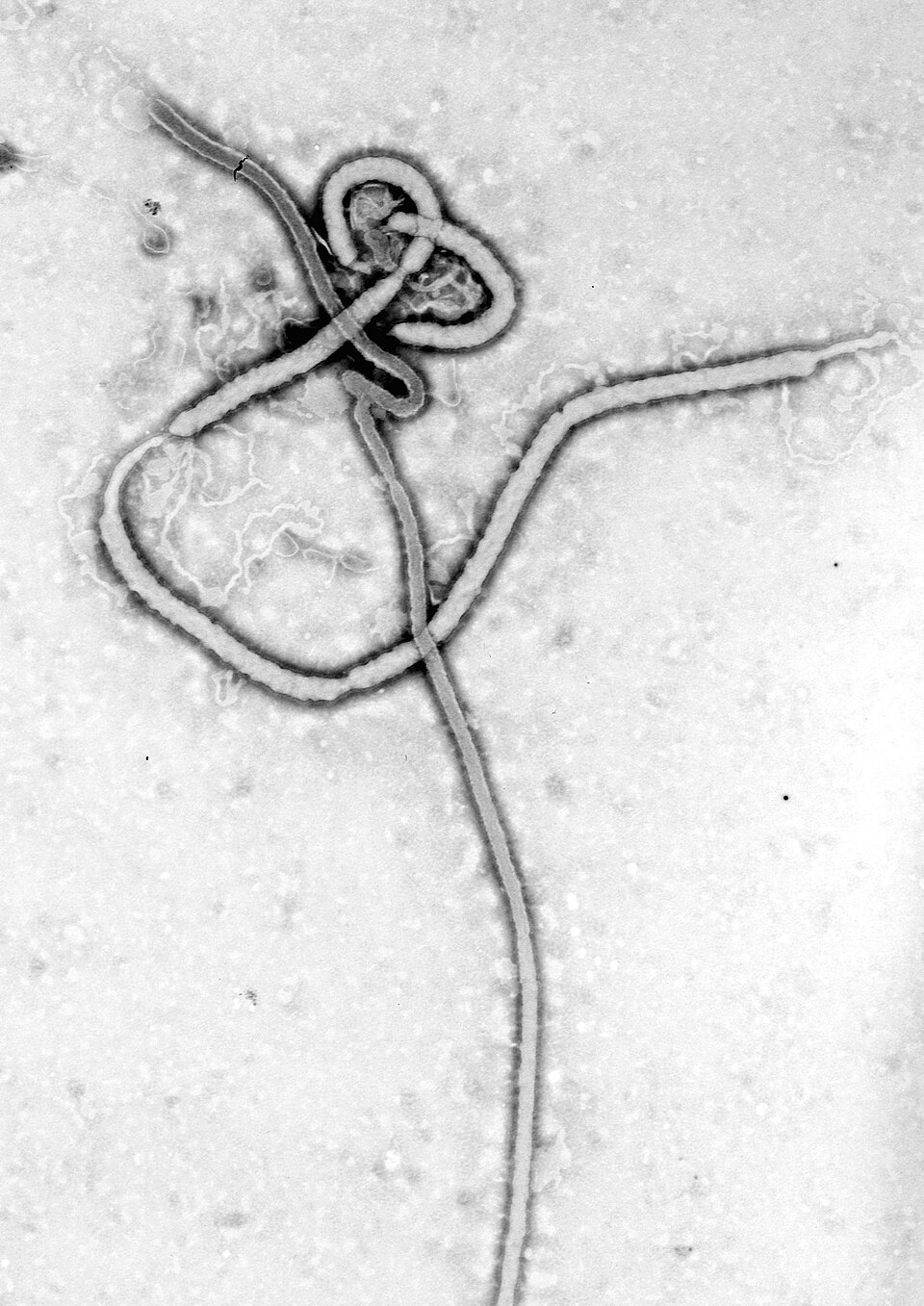
Ebola virus
Conclusion
Gain-of-function research is not a single category, and it would be scientifically inaccurate to describe all such research as extraordinarily dangerous.
But a subset of research involving pathogens with enhanced pandemic potential can present serious biosafety, biosecurity, and dual-use risks.
Those risks are recognized by the WHO, U.S. government advisory bodies, the National Academies, and current U.S. policy.
The potential benefits are also real.
Understanding infectious diseases can save lives.
Developing vaccines and treatments is essential.
Preparing for emerging diseases requires advanced biological research.
The difficult part is deciding where the boundary lies.
When the potential consequences of failure include a major public-health emergency, the standard should not be ordinary.
It should be exceptional.
The public has a legitimate interest in knowing that the most consequential biological research is subject to serious oversight, independent review, strong laboratory safety and security, meaningful transparency, and international cooperation.
The future of biotechnology will almost certainly bring capabilities that are even more powerful than those available today.
The central question will therefore become increasingly important:
Can humanity develop extraordinary scientific capabilities without creating extraordinary biological risks?
The answer should not depend on fear or blind optimism.
It should depend on evidence, rigorous risk assessment, responsible governance, and the willingness to say no when the potential consequences are too dangerous to justify the experiment.
Sources and further reading
World Health Organization — Ensuring responsible use of life sciences research
WHO overview of dual-use research, biorisks, and responsible governance.
WHO — Global guidance framework for the responsible use of the life sciences
Framework covering laboratory biosafety, laboratory biosecurity, and oversight of dual-use research.
National Academies — Potential Risks and Benefits of Gain-of-Function Research
A major review of the scientific, ethical, risk, and policy questions surrounding high-risk gain-of-function research.
U.S. National Science Advisory Board for Biosecurity — Gain-of-Function Research
Historical U.S. oversight process and policy development concerning enhanced pathogenicity or transmissibility of potential pandemic pathogens.
2024 U.S. Government Policy for Oversight of DURC and PEPP
Federal framework for oversight of dual-use research of concern and pathogens with enhanced pandemic potential.
U.S. Government Policy for Stopping High-Risk Life Sciences Research — July 28, 2026
Current U.S. policy prohibiting federal support for dangerous gain-of-function research while strengthening oversight of other high-risk life-science research.