Terms such as organized harassment, stalking by proxy, and community-oriented policing are increasingly encountered in discussions about personal safety, surveillance, online abuse, and relationships between individuals and institutions.
They are sometimes presented as though they describe one unified phenomenon.
They do not.
Some are established concepts in law or academic research.
Others are informal descriptions that can encompass many different experiences.
And some are routinely conflated with legitimate policing practices even though there is no evidence-based basis for treating the two as equivalent.
This distinction matters.
When a person believes that they are being followed, watched, harassed, contacted through other people, or repeatedly confronted by apparently unrelated individuals, the experience can be deeply distressing.
But determining what is actually happening, who is responsible, and whether separate events are connected requires evidence.
That is the approach this article takes.
What Is Stalking?
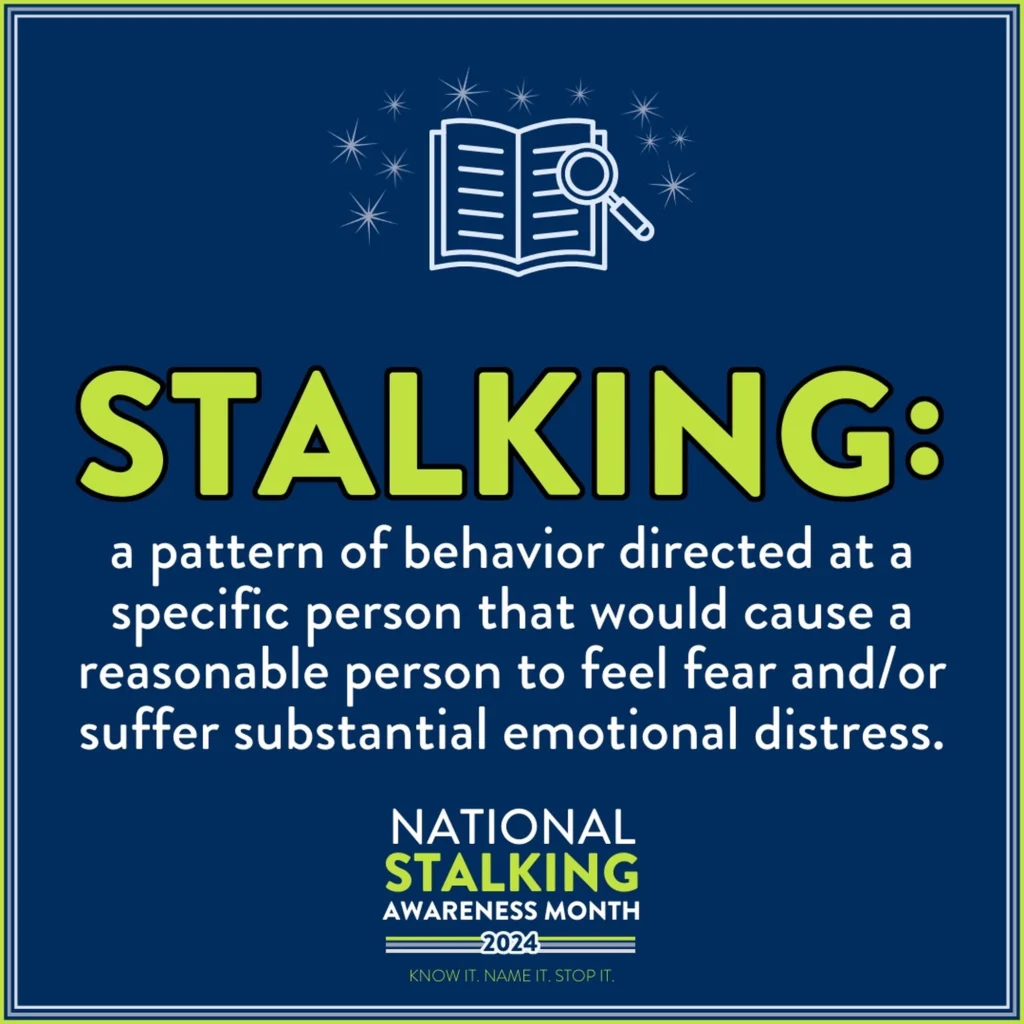
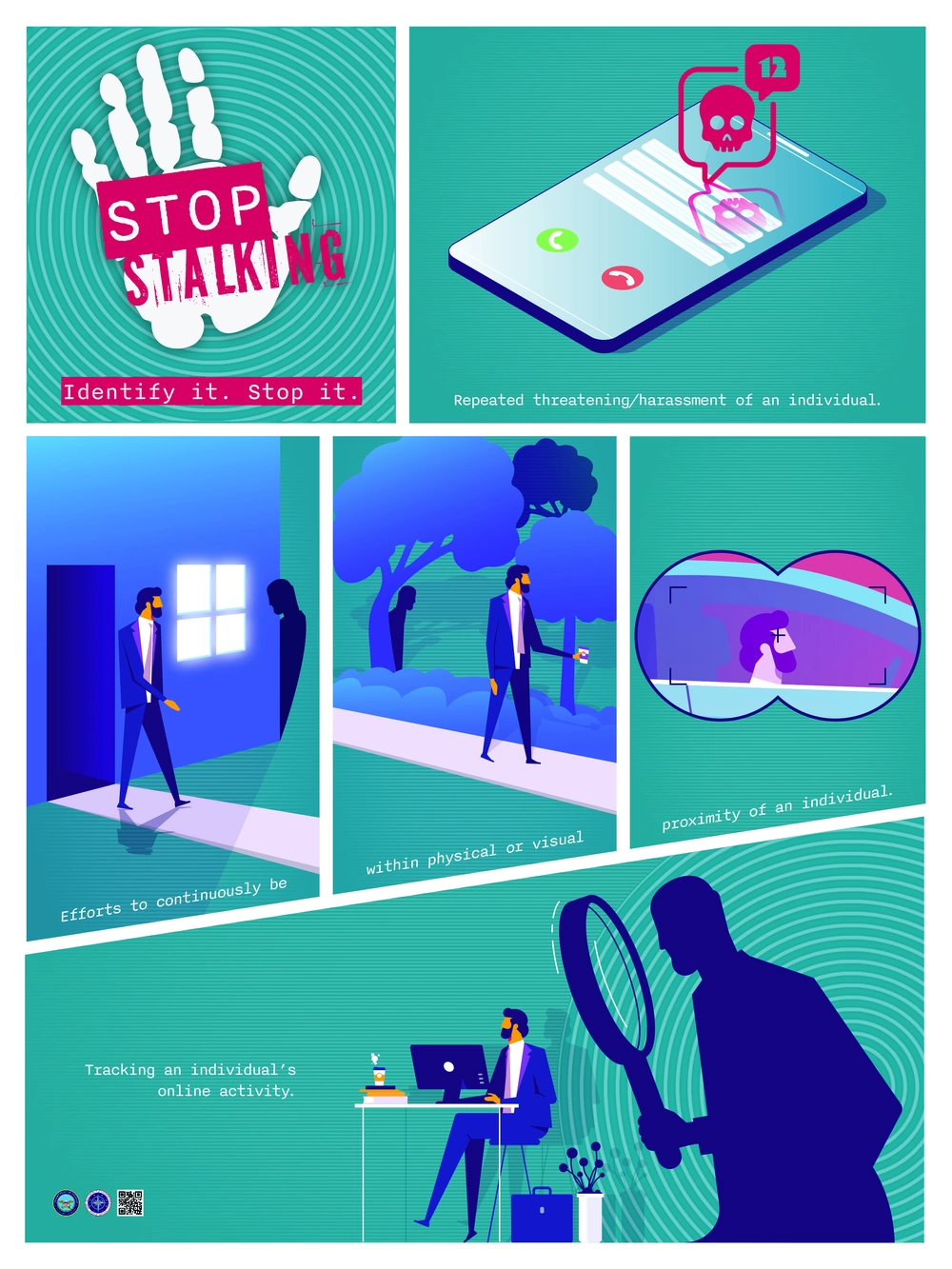
Stalking is generally understood as a pattern of repeated unwanted conduct directed toward a person.
In the United States, the Department of Justice has described stalking as a serious but often difficult-to-recognize crime because individual incidents can look insignificant when considered separately.
Effective investigations therefore require investigators to identify patterns across different events and sources of information.
Croatian law provides a concrete legal definition.
Article 140 of the Croatian Criminal Code, Nametljivo ponašanje, covers conduct in which a person persistently and over a longer period follows or surveils another person, attempts unwanted contact, or otherwise intimidates that person in a way that causes anxiety or fear for their safety or the safety of people close to them.
This definition is useful because it focuses on observable conduct and its impact, rather than on assumptions about motives.
Stalking Is a Pattern, Not a Single Strange Event
One of the difficulties in stalking cases is that a single event may have an innocent explanation.
A single unexpected encounter does not establish stalking.
A stranger looking at someone does not establish surveillance.
A missed phone call does not establish a coordinated campaign.
A person appearing in the same location may simply be there for an unrelated reason.
What makes stalking legally and analytically important is the persistent pattern of unwanted conduct and the evidence connecting the incidents.
The U.S. Department of Justice’s policing guidance emphasizes precisely this problem: stalking can involve many separate incidents, occur in multiple jurisdictions, and affect people connected to the primary victim.
That is why documentation matters.
What Does “Organized Harassment” Mean?
Unlike stalking, organized harassment is not a single universally defined criminal or academic category.
The expression is used in different ways by different people.
It may refer to: repeated harassment by several individuals; online harassment coordinated through social networks; group-based intimidation; workplace harassment; targeting through multiple channels; or allegations that a number of otherwise separate incidents are connected.
Some forms of multi-person harassment are unquestionably real.
Online abuse can be coordinated.
Domestic-abuse perpetrators can use other people as intermediaries.
Criminal conspiracies can involve multiple offenders.
Human-rights organizations document coordinated digital harassment and intimidation in some circumstances.
But a claim that many unrelated events are part of one organized campaign requires evidence linking those events.
That is an important distinction.
Examples of organized harassment (click here)
What Is Stalking by Proxy?
Stalking by proxy is a term used in academic stalking literature.
Researchers Paul Mullen, Michele Pathé, and Rosemary Purcell used the term to describe situations in which a stalker involves other people or agencies in attempts to communicate with, contact, monitor, or pursue a victim.
The word “proxy” is important.
The original stalker may not carry out every act personally.
Other people may become involved.
But there is another important finding in the research: the involvement of third parties may be unwitting.
Researchers describe situations in which people may participate because they have been given a misleading explanation, believe they are helping someone, or are performing an ordinary service without knowing the broader context.
That means “stalking by proxy” does not necessarily mean that every person involved is consciously collaborating with a stalker.
How Proxy Stalking Can Work
Documented examples can include the involvement of: friends; family members; coworkers; service providers; online contacts; or other people whom the stalker can influence.
For example, research on technology-assisted abuse has documented perpetrators using shared social networks to continue surveillance and harassment after being blocked directly.
Researchers have described the use of friends’ or relatives’ social-media accounts and the recruitment of new partners into abusive behavior.
This is one reason stalking can feel difficult to escape.
The victim may block the original perpetrator while communication continues indirectly through another person.
Friends and Family Can Become Secondary Targets
Stalking does not necessarily affect only one person.
U.S. Department of Justice guidance on policing stalking specifically notes incidents involving threats against or vandalism affecting coworkers, family members, or friends connected to the victim.
That is significant.
If someone is attempting to intimidate a victim, interfering with the victim’s support network can be another way of increasing pressure.
The important point, however, is that this should still be demonstrated through evidence.
A friend receiving an unpleasant message is an event.
It becomes evidence of proxy stalking only when there is a credible connection to the underlying stalking pattern.
Technology Has Changed Proxy Stalking
The Internet has dramatically changed how third-party involvement can occur.
A person who is blocked can potentially appear through: new accounts; friends’ accounts; fake identities; shared groups; public posts; or indirect messages.
Research published in 2024 documented cases in which perpetrators used social networks and the accounts of friends or relatives to continue abusive communication after direct access had been blocked.
Technology therefore allows harassment to become more persistent and geographically distributed.
But it also creates a major evidentiary problem: online information is easy to imitate, misattribute, or misunderstand.
A fake profile may not belong to the person it appears to represent.
An anonymous account may belong to anyone.
A screenshot can be edited.
A message can be forwarded without context.
IP-address attribution may require specialist technical evidence.
That makes careful verification particularly important.
The Importance of Pattern Analysis
One of the strongest ideas in professional stalking investigations is pattern analysis.
Instead of asking:
“Was this event suspicious?”
the better questions are:
“Is this part of a documented pattern?”
“Are the events connected?”
“Is there evidence of common authorship or coordination?”
“Is there an identifiable motive?”
“Can independent evidence establish the relationship between the incidents?”
This approach protects against two opposite errors.
The first is underestimating genuine stalking because each incident appears insignificant in isolation.
The second is over-connecting unrelated events because they feel unusual when viewed together.
Good investigation has to avoid both.
What About Community-Oriented Policing?
This is where an important distinction must be made.
Community-oriented policing is not a synonym for surveillance of civilians.
The U.S. Department of Justice’s Office of Community Oriented Policing Services defines community policing as a philosophy involving police-community partnerships, problem-solving, proactive approaches to public-safety issues, and organizational structures designed to support those partnerships.
The COPS Office describes goals including building trust between law enforcement and the communities they serve and using community partnerships to address crime and disorder.
Typical activities can include: community meetings; neighborhood outreach; local advisory groups; problem-solving partnerships; and direct interaction between officers and residents.
Those activities are fundamentally different from covert stalking.
Community Policing Is Not Evidence of a Harassment Campaign
This distinction is especially important when interpreting repeated encounters with police or community representatives.
A police officer attending a neighborhood meeting is not evidence of stalking.
An officer speaking to local residents is not evidence of a covert operation.
Community outreach is literally one of the objectives of community-oriented policing.
Likewise, the existence of relationships between police and community organizations does not itself demonstrate that those organizations are being used to monitor a particular person.
There may be legitimate reasons for contact.
The question is whether there is specific evidence of unlawful conduct.
Why the Two Concepts Can Be Confused
The confusion can arise because both situations involve networks of people.
Community policing deliberately creates relationships between law enforcement and community members.
Stalking by proxy can involve a perpetrator using other people.
Those superficial similarities do not make the two things equivalent.
The purposes are different.
The legal basis can be different.
The methods are different.
The evidence required is different.
One is a policing philosophy intended to solve public-safety problems through partnership.
The other describes a form of unwanted pursuit in which third parties may be enlisted or manipulated.
It is therefore important not to infer one from the mere existence of the other.
When Police Contact Becomes a Legitimate Concern
That does not mean police behavior is beyond scrutiny.
Police officers, like anyone else, are subject to law and professional standards.
Legitimate concerns can include: unlawful searches; unlawful surveillance; abuse of authority; harassment; retaliation for lawful activity; discrimination; improper disclosure of personal information; or other misconduct.
But those issues should be assessed on evidence.
A person who has concerns about police conduct should document the incident, obtain identifying information where legally possible, preserve communications and seek an appropriate complaint or oversight mechanism.
That is very different from assuming that every police interaction represents a coordinated campaign.
Distinguish Facts From Interpretation
This may be the most important principle in the entire subject.
Consider the difference between:
“A man in a dark vehicle drove past my home three times.”
and:
“I was being surveilled by a coordinated team.”
The first is an observation.
The second is an interpretation.
The interpretation may or may not ultimately be correct.
The safest approach is to record the first statement first and then look for evidence supporting or contradicting the second.
The same principle applies online.
Instead of:
“They created this account to monitor me,”
document:
“This account contacted me on this date, sent these messages, and appeared to use this photograph.”
That gives an investigator something verifiable to examine.
Why Misidentification Matters
Stalking investigations can become complicated precisely because the target may encounter many unrelated people.
A person can be: followed by one person, approached by another, contacted by an unknown account, and involved in a completely unrelated disagreement with a third party.
These events may feel connected.
They may even occur close together.
But temporal proximity is not proof of common cause.
That is why investigators need independent corroboration.
The Third-Party Problem
The research on stalking by proxy contains an unusually important warning:
third-party involvement may be real, but third parties may also be innocently involved.
The Cambridge researchers explicitly note that victims can sometimes believe that unrelated employees, service providers, mechanics, or other people have been recruited by a stalker.
This is not a reason to dismiss someone’s concerns.
It is a reason to investigate them carefully.
A good investigation protects both the victim and innocent third parties from false attribution.
Online Networks Make This Even More Important
Social media amplifies the problem.
An account can be: anonymous; pseudonymous; impersonated; shared; hacked; or operated by a person in another country.
Screenshots may omit context.
Images can be stolen.
Old photographs can be reused.
Names can be copied.
This is why digital attribution should ideally rely on technical and documentary evidence rather than visual resemblance or intuition alone.
Community Partnerships Can Actually Help Victims
There is another side to community-oriented policing that is sometimes forgotten.
A legitimate community-policing model can provide a mechanism through which residents report problems and obtain assistance.
Its emphasis on partnerships can improve communication between police and residents.
The U.S. DOJ describes community policing as an approach intended to build trust, cooperation, and problem-solving relationships between law enforcement and communities.
For a stalking victim, a functioning relationship with trustworthy local institutions can therefore be helpful.
The critical issue is accountability.
Community involvement should not mean unchecked authority.
Good community policing should remain consistent with constitutional rights, professional standards, lawful procedure, and independent oversight.
The Right Way to Approach a Difficult Situation
When someone suspects organized harassment or proxy stalking, the most defensible approach is neither automatic belief nor automatic dismissal.
It is structured documentation and independent verification.
Start with what happened.
Record when it happened.
Preserve what can be independently verified.
Separate direct observation from interpretation.
Look for corroboration.
Avoid confronting people based solely on suspicion.
Report concrete incidents through appropriate channels.
And allow qualified investigators to determine whether apparently connected events actually have a common cause.
This approach has a second advantage:
If there really is a coordinated pattern, good documentation makes it much easier to demonstrate.
If there is not, careful documentation can help prevent innocent people from being wrongly identified.
What Community-Oriented Policing Should Mean
At its best, community-oriented policing should mean something quite straightforward:
police and communities working together to solve real problems while respecting rights.
It should not mean that ordinary residents become informal intelligence agents.
It should not mean that political disagreement becomes a justification for surveillance.
It should not mean that activists are treated as criminals merely because they criticize institutions.
And it should not mean that police-community relationships operate without accountability.
The COPS Office’s own definition emphasizes partnerships, problem-solving and public safety… not covert targeting.
The Importance of Civil Liberties
A functioning democracy has to be able to deal with two problems at once.
People need protection from genuine stalking and harassment.
And people need protection from unlawful surveillance, arbitrary interference, and false accusations.
Those are not contradictory objectives.
They are complementary.
Law enforcement should have the tools necessary to investigate genuine threats.
Citizens should have effective mechanisms for challenging unlawful conduct.
And both sides should operate within the law.
Conclusion
Stalking is real.
Third-party involvement in stalking is real.
Academic research recognizes the concept of stalking by proxy, including cases where other people are intentionally or unintentionally drawn into a perpetrator’s actions.
Organized harassment can also occur in real-world and digital environments.
But “organized harassment” is not, by itself, proof that apparently unrelated events have a common organizer.
And community-oriented policing is not inherently a form of organized harassment.
Sources and further reading
U.S. Department of Justice — Office of Community Oriented Policing Services
Overview of community policing, including its focus on partnerships, public safety, and trust.
U.S. DOJ — Model Protocol for Community Oriented Police Response to Stalking
Detailed policing guidance discussing stalking patterns, third-party targeting, and evidence gathering.
Mullen, Pathé & Purcell — “Stalking by proxy,” Cambridge University Press
Academic discussion of third-party involvement in stalking, including the possibility of unwitting participation and mistaken attribution.
Croatian Criminal Code — Article 140, Nametljivo ponašanje
Current Croatian legal framework for persistent following, unwanted contact, intimidation and conduct causing fear or anxiety.