Croatia’s Path to Independence and the Homeland War (1990–1995)
Executive Summary:
Croatia’s modern statehood traces back to medieval kings (Kingdom of Croatia, 925 AD) and was later part of Hungary–Austria and Yugoslavia.
In the late 20th century, democratic reforms and rising nationalism led Croatia to pursue sovereignty.
After winning the 1990 elections, Croatia held a 19 May 1991 referendum on sovereignty (93% in favor) and declared independence on 25 June 1991.
A brief European‐mediated truce (Brijuni Accord, July 1991) was followed by full secession on 8 October 1991.
Serb-controlled Yugoslav forces then waged war in Croatia (1991–95), including the sieges of Vukovar and Dubrovnik, and major battles like Maslenica (Jan 1993) and Operation Flash (May 1995).
The war ended after Operation Storm (4–7 Aug 1995) liberated Krajina (liberation of Knin celebrated as Victory Day) and the Dayton Peace Accords (Dec 1995) secured peace in the region.
The conflict left 15,000–20,000 dead (Croatian figures ~15,000; some diplomats cite ~20,000) and displaced hundreds of thousands: an estimated 500,000 Croats fled Serb-held areas, about 200–250,000 Croatian Serbs fled after 1995, and roughly 187,000 Bosnian war refugees took shelter in Croatia.
Post-war Croatia undertook reconstruction and reconciliation (e.g. peaceful reintegration of Eastern Slavonia under UNTAES by 1998), while commemorating Defenders’ Day (added to 5 Aug Victory Day in 2008) to honor its war veterans.
This account draws on Croatian archives (e.g. Narodne Novine, Sabor records), ICTY/UN documents, academic studies, and contemporary news.
Historical Background of Croatian Statehood
Croatian statehood dates to the early Middle Ages.
By the 10th century (King Tomislav, 925 AD) Croatia was a Christian kingdom; in 1102 it entered a personal union with Hungary while retaining its own institutions (Sabor, Ban).
Over centuries the Croatian lands were contested by the Ottoman Empire and Habsburgs: after the 1527 election at Cetin, Croatia was ruled by the Habsburg monarchy (with its own Sabor and Ban) and later by the Austro-Hungarian Empire.
In 1918 Croatia joined the new Kingdom of Serbs, Croats and Slovenes (renamed Yugoslavia in 1929).
After World War II, Croatia was a federal republic within Socialist Yugoslavia under Tito (1945–1990).
Throughout the 20th century, Croats nurtured national culture and autonomy under federalism, even as political and ethnic tensions simmered in Yugoslavia.
Lead-up to 1990–1991 Independence
In the late 1980s, reform movements swept Yugoslavia.
In Croatia the nationalist-democratic Croatian Democratic Union (HDZ) led by Franjo Tuđman demanded sovereignty.
On 30 May 1990 Croatia’s first multi-party parliament (Sabor) convened; HDZ won the elections and Tuđman became President.
The new government amended Croatia’s constitution (Dec 1990) asserting its sovereign status.
Amid failed negotiations with Belgrade over federal reform, Croatia scheduled a sovereignty referendum.
On 19 May 1991, 93% of voters endorsed Croatia as a “sovereign and independent state” able to form a confederation with other Yugoslav republics (with Serbs overwhelmingly opposing staying in Yugoslavia).
The referendum results gave democratic mandate for independence.
Accordingly, on 25 June 1991 the Sabor adopted the Ustavna odluka o suverenosti i samostalnosti Republike Hrvatske (Constitutional Decision on Sovereignty and Independence), proclaiming the Republic of Croatia an independent, sovereign state and beginning the process of separating from Yugoslavia. (This decision was published in Narodne Novine NN 31/1991.)
Immediately, the Yugoslav People’s Army (JNA) and Serb rebel forces in Croatia began blockades and attacks on Croatian towns.
Despite an EU-brokered ceasefire agreement on 7 July 1991 (the Brijuni Agreement, which imposed a three-month moratorium on independence moves), hostilities continued.
On 8 October 1991, the Croatian Parliament adopted a further decision severing all legal ties with Yugoslavia and “renouncing all federal legislation, regulations, and orders”.
From that date Croatia was fully independent in law (though fighting persisted on the ground). International recognition followed soon after: the European Community recognized Croatia on 14 January 1992, and the United Nations admitted Croatia on 22 May 1992 (a landmark for international legitimacy).
Course of the War (1991–1995)
The Croatian War of Independence (Domovinski rat) was fought from mid-1991 until late 1995.
In 1991–92, Serb insurgents (backed by the JNA and Serbia) seized about one-third of Croatia’s territory, proclaiming the Republic of Serbian Krajina.
They besieged key towns: the battle for Vukovar (Aug–Nov 1991) ended in the city’s destruction and civilian massacre.
The historic city of Dubrovnik was shelled by the JNA in late 1991, drawing international condemnation.
By the end of 1991 Croatia had lost significant territory, and thousands of Croatian civilians were killed.
Croatian forces defended remnants of the country and also launched offensives to regain ground.
Notable military operations include Maslenica (Jan 22–Feb 1, 1993) – a Croatian Army offensive in Dalmatia that retook critical territory and reopened a land corridor between northern and southern Croatia.
In May 1995, Croatia launched Operation Flash, recapturing western Slavonia (558 km²) from Serb rebels.
The decisive blow came with Operation Storm (Oluja), a massive offensive from 4–7 August 1995.
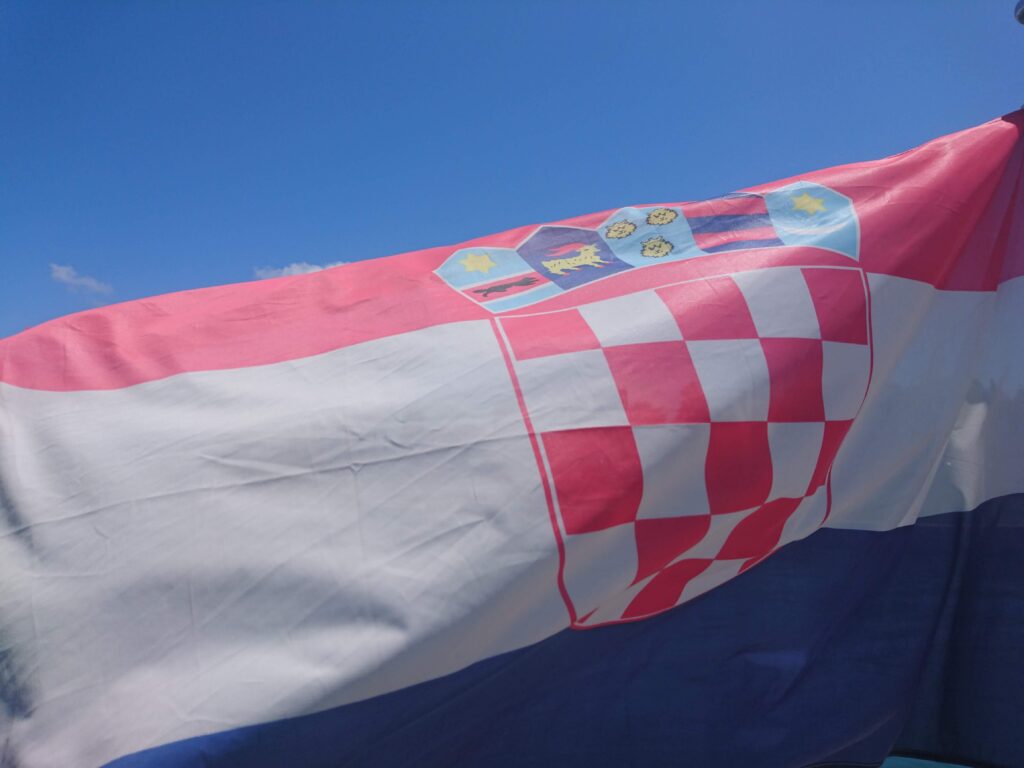
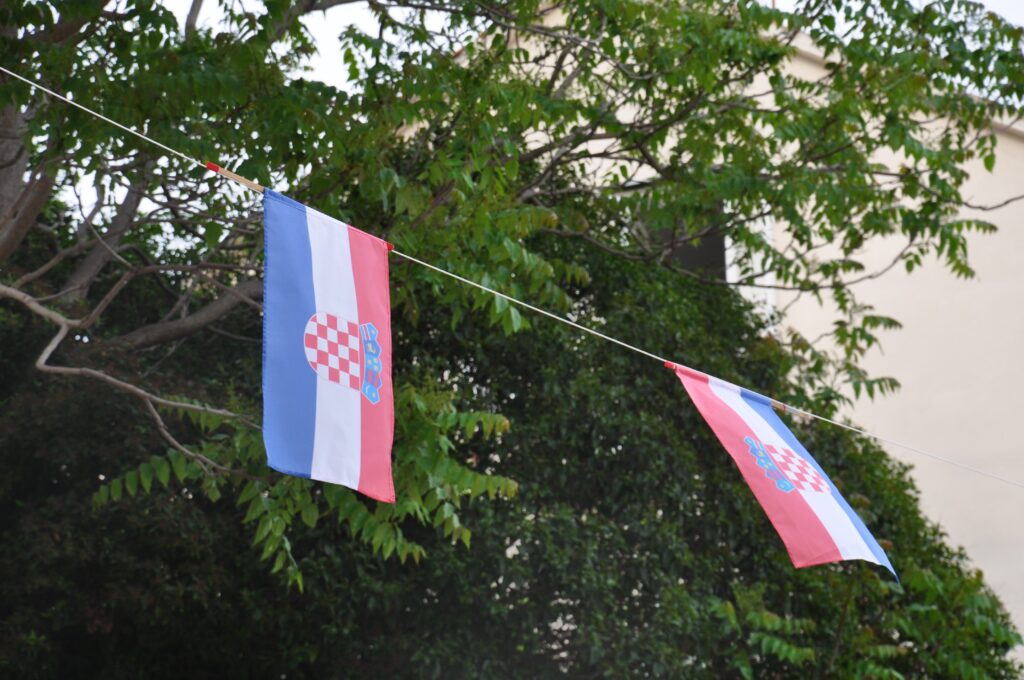
By 5 August the army liberated Knin (hoisting a large Croatian flag on Knin Fortress), effectively ending the war.
Operation Storm freed ~11,000 km² of territory and led to the exodus of roughly 250,000 Croatian Serb civilians.
Following Storm, only Eastern Slavonia (Danube region) remained under Serb control; it was peacefully reintegrated into Croatia by 1998 under a UN transitional administration (UNTAES) established after the 1995 Erdut Agreement.
The war formally ended with the Dayton Peace Accords (signed 14 Dec 1995), which also secured Bosnia.
By 1996–97, UN peacekeepers had withdrawn and national borders were restored.
International Response
Croatia’s independence and war drew varied international reactions.
Initially the UN imposed an arms embargo on all Yugoslav republics (Res.713 in Sept 1991), but enforcement was uneven.
The European Community and US were cautious until Croatian and Slovenian independence went into effect (Jan 1992); then EC/EU countries began recognition (14 Jan 1992) and Croatia joined the United Nations (May 1992).
The UN deployed peacekeepers: UNPROFOR in Croatia (1992–95) guarded ceasefires and UN Protected Areas for Serbs, and a special UNTAES mission administered Eastern Slavonia (1996–98) to ensure peaceful reintegration.
NATO did not intervene directly in Croatia’s war, but later enforced the Dayton Accords.
The US and EU also pressured all sides diplomatically and provided humanitarian aid.
Casualties and Displacements
The war’s human toll was severe.
Estimates of dead and missing vary. Croatian authorities report ~15,000 killed or missing (about 8,700 military and 6,300 civilian), while some diplomatic accounts cite up to 20,000 total killed on all sides.
About 37,000 were wounded.
According to the International Commission on Missing Persons, around 6,000 people (mostly civilians) remain unaccounted for from the conflict.
The war also caused massive population shifts:
- Croat civilians and soldiers displaced: By war’s end an estimated 500,000 Croats and other non-Serbs had fled or been expelled from Serb-held areas.
- Croatian Serb refugees: Approximately 250,000 Croatian Serbs fled Croatia during and after Operation Storm (Aug 1995); by 2005 just over half of them had returned under UN/GO initiatives.
- Bosnian refugees in Croatia: During the 1992–95 Bosnian War roughly 187,000 refugees from Bosnia and Herzegovina took shelter in Croatia (mostly Bosnian Croats).
These figures are summarized below. (Sources and ranges are noted; estimates differ by source.)
| Category | Estimate | Sources |
|---|---|---|
| Total killed or missing (all sides) | ~15,000–20,000 | Croatia (15,007); diplomats (≈20,000) |
| Wounded (both sides) | ≈37,000 | Croatian sources |
| Missing (unrecovered) | ~1,800–6,000 | Croatian Missing Persons Comm.; ICMP |
| Croats displaced/refugees | ~500,000 (1991) | UNHCR/Croatian govt |
| Croatian Serb refugees (1995) | ~250,000 (in exodus after Storm) | UNHCR |
| Bosnian war refugees in Croatia | ~187,000 (by war’s end) | UNHCR |
Note: All figures are approximate. Casualty counts are contested – e.g. Serbian sources claim higher civilian casualties during Flash than Croatian reports. Displacement numbers reflect peak flows; by late 1990s many refugees had returned under UN-led programs or integrated locally.
Aftermath: Reconstruction & Reconciliation
After the fighting stopped, Croatia faced rebuilding and reintegration.
War-damaged cities (Vukovar, Dubrovnik, etc.) were reconstructed with domestic and international aid.
Eastern Slavonia’s peaceful reintegration (via UNTAES, 1996–98) avoided another conflict.
Constitutional reforms in 2000–2001 improved minority rights; Croatia ultimately joined NATO (2009) and the EU (2013).
Efforts at reconciliation continue: e.g. joint initiatives on missing persons, cultural exchanges, and inclusive commemoration events.
The international community (UN, EU, OSCE) monitored minority return and property restitution, though irregularities have been reported.
By the 2020s, most displaced persons have returned home: UNHCR notes that over 240,000 IDPs of Croat ethnicity returned after 1995; some 125,000 former Serb refugees have repatriated or integrated (Croatian government data).
Nevertheless, some issues remain unresolved (property claims, war crimes legacy).
Victory Day and Defenders’ Day
Croatia honors its wartime veterans and victory on 5 August.
Legally “Victory and Homeland Thanksgiving Day” is a national holiday, marking the liberation of Knin on 5 Aug 1995.
It recalls Operation Storm’s success (by 7 Aug, Knin and 11,000 km² were freed) and the end of the rebellion.
In 2008 the holiday was expanded to also be “Day of Croatian Defenders”, honoring all who defended the country.
Annual observances include a mass and flag-raising at Knin Fortress, military parades, and ceremonies for the fallen.
These commemorations emphasize sacrifice and national unity, while (in recent years) inviting messages of peace to Serbs from Croatian leaders.
Sources and Further Reading
This overview is based on primary documents and reputable analyses.
Key official sources include the Narodne Novine gazette and Croatian Parliament (Sabor) archives for declarations and laws.
Academic works (e.g. Central European university studies, Human Rights Watch reports) provide context.
For an in-depth study, see e.g. Norman Davies, Heart of Europe: A Short History of Poland (for regional context); Sabrina P. Ramet, The Three Yugoslavias; Marcus Tanner, Croatia: A Nation Forged in War.
Further resources: Croatian State Archives (DIGITAL: arhiv.hr), Sabor archives, Narodne novine (NN) site, ICTY cases and judgments (icty.org), UN documents (digitallibrary.un.org), as well as historical reports by Human Rights Watch and the UNHCR. Useful overviews are available from the Croatian Ministry of Defense and official commemoration websites.