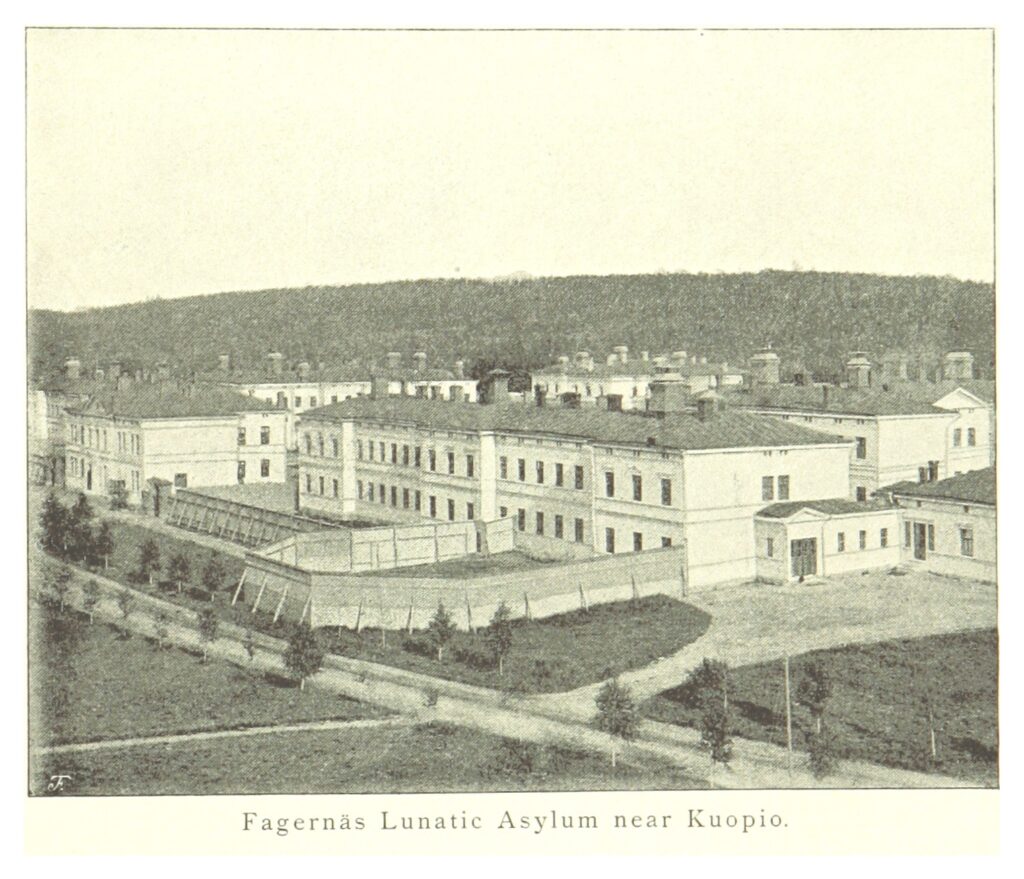
The German word Zersetzung is often translated as disintegration, decomposition, or degradation.
In the history of the German Democratic Republic (GDR), however, it has a very specific meaning.
Zersetzung was a set of covert methods developed and used by the Ministry for State Security (Ministerium für Staatssicherheit, MfS), commonly known as the Stasi, to weaken people and groups regarded by the East German state as politically hostile or threatening.
This is not a theory or an internet legend.
The methods are documented in surviving Stasi records, including the Stasi’s own internal directives and operational files now preserved in Germany’s Federal Archives.
At the same time, it is important to distinguish the historical record from modern speculation.
The existence of Zersetzung in the GDR does not establish that a person experiencing harassment, online attacks, surveillance, professional difficulties, or social conflict today is necessarily the victim of a Zersetzung operation.
Understanding the history properly means doing both things: taking documented repression seriously while refusing to replace evidence with assumption.
What Was the Stasi?

Stasi headquarters in Berlin-Lichtenberg, 1970s
This is an authentic historical photograph of the Stasi headquarters complex, taken around 1975. The source is the official Stasi Records Archive’s media library.
The Stasi was the secret-police and intelligence organization of the GDR.
It was founded in 1950 and remained active until the collapse of the East German system in 1989–1990.
The institution formally ceased to exist on 30 June 1990.
The Socialist Unity Party of Germany (SED) ruled the GDR for four decades without being legitimized through free democratic elections.
The Stasi served as one of the central instruments through which the regime monitored society, collected intelligence, identified opposition, and attempted to suppress activities considered hostile to the state.
The organization relied heavily on a vast network of Inoffizielle Mitarbeiter (IMs), or unofficial collaborators/informers.
These people operated throughout society, providing information to the security service without necessarily being known to the people around them.
According to the Federal Archives, approximately 180,000 unofficial collaborators were recorded in Stasi files by the autumn of 1989.
This extensive information network was important to Zersetzung because covert interference worked far more effectively when the security service understood the relationships, vulnerabilities, workplaces, friendships, disagreements, and personal circumstances of the people it was targeting.
What Exactly Was Zersetzung?
Zersetzung was not one single technique.
It was a system of coordinated, covert measures intended to weaken individuals or groups without necessarily resorting to conventional imprisonment.
The Stasi’s 1976 Richtlinie 1/76, a directive concerning the handling of operational cases, described the objectives of Zersetzung in terms of fragmenting, paralyzing, disorganizing, and isolating people regarded as hostile-negative.
The methods were designed to interfere with a person’s social relationships, professional life, reputation, confidence, and ability to organize collectively.
The goal was not necessarily to make the repression obvious.
In many cases, precisely the opposite was intended.
The intervention was supposed to remain sufficiently concealed that the target might have difficulty identifying who was responsible or proving what was happening.
Who Was Targeted?
The Stasi used Zersetzung against a range of people and organizations that it regarded as politically problematic.
The Federal Archives identifies, among others:
- independent peace groups;
- environmental and ecology groups;
- human-rights groups;
- people seeking to leave the GDR;
- politically active Christians;
- and individuals or organizations that the Stasi suspected of supporting political opposition.
This is particularly important historically because it demonstrates that Zersetzung was not limited to armed resistance or conventional espionage.
People could come under pressure because of peace activism, religious activity, environmental work, applications to emigrate, independent organization, or criticism of the political system.
How Did Zersetzung Work?
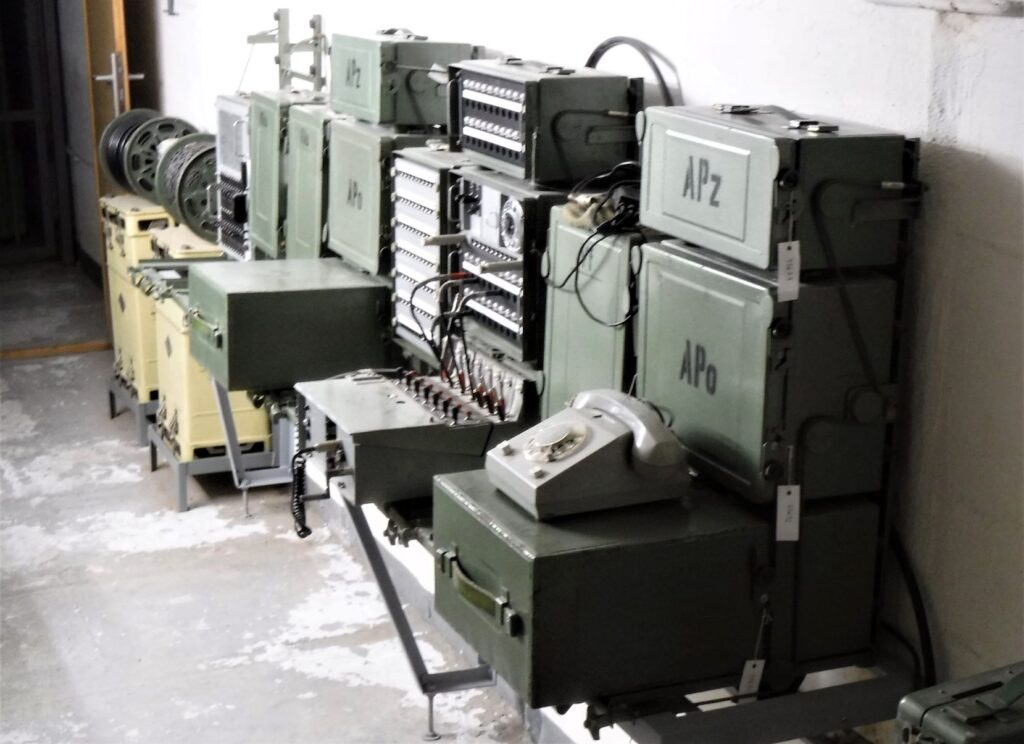
Stasi bunker communications equipment
This shows equipment preserved at the Machern Stasi Bunker Museum, illustrating the technical infrastructure used by the East German security apparatus.
The Stasi records show a range of methods.
According to the Federal Archives and the Federal Agency for Civic Education, these included attempts to create distrust and suspicion within groups, exploit personal rivalries, damage professional prospects, spread rumors, isolate people, and undermine confidence.
Documented techniques included:
Systematic damage to reputation.
The Stasi’s directive explicitly contemplated using a combination of true, verifiable damaging information and false but plausible information to undermine an individual’s reputation and standing.
Professional and social obstruction.
The objective could include engineering professional or social failures in order to weaken a person’s self-confidence.
Creating distrust inside groups.
The Stasi sought to create suspicion, rivalries, disagreements, and mutual accusations among members of opposition groups.
Rumor campaigns.
The records describe the deliberate dissemination of rumors about particular people.
Anonymous or pseudonymous communications.
Anonymous letters, telegrams, and telephone calls could be used as part of operations.
Compromising or fabricated material.
The Stasi directive refers to the use of compromising photographs, including photographs intended to create a misleading impression about a person’s activities or relationships.
Manipulation of social relationships.
Because unofficial collaborators could operate inside workplaces, friendship circles, religious communities, and opposition groups, information could be used to exploit existing tensions and create new ones.
The important historical point is that these measures were not simply random harassment.
They were part of a state-directed security strategy, supported by internal documentation, personnel, intelligence collection, and operational files.
Why Was This Approach Used?
There were political reasons for the development of such methods.
A dictatorship can always imprison opponents, but imprisonment can also create visible political problems.
Covert repression offered another option: interfere with a person’s ability to organize, communicate, maintain relationships, work, or maintain a public reputation while keeping the state’s involvement difficult to prove.
The Stasi itself described Zersetzung as a method for preventing or restricting hostile activity before it could develop further.
In this sense, Zersetzung belongs to a broader history of preventive political repression: attempting to weaken opposition before it becomes more organized or influential.
An Important Example: The Pankow Peace Circle
The surviving records provide unusually concrete evidence of how these operations were planned.
One documented example concerns the Pankow Peace Circle, an independent peace group in East Berlin.
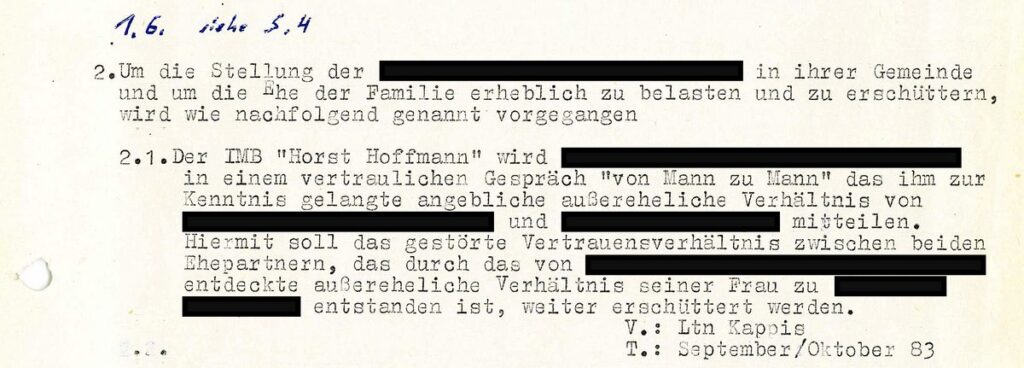
Subversive measures against the Pankow Peace Circle
A surviving Stasi document lays out planned Zersetzung measures designed to weaken the group’s activities and influence.
The archival material illustrates the deliberate use of informers and interference to create internal conflict and reduce the group’s effectiveness.
This type of documentation is particularly valuable because it moves the discussion away from vague recollections and toward primary-source evidence.
There are actual operational files.
There are written instructions.
There are identified targets.
And there are records describing intended methods.
That is how historical claims about Zersetzung can be responsibly established.
The Psychological Dimension
Zersetzung could have profound psychological consequences.
The Federal Agency for Civic Education describes it as a method intended to undermine self-confidence and produce fear, confusion, and psychological destabilization.
The significance of this is not simply that people were frightened.
Social relationships themselves could become uncertain.
A person might wonder whether a rumor originated naturally or had been deliberately planted.
Someone’s professional problems might appear coincidental.
A friendship might suddenly deteriorate.
A person could be left unsure which events were ordinary and which had been deliberately engineered.
That uncertainty was itself part of the effectiveness of covert repression.
What Happened to the Stasi?
The East German security state began to collapse in 1989.
Mass demonstrations and the broader peaceful revolution made the continued operation of the SED system increasingly impossible.
Citizens eventually entered and occupied Stasi facilities, preventing the destruction of all of the agency’s records.
The Stasi formally ceased to exist in 1990.
The surviving records later became an extraordinarily important historical archive.
In 2021, responsibility for the Stasi records was transferred to Germany’s Federal Archives (Bundesarchiv), where they remain available for historical research, personal access, and public education.
The existence of these records is one of the main reasons historians can speak about Zersetzung with such specificity today.
What Does Zersetzung Have to Do With the Modern Era?
This is where caution is necessary.
We should not simply take every modern experience of harassment, social conflict, digital intrusion, or professional pressure and call it Zersetzung.
The original Stasi system operated within a specific political environment:
- a one-party dictatorship;
- a state security organization with extensive coercive authority;
- large-scale human intelligence networks;
- access to official administrative institutions;
- and a systematic state apparatus dedicated to political surveillance and repression.
Modern democratic societies are not identical to the GDR.
However, some of the types of pressure that Zersetzung illustrates have modern technological counterparts.
From Analog Repression to Digital Pressure
Today, human-rights organizations and European institutions document a range of threats against activists and human-rights defenders, including:
- unlawful or arbitrary surveillance;
- spyware and malicious cyber activity;
- online harassment;
- doxxing;
- smear and disinformation campaigns;
- intimidation;
- censorship and internet shutdowns;
- blackmail;
- and other forms of digital repression.
These methods are not the same thing as Stasi Zersetzung.
But there can be functional similarities.
A rumor that once traveled through personal networks can now spread through social media.
A surveillance capability that once required physical wiretapping equipment can now involve digital accounts, malware, or spyware.
A campaign designed to isolate somebody socially can potentially be amplified by online networks.
Personal information that might once have required a large intelligence apparatus to collect can sometimes be exposed through hacked accounts, data breaches, open-source information, or social media.
Technology has therefore changed the scale, speed, and reach of certain forms of pressure.
The underlying historical lesson remains relevant: information can be used not only to monitor people, but also to influence relationships, reputation, participation, and access to public space.
What Contemporary Research Says
Recent academic research has explicitly examined whether some contemporary forms of covert and personalized repression display similarities to Zersetzung.
A 2023 article in the Zeitschrift für Qualitative Forschung examined Zersetzung as a historical example of personalized, covert repression and compared it with later forms of repression involving psychological destabilization and technological development.
The authors argue that comparable forms can be observed in different contexts over subsequent decades.
That research does not mean that modern harassment is automatically Zersetzung.
It means that the historical concept can be useful analytically when studying certain mechanisms of covert repression.
That distinction matters.
Human-Rights Defenders in the Digital Age
The broader issue is not confined to Germany.
The UN human-rights system has documented growing threats to human-rights defenders, including online attacks, legal harassment, arbitrary detention, physical violence, and increasingly sophisticated forms of digital surveillance.
The European Union and United States have likewise warned that technology can be misused against human-rights defenders through surveillance, harassment, smear campaigns, disinformation, doxxing, and other methods.
More recently, the European Parliament has addressed transnational repression, including digital surveillance, hacking, intimidation, defamation, disinformation, spyware, and threats against human-rights defenders.
These are contemporary, documented issues.
They should be studied on their own evidence.
The Danger of Overusing the Word “Zersetzung”
There is also a danger in using the term too broadly.
Once Zersetzung becomes a label for every unexplained event, it loses its historical meaning.
That can make genuine cases of repression harder to investigate rather than easier.
A responsible approach is therefore to ask:
What is actually documented?
What evidence exists?
Who had the capability to carry out a particular action?
What records, communications, or technical evidence support the claim?
Are there ordinary explanations that should also be considered?
This is essentially the same principle historians use when reconstructing the Stasi’s activities.
The strength of the historical case comes from records.
The Historical Lesson
The most important lesson from Zersetzung may not be that people should assume that covert psychological repression is happening around them.
The lesson is that institutions can misuse information, surveillance, social networks, and administrative power to weaken political opponents, and that such practices can remain difficult to recognize while they are happening.
That is why archives matter.
That is why documentation matters.
That is why independent journalism matters.
And that is why legal safeguards, judicial oversight, privacy protections, and protections for civil society matter.
The history of the Stasi demonstrates what can happen when security institutions operate without meaningful democratic accountability.
Why This History Still Matters
Zersetzung belongs to the history of the Cold War and the dictatorship of East Germany.
It should be studied in that historical context.
But history does not become irrelevant simply because technology changes.
Modern societies have new capabilities that the Stasi could not have imagined.
The tools are different.
The legal environments are different.
The political systems are different.
Yet the fundamental question remains familiar:
What happens when power is used to monitor, intimidate, isolate, or silence people who challenge it?
Zersetzung: the anatomy of decomposition
The answer should always be the same:
Transparency.
Evidence.
Independent oversight.
Due process.
Protection of civil society.
And respect for fundamental rights.
The history of Zersetzung is therefore not a reason to assume that every modern problem has a hidden political explanation.
It is a reason to insist that when serious allegations of surveillance, harassment, or repression are made, they should be investigated carefully and on the basis of evidence.
That is ultimately what the surviving Stasi records have made possible: replacing speculation with documentation.
And that may be the most important lesson of all.
Sources and Further Reading
German Federal Archives — “Zersetzung”
The Federal Archives’ historical overview explains the Stasi definition of Zersetzung, its objectives, targets, and documented methods.
German Federal Archives — “What was the Stasi?”
An authoritative overview of the organization, its structure, informers, surveillance system, and historical development.
German Federal Archives — “How the Stasi Worked”
Background on surveillance, operational methods, and Zersetzung.
Federal Agency for Civic Education (bpb) — “Psychofolgen bis heute: ‘Zersetzungs’-Opfer der DDR-Geheimpolizei”
Includes discussion of the 1976 directive and specific documented techniques.
Nussmann & Guski-Leinwand, “Zersetzung als moderne Repressionsmaßnahme” (2023)
Academic discussion of Zersetzung and later forms of covert, personalized repression.
European External Action Service — Protecting Human Rights Defenders Online
Documentation of contemporary threats including surveillance, harassment, smear campaigns, disinformation, doxxing, and other digital attacks.
European Parliament — Transnational Repression of Human Rights Defenders (2025)
Recent European discussion of digital surveillance, spyware, hacking, intimidation, defamation, and other forms of repression.