There is a strange moment in technological history when reality starts sounding like science fiction.
A machine can translate brain activity into spoken language.
Scientists can transport antimatter in a vehicle.
A laboratory can create conditions in which a tiny fusion reaction produces more energy than the laser energy delivered to its target.
Humanity can detect ripples in spacetime generated by merging black holes billions of light-years away.
A telescope can directly observe planets orbiting other stars and analyze their atmospheres.
Living human tissue has been 3D-bioprinted in orbit.
Artificial intelligence can predict the three-dimensional structures of hundreds of millions of proteins.
And a network of detectors can effectively listen to the universe for vibrations in spacetime.
None of these are hypothetical concepts.
They are documented capabilities or demonstrated experiments.
The surprising part is not that they might exist someday.
Some of them already exist today.
What follows are several examples that I find particularly difficult to believe—even though the evidence is publicly available.
1. A Computer Can Turn Brain Activity Into Speech
One of the most extraordinary developments in neuroscience is the emergence of brain-computer interfaces (BCIs) capable of turning neural activity into speech.
In April 2025, NIH reported on a brain-computer interface developed by researchers at the University of California, San Francisco and UC Berkeley that translated attempted speech-related brain activity into audible words for a woman who had been unable to speak or produce vocal sounds for 18 years following a stroke.
Electrodes were placed over the brain region associated with speech. A deep-learning system translated the resulting neural activity into synthesized speech. The system could decode a 50-word vocabulary at approximately 90.9 words per minute, while maintaining a vocabulary-wide decoding and speech-synthesis success rate above 99% for the tested system.
That sounds like something from a science-fiction movie.
But it is a published experimental system.
And the field has continued advancing.
In September 2025, NIH reported research demonstrating real-time decoding of inner speech from brain signals in a participant. The work explored whether speech could be decoded without the person physically attempting to speak.
There is an important limitation.
This does not mean scientists can remotely read anybody’s thoughts.
The systems require highly specific hardware, controlled experimental conditions, trained models, and access to neural signals. The research is primarily aimed at helping people who have lost the ability to communicate.
Nevertheless, the underlying achievement is remarkable: electrical activity in a human brain can be translated into a computer-generated voice.
That’s real.
2. Antimatter Has Been Put in a Truck
Antimatter sounds almost fictional.
But it is a real physical substance, routinely produced and studied in particle-physics laboratories.
The remarkable recent development is that scientists have begun making antimatter transportable.
On 24 March 2026, CERN announced that its BASE experiment had successfully transported a trap containing antiprotons across CERN’s main site in a truck.
The device contained a cloud of 92 antiprotons held inside a portable cryogenic Penning trap. The trap was disconnected from the experiment, transported by vehicle and then reconnected so the experiment could continue.
Why is this impressive?
Antimatter annihilates when it encounters ordinary matter.
So storing it requires electromagnetic confinement and extraordinarily controlled conditions.
CERN explains that BASE has already demonstrated antiproton trapping for hundreds of days and has developed increasingly portable systems for precision experiments.
And there is an important misconception worth correcting.
This does not mean CERN has a truck full of science-fiction quantities of antimatter.
The amount involved was extraordinarily small.
CERN explains that even if all the antiprotons in the transport trap annihilated, the released energy would be minuscule—equivalent to the mass-energy of roughly a thousand electrons.
So the astonishing part isn’t the destructive power.
It is the engineering precision required to move antimatter around without letting it touch ordinary matter.
3. We Have Detected Ripples in Spacetime From Colliding Black Holes
Einstein predicted gravitational waves as a consequence of general relativity.
For decades, scientists knew they should exist but had no direct detection.
That changed in 2015.
LIGO detected gravitational waves generated by the merger of two black holes.
The significance is difficult to overstate.
The signal was not ordinary light.
It was not a radio transmission.
It was not a particle beam sent toward Earth.
It was a tiny disturbance in the structure of spacetime itself.
Since then, gravitational-wave astronomy has grown dramatically.
In May 2026, the LIGO-Virgo-KAGRA collaboration announced the GWTC-5.0 catalog, bringing the total number of confirmed gravitational-wave events detected by the international network to 390. The new catalog included 161 events observed during part of the fourth observing run.
Think about what that means.
A black-hole merger occurs somewhere in the universe.
The event produces gravitational waves.
Those waves propagate across enormous distances.
They eventually pass through Earth.
And extraordinarily sensitive instruments detect the tiny change.
Humanity has effectively developed a way to listen to spacetime.
4. Humanity Has Taken an Image of a Black Hole
There is a subtle technical qualification here.
People sometimes say that humanity has photographed a black hole.
Strictly speaking, the Event Horizon Telescope image is not a conventional photograph of the black hole itself.
A black hole does not emit light that can simply be photographed.
What the Event Horizon Telescope produced was an image of the black hole’s shadow, created by the behavior of glowing material and strongly bent light around it.
In April 2019, the Event Horizon Telescope collaboration announced the first image of the supermassive black hole in galaxy M87, approximately 55 million light-years away. The collaboration used eight ground-based radio observatories linked into an Earth-sized virtual telescope.
In 2022, the collaboration produced an image of Sagittarius A*, the supermassive black hole at the center of our own Milky Way galaxy.
This means that an object whose gravity is so extreme that light cannot escape its event horizon has nevertheless produced an observable signature that scientists can reconstruct into an image.
That is an extraordinary achievement.
5. We Can Directly See Planets Orbiting Other Stars
For most of human history, the existence of planets beyond our solar system was speculation.
Now thousands of exoplanets are known.
Even more remarkable, some can actually be directly imaged.
NASA’s James Webb Space Telescope has directly imaged multiple giant planets in the HR 8799 system.
The system is approximately 130 light-years away.
In 2025, Webb observations provided evidence of carbon dioxide in the atmospheres of the giant planets in that system.
Webb can also analyze the atmospheres of distant planets by studying how their atmospheres affect light.
Scientists can infer the presence of molecules such as water vapor, carbon dioxide and other atmospheric constituents from spectroscopic measurements.
That means we can do something astonishing from Earth:
look toward another star, isolate information from a distant planet, and determine something about its atmosphere.
We aren’t travelling there.
We aren’t touching it.
We are analyzing its light.
And the information is enough to tell us about chemistry happening hundreds of light-years away.
6. Fusion Ignition Has Actually Happened
Nuclear fusion powers the Sun.
For decades, researchers have attempted to reproduce controlled fusion conditions on Earth.
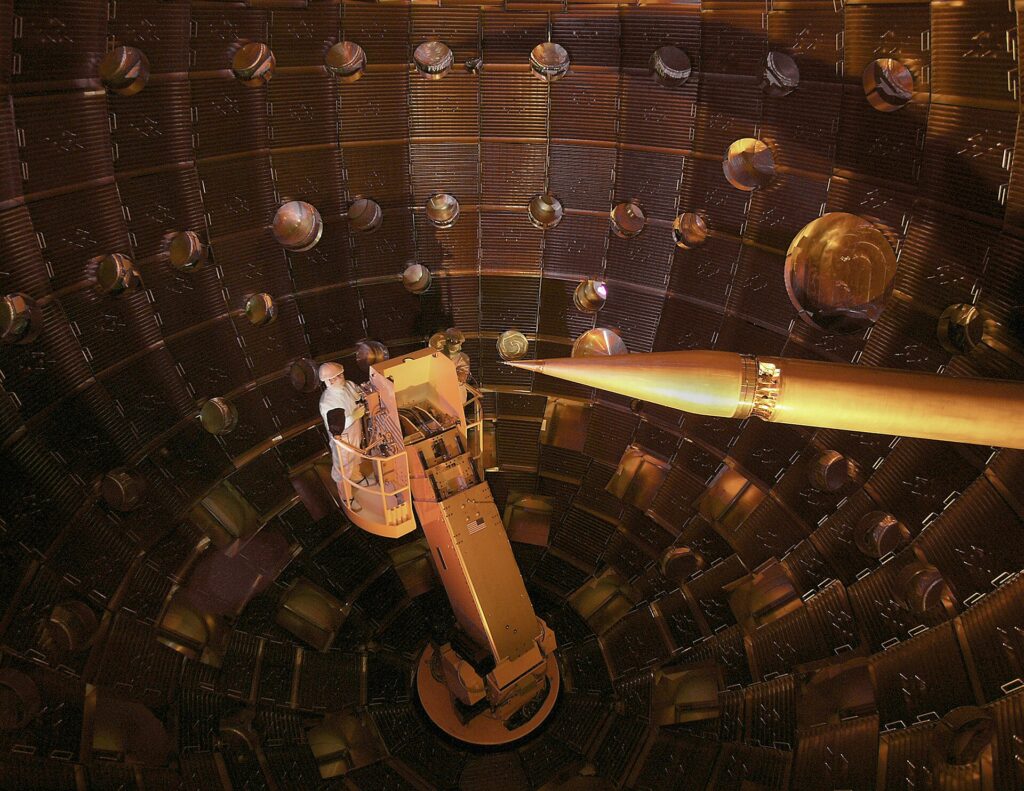
At Lawrence Livermore National Laboratory’s National Ignition Facility, that goal reached a historic milestone in December 2022.
Scientists achieved fusion ignition: the fusion reaction produced more energy than the laser energy delivered to the target.
The achievement has since been repeated.
In April 2025, an experiment delivered 2.08 megajoules of laser energy to the target and produced a record 8.6 megajoules of fusion energy, corresponding to a target gain of approximately 4.13.
And the achievement did not stop there.
LLNL’s current record states that fusion ignition was achieved for the 11th time on 20 June 2026, producing approximately 7.9 megajoules of fusion yield.
There is an extremely important caveat.
This is not yet a commercial fusion power plant.
The laser energy delivered to the target is not the same thing as the total electrical energy required to operate the entire facility.
Researchers still face enormous engineering challenges before fusion can provide practical commercial electricity at scale.
Nevertheless, the underlying phenomenon is real:
humanity has repeatedly created controlled fusion ignition in a laboratory.
7. We Have 3D-Printed Human Tissue in Space
3D printing is no longer just about plastic objects.
Researchers are using living cells, proteins and biological materials in attempts to construct tissue.
NASA has supported experiments investigating whether microgravity can make it easier to produce three-dimensional biological structures.
In 2023, NASA reported the first successful 3D bioprinting of a human knee meniscus in orbit using the BioFabrication Facility aboard the International Space Station.
Follow-up experiments continued to investigate tissue printing in microgravity.
NASA reported in 2024 that researchers had demonstrated the feasibility of producing an anatomically shaped meniscus in orbit and were studying whether microgravity could overcome some of the deformation and collapse problems encountered during bioprinting on Earth.
The ultimate goal is far more ambitious:
using biological printing technologies to produce replacement tissues and potentially, someday, whole organs.
That future is not here yet.
We cannot currently order a fully functional, custom 3D-printed human heart.
But the foundation of the technology… printing living biological structures, is no longer science fiction.
8. AI Has Predicted More Than 200 Million Protein Structures
Proteins are microscopic machines.
Their three-dimensional structures influence how they function inside living cells.
For decades, determining protein structures experimentally could take enormous amounts of time and effort.
Then artificial intelligence changed the scale of the problem.
DeepMind’s AlphaFold system demonstrated that AI could predict protein structures from amino-acid sequences.
In 2022, the AlphaFold Protein Structure Database expanded to contain predicted structures for more than 200 million proteins, covering nearly all catalogued proteins known to science at the time.
The achievement is difficult to comprehend.
Scientists are accustomed to studying individual molecules.
AlphaFold helped create a resource containing hundreds of millions of predicted molecular structures.
By November 2025, Google DeepMind reported that more than 3 million researchers in more than 190 countries had accessed the AlphaFold database.
This does not mean AI has solved biology.
Protein structure prediction has limitations, and biological function involves much more than knowing the static structure of one molecule.
But the basic capability is extraordinary:
an AI system can infer the three-dimensional form of biological molecules from their sequences.
9. Quantum Computers Are Performing Computations Beyond Classical Simulation
Quantum computing is often described with language that makes it sound almost mystical.
The underlying physics is real, however.
Quantum computers use quantum mechanical states to perform computations in ways that differ fundamentally from classical computers.
And in 2026, the field has reached another important milestone.
On 30 July 2026, IBM and researchers at the University of Chicago announced a quantum-computing demonstration involving 70 logical qubits and a computational problem they described as beyond the reach of leading classical simulation methods. The computation took approximately 15 minutes.
That does not mean a quantum computer has replaced your laptop.
It doesn’t mean quantum machines are generally faster than conventional computers.
Quantum advantage applies to particular computational problems and carefully designed experimental conditions.
But the fundamental achievement is important: machines operating according to quantum mechanics can perform computational experiments that become extraordinarily difficult to reproduce classically.
10. We Can Make a Computer Speak With Someone’s Own Voice From Brain Signals
The brain-computer-interface developments deserve another mention because of one particularly strange feature.
The output does not simply have to be generic computer speech.
In the 2025 NIH-supported study, researchers used a recording of the participant’s pre-stroke voice to synthesize the resulting speech.
That means the technology can potentially preserve something deeply personal: the sound of the person’s own voice.
For somebody who has lost the biological ability to speak, the significance goes beyond technical achievement.
A synthesized voice can carry identity.
It can sound like the person’s voice rather than an anonymous machine.
Technology is therefore beginning to cross an unusual boundary: from restoring communication, to potentially restoring part of a person’s recognizable identity.
11. We Can Study the Chemistry of Worlds We Cannot Visit
There is another capability that deserves more attention.
Astronomers don’t need to physically reach an exoplanet to study its atmosphere.
When a planet passes in front of its star, some of the starlight travels through the planet’s atmosphere before reaching the telescope.
Different molecules absorb different wavelengths.
By analyzing the resulting spectrum, astronomers can infer the presence of particular gases.
NASA explains that Webb’s instruments can analyze wavelengths associated with molecules including water vapor, carbon dioxide, oxygen and methane under appropriate observing conditions.
This is conceptually astonishing.
A planet may be hundreds of light-years away.
We may never visit it.
But its atmosphere leaves a chemical fingerprint in the light that reaches our instruments.
And human technology can read that fingerprint.
The Common Theme
All of these technologies have something in common.
They don’t violate the laws of physics.
They exploit them.
That distinction is important.
Science fiction often imagines technology as humanity overpowering nature.
Real technological progress is usually more subtle.
We learn how nature works.
Then we build instruments precise enough to take advantage of it.
Quantum mechanics becomes quantum computing.
General relativity becomes gravitational-wave astronomy.
Electromagnetic physics becomes an Earth-sized radio interferometer.
Neuroscience becomes a speech neuroprosthesis.
Cell biology becomes bioprinting.
Machine learning becomes protein-structure prediction.
Nuclear physics becomes laboratory fusion.
The achievement isn’t that humans escaped the laws of nature.
It is that we learned enough about those laws to build machines that operate within them.
Technology Is Advancing in Different Directions at Once
Another fascinating thing is that these developments are happening at radically different scales.
At one end:
subatomic particles.
At another:
individual neurons.
Then:
proteins and cells.
Then:
computers and quantum systems.
Then:
laboratories the size of buildings.
And finally:
the entire observable universe.
Human civilization now operates across an extraordinary range of scales.
We can manipulate particles that are smaller than atoms.
We can record electrical activity from individual regions of the brain.
We can engineer biological tissue.
We can operate kilometer-scale laser interferometers.
We can build telescopes capable of studying planets around other stars.
And we can combine data from instruments distributed across the Earth to observe phenomena billions of light-years away.
That is the truly strange part.
But Technology Does Not Mean Magic
There is an important lesson in all of this.
Amazing technology is still subject to limitations.
A brain-computer interface does not read unrestricted thoughts from someone walking down the street.
A quantum computer is not a universally faster computer.
Fusion ignition is not yet commercial fusion electricity.
Bioprinted tissue is not the same thing as a routinely transplantable artificial human organ.
A black-hole image is not a conventional photograph.
Webb cannot simply zoom in and produce detailed photographs of Earth-like planets hundreds of light-years away.
Antimatter cannot currently be produced in economically useful quantities.
And AlphaFold predictions are not equivalent to experimentally determining every property of a protein.
These limitations don’t make the achievements less impressive.
They make them more interesting.
Because the real technology is already extraordinary without exaggeration.
The Future May Be Even Stranger
Perhaps the most exciting thing is that many of today’s seemingly impossible technologies are still early.
Brain-computer interfaces are being improved.
Quantum computing is developing rapidly.
Fusion research continues.
Bioprinting is progressing.
AI is becoming increasingly capable of modelling biological systems.
Space telescopes are getting more sophisticated.
Gravitational-wave observatories are becoming more sensitive.
Antimatter experiments are becoming more portable.
The technologies that sound impossible today may eventually become ordinary.
Consider how strange some existing technologies would have sounded to people 100 years ago.
A handheld device can contain a camera, computer, GPS receiver, high-resolution display and instant global communications.
A person can video-call someone on the other side of the planet.
Aircraft can cross oceans in hours.
A spacecraft can photograph planets in another solar system.
A machine can translate languages.
A database can contain hundreds of millions of predicted molecular structures.
And now, in a laboratory, a machine can translate neural activity into spoken language.
The future isn’t approaching from some distant horizon.
Parts of it have already arrived.
The Most Extraordinary Technology May Be Human Curiosity
The machines are impressive.
But behind every one of them is something even more remarkable.
Someone asked a question that initially seemed impossible to answer.
Can we detect gravitational waves?
Can we see a black hole?
Can we preserve antimatter?
Can we make fusion occur on Earth?
Can we translate brain signals into speech?
Can we print living tissue?
Can we predict the shape of a protein?
Can we perform computations using quantum states?
The answer to these questions was not initially obvious.
The answers came from decades of theory, experiments, failures, engineering, mathematics, computing, collaboration and persistence.
That may be the most important lesson.
Technology doesn’t begin when somebody builds the machine.
It begins when somebody is willing to ask:
“What if we could?”
And sometimes, unbelievably, the answer eventually becomes:
“We can.”
Conclusion
There are technologies operating around us today that would have sounded completely impossible to previous generations.
Human brains can be connected to computers to restore speech.
Antimatter can be trapped and transported.
Fusion ignition can be repeatedly achieved in a laboratory.
Gravitational waves from cosmic collisions can be detected on Earth.
Black-hole shadows can be reconstructed into images.
Planets around other stars can be directly observed and their atmospheres studied.
Living human tissue can be bioprinted in orbit.
AI can predict the structures of hundreds of millions of proteins.
Quantum computers can perform specialized calculations that are extraordinarily difficult to reproduce using classical simulation.
None of this means that science has become magic.
Quite the opposite.
These achievements demonstrate how much can become possible when mathematics, physics, biology, engineering and computing are combined with enough patience and precision.
And perhaps the most astonishing thing is that we are still early in the story.
The technology that sounds unbelievable today may eventually become the technology that children of the future take completely for granted.
The line between science fiction and reality isn’t a fixed boundary.
It moves every time somebody proves that something previously considered impossible can actually be done.
We are living through that process right now.
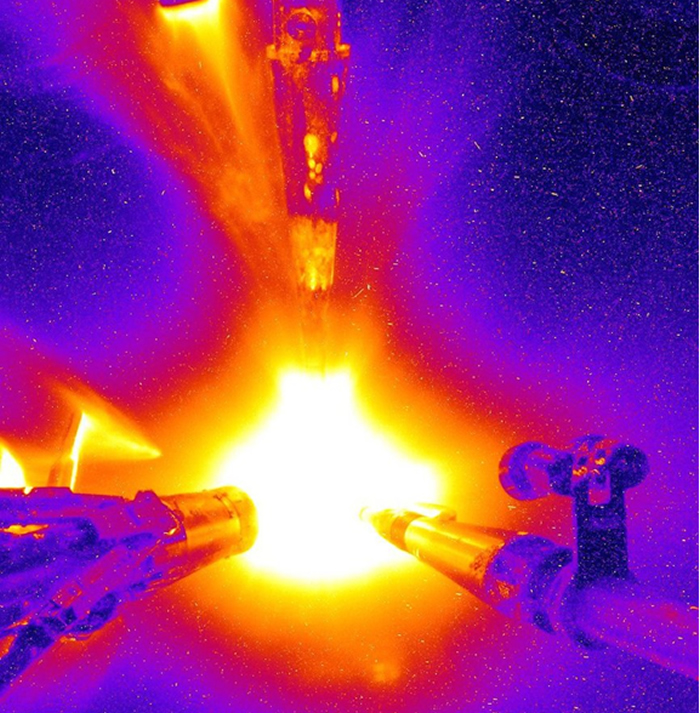
Colorized image of NIF “Bigfoot” deuterium-tritium implosion, Feb. 7, 2016.
Bigfoot platform uses shortened three-shock pulse and thinner DT ice layer that puts fuel and diamond ablator on higher adiabat than previous designs.
Credit: Don Jedlovec